
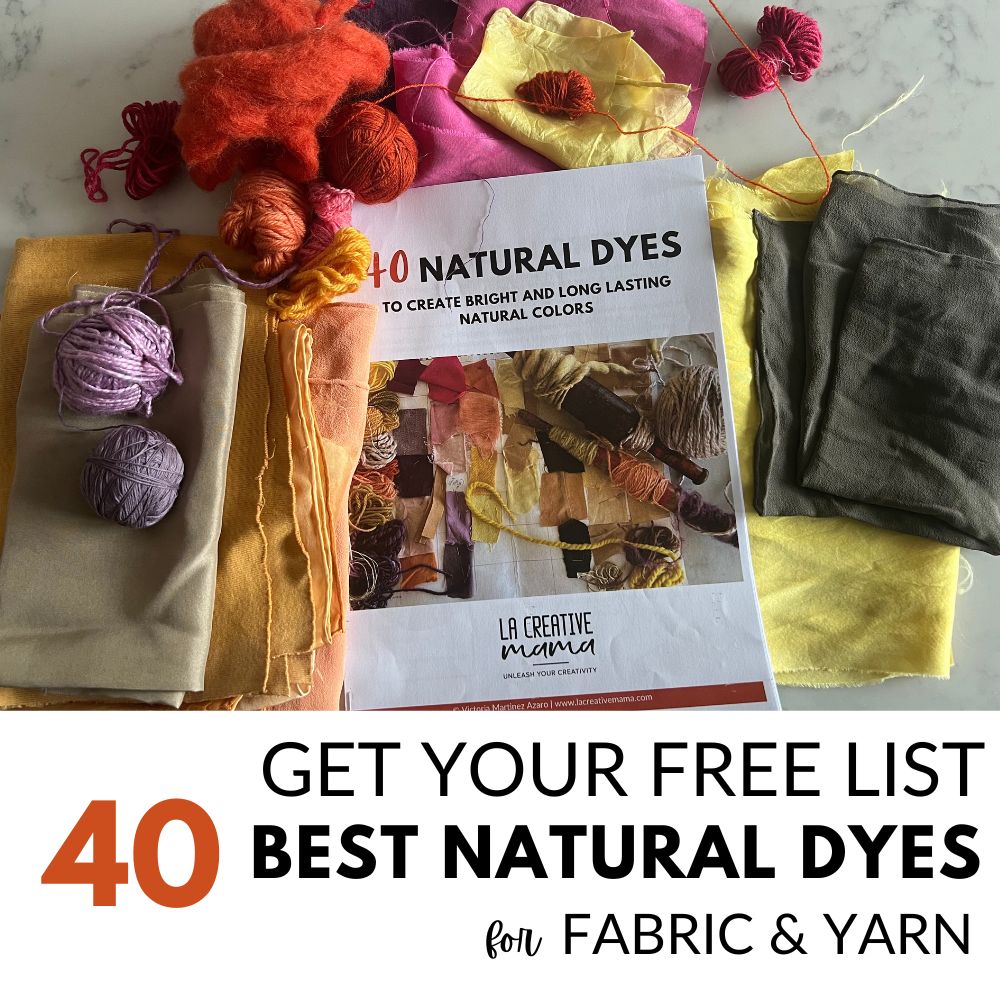
Hi Creative Mamas! Would you like to discover which are the best 40 colorfast natural dyes to use to dye fabric and yarn so that you can create beautiful natural color that is bright and that last for a very long time!
Watch this little video to find out about the amazing FREE dyes list we have prepared for you!
What are colorfast dyes
Colorfast dyes are dyes that don’t fade, bleed, or wash out easily once they’ve been applied to a fabric, fiber, or yarn. In other words, when a dye is colorfast, the color stays bright and stable even after washing, exposure to sunlight, or contact with sweat or friction.
What “Colorfast” Means
The term literally means “fast to color”, or resistant to being removed. A colorfast dye bonds strongly with the fiber, creating a long-lasting color that doesn’t easily detach or fade.
In Natural Dyeing
When working with natural dyes, achieving colorfastness depends on:
- Proper mordanting (using alum, iron, tannins, etc. to fix dye to fiber)
- Choosing dye plants known for strong pigments (like madder root, indigo, or goldenrod)
- Using the right fiber type — natural fibers like wool, silk, cotton, and linen bond best when mordanted properly
Common Tests for Colorfastness
You can test a dyed fabric’s colorfastness by:
- Washing a small sample and checking if color runs or fades
- Rubbing the fabric with a damp white cloth to see if dye transfers
- Exposing it to sunlight to see if it fades over time
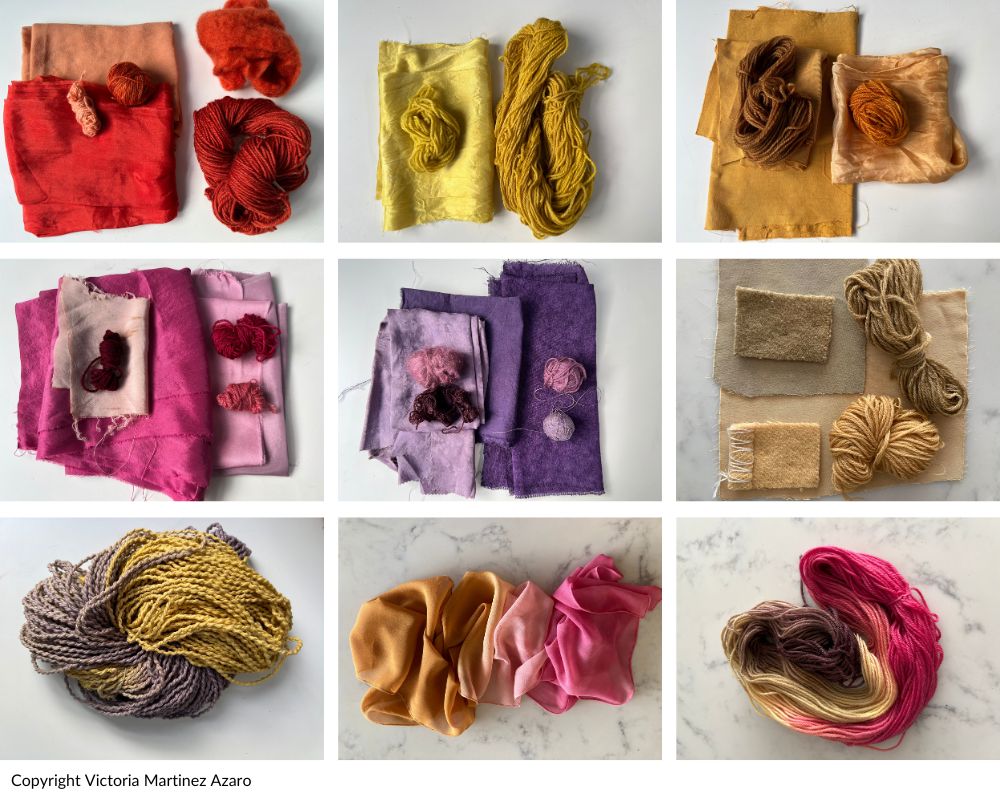
If you work with natural dyes in the right way you will achieve these kind of natural colors on your natural fibers. The photo below are all the colors that we created while filming the video tutorials for The Natural Dyeing Ultimate course! So much fun!
Watch the video below and discover the kind of color that is available to you!
Making natural colors/botanical colors
Dyeing with natural ingredients and making natural colors is not only healthier for you and the environment, but also more eco-friendly than using chemical alternatives.
And the best part about it is that it’s fun and easy!
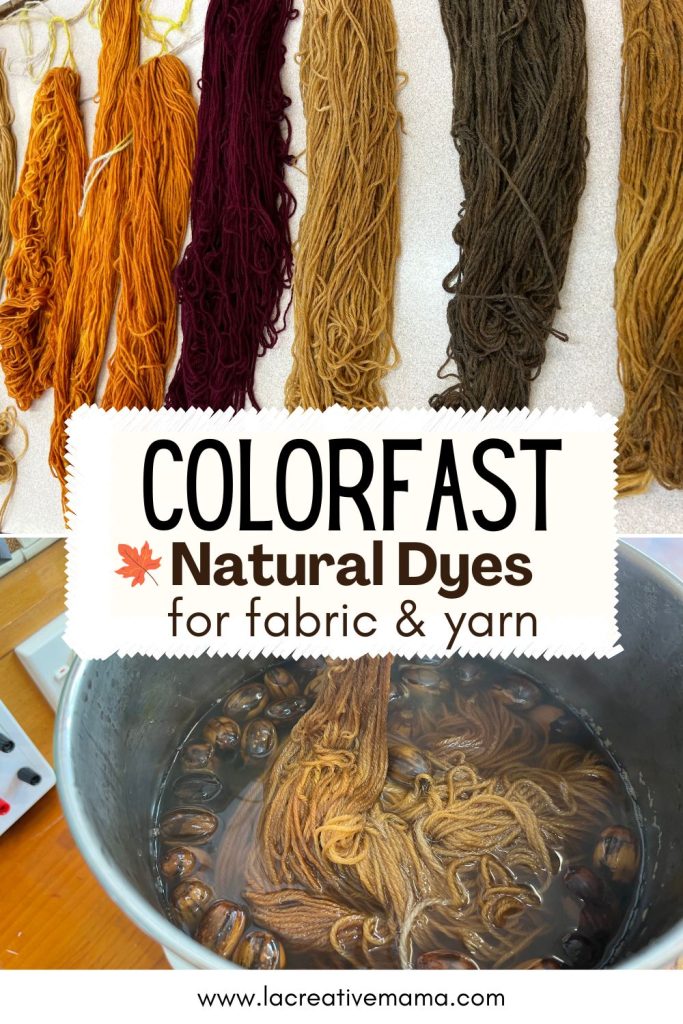
There’s no need for harmful chemicals or synthetic dyes when there are so many options available. However, you need to know that not all natural dyes are created equal.
This is because natural dyes are not as potent as synthetic dyes. You need to make sure that you are using the correct processes and applying the correct amount of each of the ingredients in the dyeing recipes.
Grab the FREE NATURAL DYES LIST
Complete the form below to download the FREE list of the best 40 dyes to use in natural dyeing! Save time and frustration!
My secret to create beautiful bright and lasting color every time is very simple:
Specific dyes + specific process = BEAUTIFUL BRIGHT & LASTING COLOR
I have a list of 10 natural dyes that I recommend to all my students to use as they start experimenting with natural dyeing.
I do this because I know that if they use this list of dyes they will be 100% satisfied with the amazing color results they will get.
Check out my Beginner’s Guide to Natural Dyes for the list of natural dyes that I recommend!
What are natural colors?
Natural colors or natural colorants are produced by natural dyes.
These dyes are natural colorants obtained from natural sources. They include a wide-variety of natural materials including vegetables, flower petals, leaves and animal products.
Using mordants in natural dyeing
Natural mordants include barks, tannins, lichens, tin, copper, alum and iron as well as natural fiber blends such as linen/ cotton which are known to create colors with natural fibers.
Due to the level of toxicity that some of these mordants have I only ever use Alum. You can read all about the different mordants and their application in natural dyeing here.
List of 40 plus natural dyes
I receive a lot of emails from my students asking questions about a lot of different natural dyes.
Also lot of people come to my live workshops wanting to have a go at natural dyeing with beetroot and carrots.
My response is always the same: PLEASE DONT!!!!!!
Even though there is a lot of info out there about these dyes and how quick and easy they are to use, the reality is that they just won’t last. They are not colorfast and they will fade away in no time.
Why spend your time creating colors that will wash away so fast when you could be spending the same amount of time with dyes that will deliver long lasting color for years to come?
Using Solar dyeing with the natural dyes list
You can totally apply this list of dyes to the solar dyeing Process. The beautiful thing about solar dyeing is that it’s a great slow craft to do with kids. they will love seeing the color change day after day 🙂
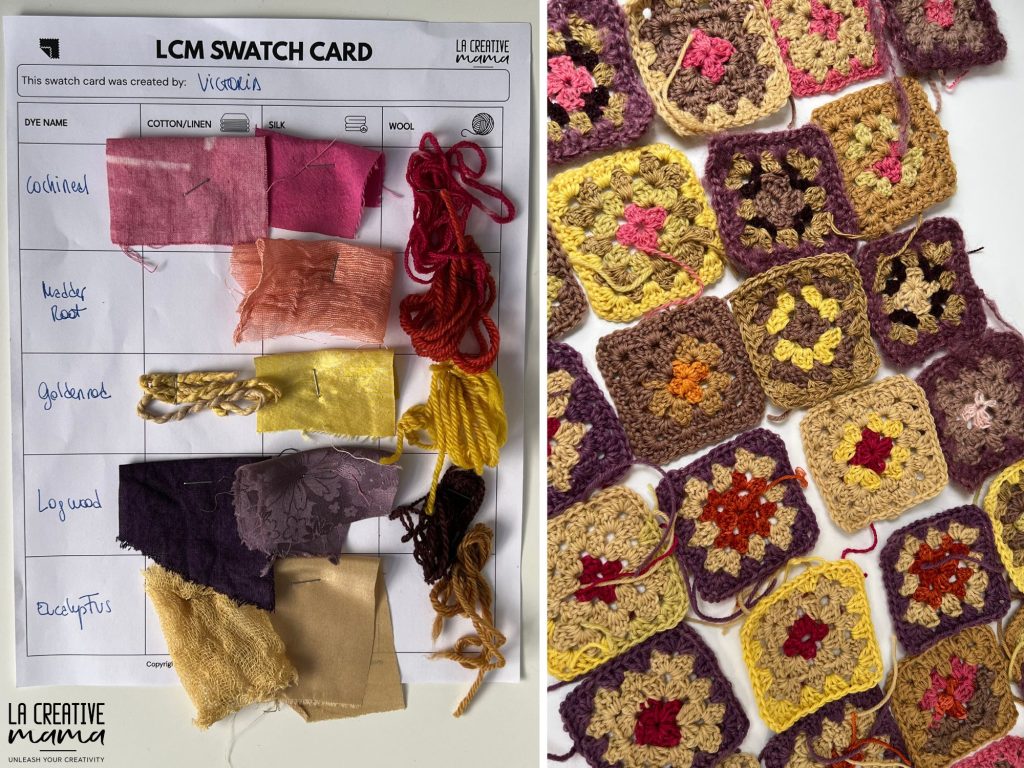
Natural Dye Chart
This is my go to natural dye chart of colors that I normally work with. All these natural colors were obtained through my 10 favorite natural dyes.

Let’s explore other natural dye options 🙂
Grab you FREE List f dyes by completing the form below!
Save this post to your favorite Pinterest Board
Hi, I am Victoria!
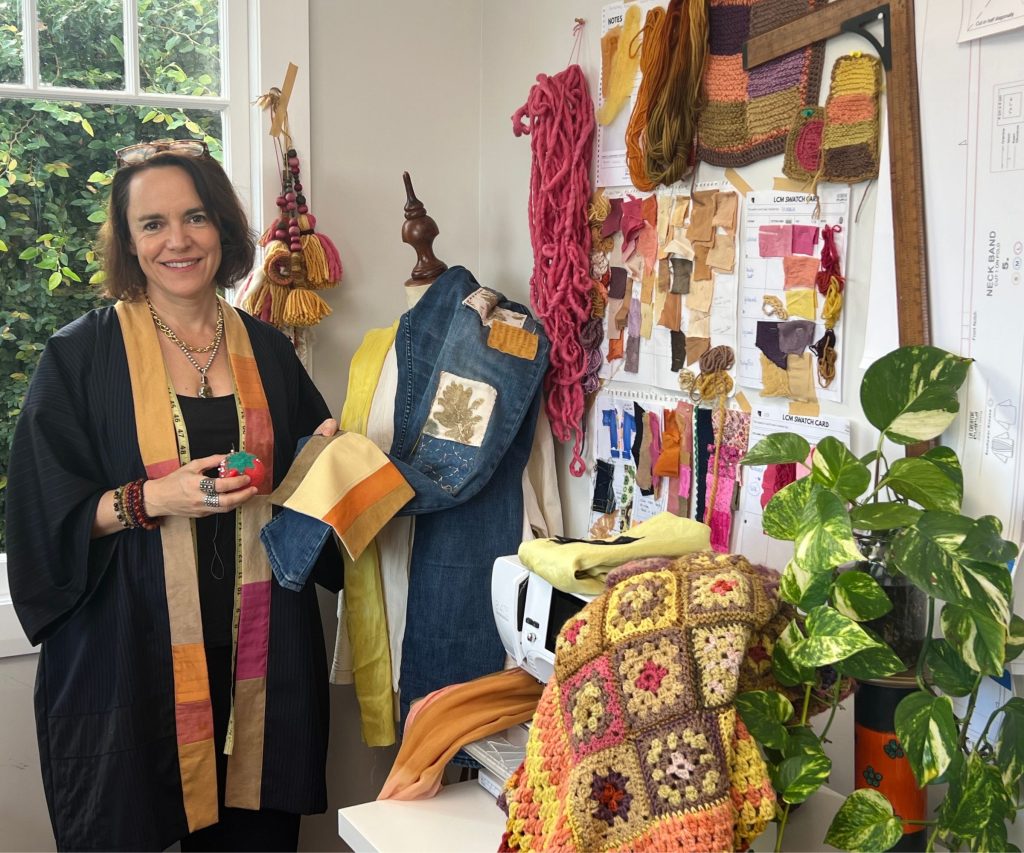
Welcome to my creative world!
I created LA CREATIVE MAMA as a crafty home for all my crafty talented friends who want to get inspired and creative with DIY sewing projects, upcycled fabric crafts, natural dyeing, eco printing and of course my favorite: DIY Sustainable FASHION!
Get in touch!
Join me and the community of Creative Mamas! Come over to Facebook / Instagram/ Pinterest and leave a comment or reply to a blog post here.
Would love to see any pics from projects you did from my blog and I can feature you here!