
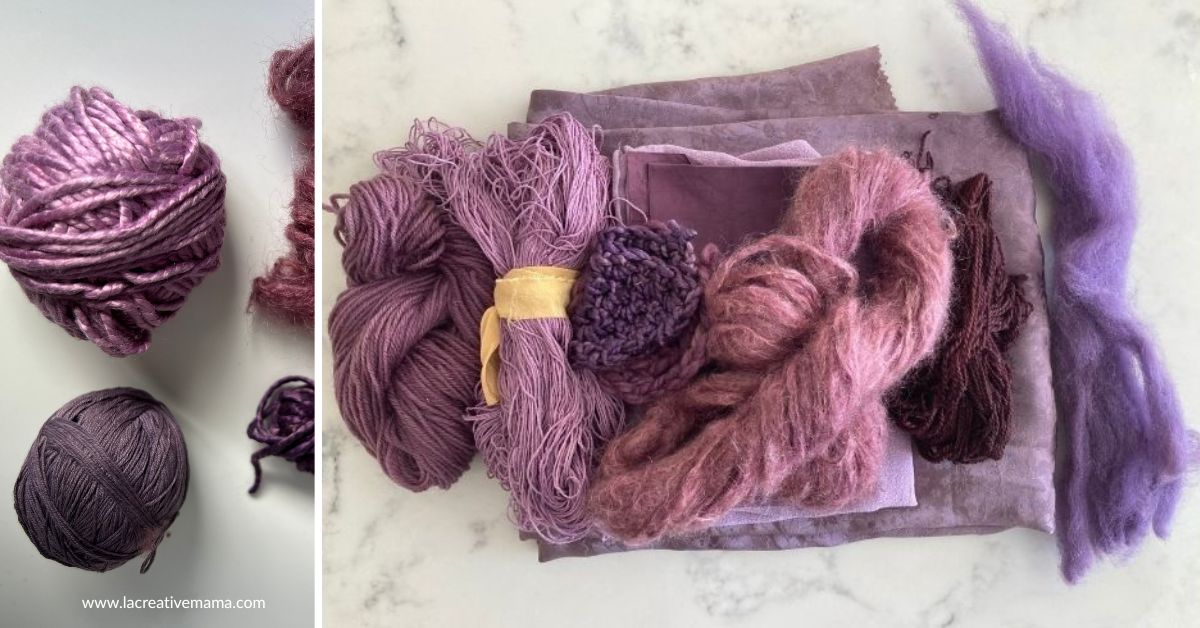
Hi creative Mamas! Welcome to a super informative post in which I will share which are the ten best natural dyes you need to be using to create bright natural pinks, reds, purples, yellows and even greens and charcoals, that last and don’t wash away!
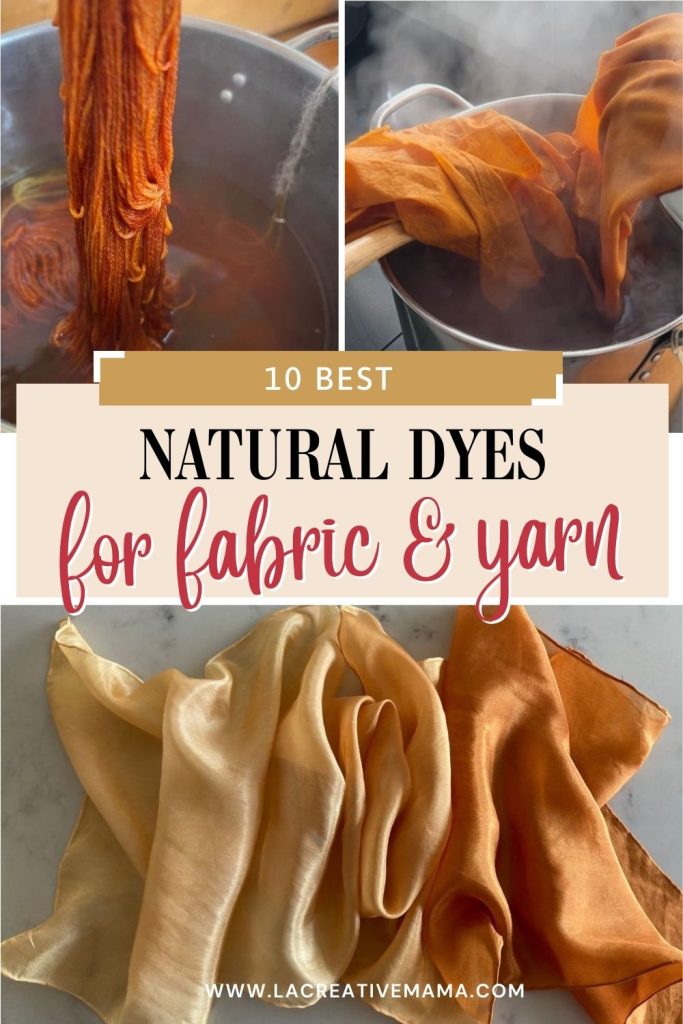
My DIY fashion practice, always starts by using natural dyes for fabric and yarns so that I create my colors on fabrics before I use them in a sewing project, or a hand dyed yarn project, eco printing, mending, upcycling...it’s the foundation of my creative practice.
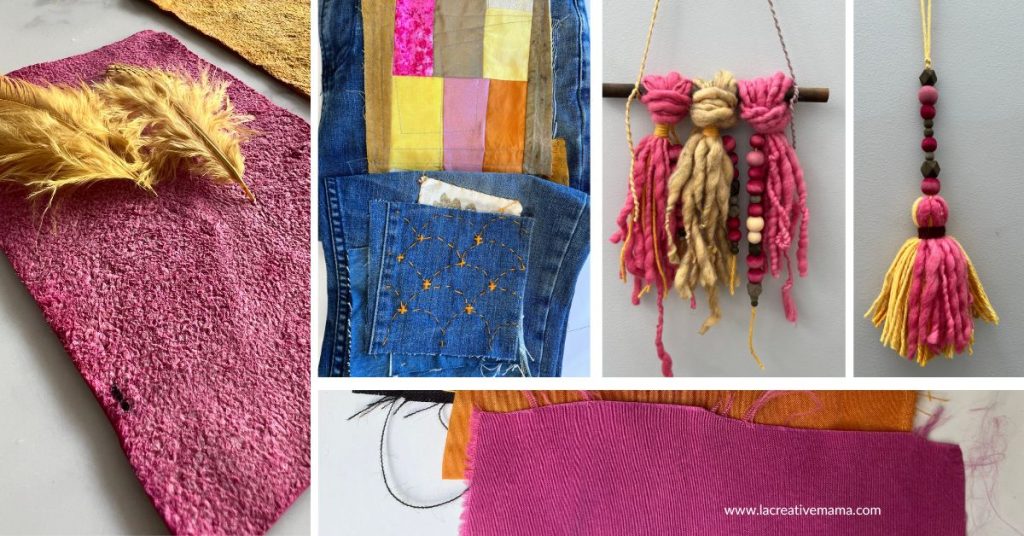
The photo below illustrates all the different ways in which I use and apply natural dyes in my own practice and in my teachings inside my courses.
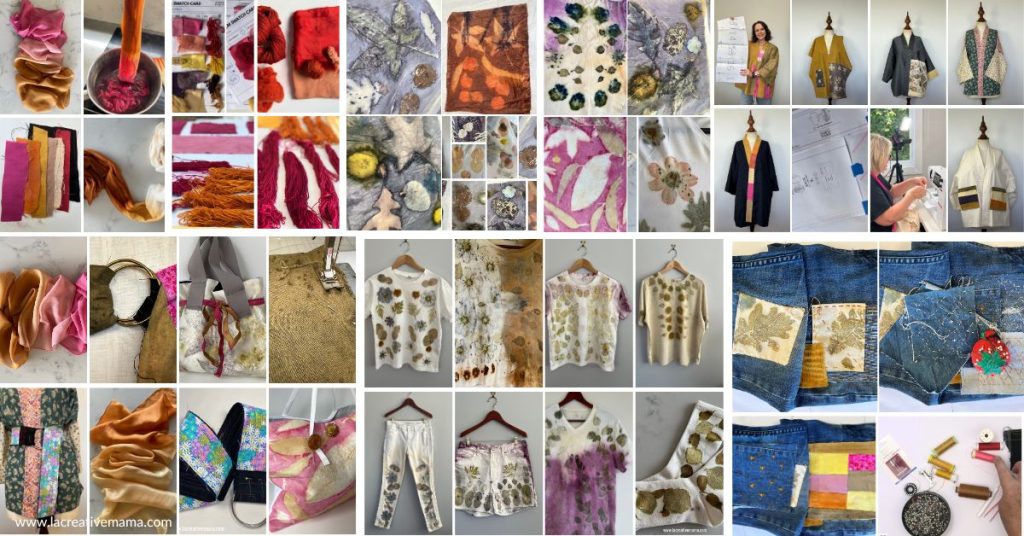
As you can see in the photo above I naturally dye fabrics and yarns and I use them in my DIY Fashion sewing projects, upcycling projects, re fashion projects, thrift flip projects, to name a few!
Watch the video below and discover the natural color you can create!
Unlike synthetic dyes, which often rely on chemicals and petroleum-based ingredients, botanical dyeing uses plants, barks, flowers, roots, and even insects to bring out a stunning variety of shades.
Download the FREE List and Guide of the BEST NATUALES DYES you need to be using by completing the form below!
From tea dyeing fabric to using eco printing for a one-of-a-kind leaf pattern on cotton and linen, the possibilities are endless.
If you’ve ever wondered about the best natural dyes to start your journey, here’s a list of ten trusted favorites that dyers have used for centuries. These dyes are reliable, versatile, and capable of producing breathtaking natural dye colors for fabric.
Best Natural dyes for Fabric and Yarn
1. Cochineal
Cochineal is one of the most famous natural dyes in history. Derived from tiny insects that live on prickly pear cactus, it produces a dazzling range of reds, pinks, and purples. A small amount goes a long way, which is why it was so prized in the past.
When working with cochineal, you’ll prepare a dye bath and experiment with different mordants for natural dyes as well as modifiers, to shift the final shade.
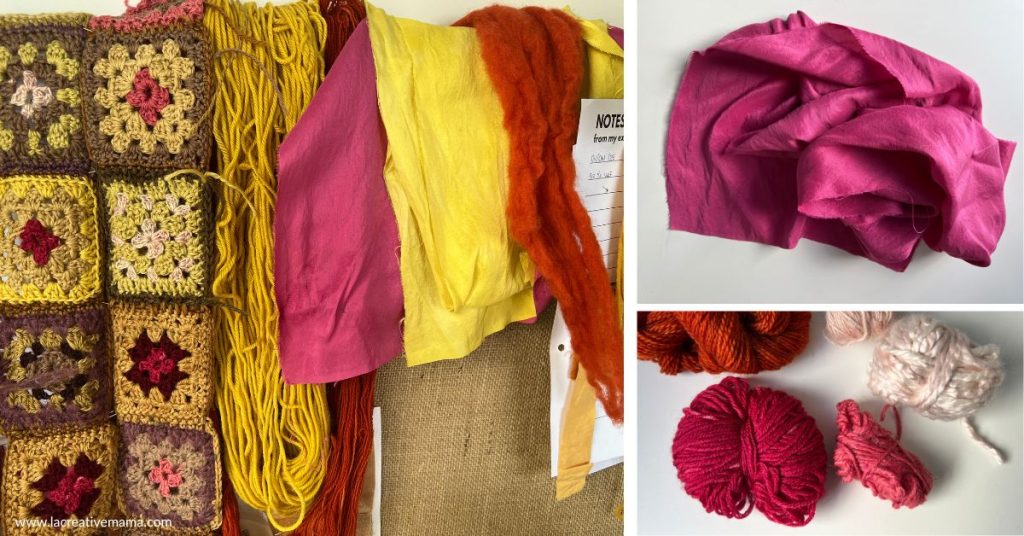
On protein fibers like wool and silk, cochineal gives the brightest crimson and magenta hues. On cellulose fibers like cotton or linen, it produces softer pinks.
On leather and feathers it gives a beautiful pink as well! In the photo below you can see cochineal dye results in leather, silk, wool and cotton!
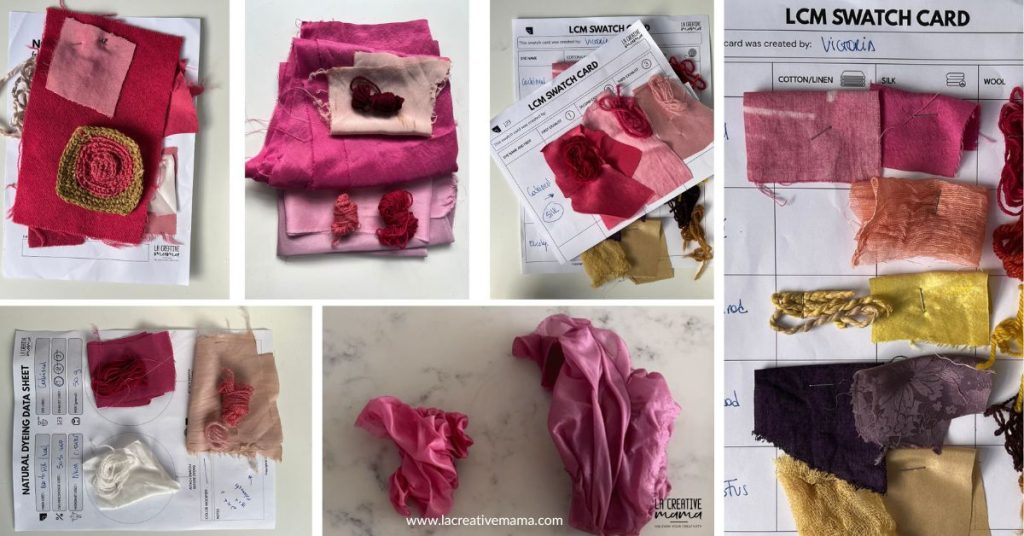
Cochineal also shines when combined with other plant-based dyes. For example, adding iron can deepen the red into plums and purples, while mixing with madder or logwood creates different shades of natural color. We call this modifying the color post dye bath.
In the photo below you can see examples of the color being modified with iron solution as well as dyeing with different ratios and intensities of the cochineal dye.
2. Madder Root
Madder root has been used for thousands of years to create red natural dye. It produces a spectrum from orange-reds to deep brick tones, depending on the mordant bath and the type of fabric.
The roots are dried, chopped, and simmered in a stainless steel pot to release their pigments.
In the photo below you can see the madder roots imprints in an eco printed upcycled woolen top. The blanket also has a line of madder root dyed wool yarn.
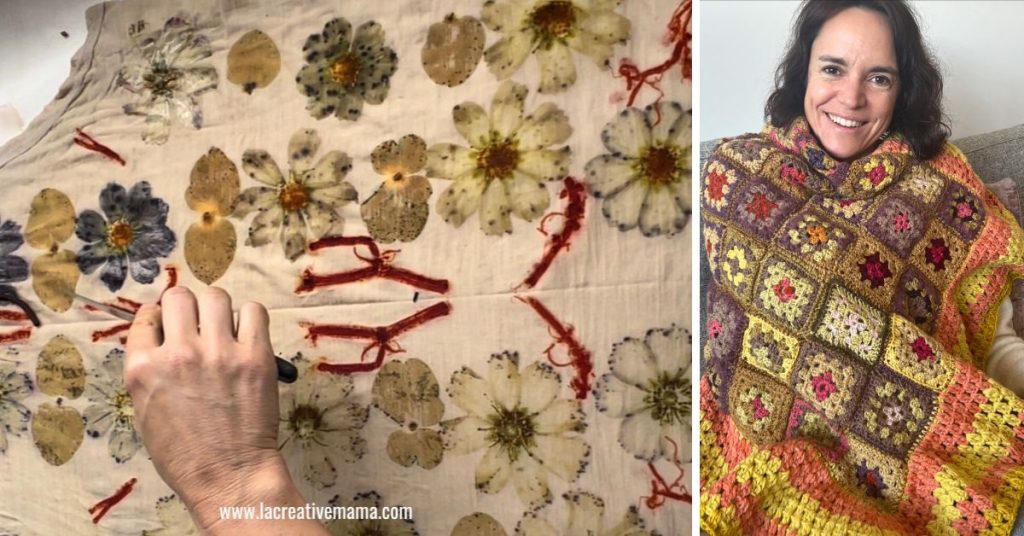
For the best results, soak your fabric in a mordant beforehand, as madder works especially well with alum mordants. On natural fibers such as wool or silk, madder yields beautiful colors that are both strong and long-lasting.
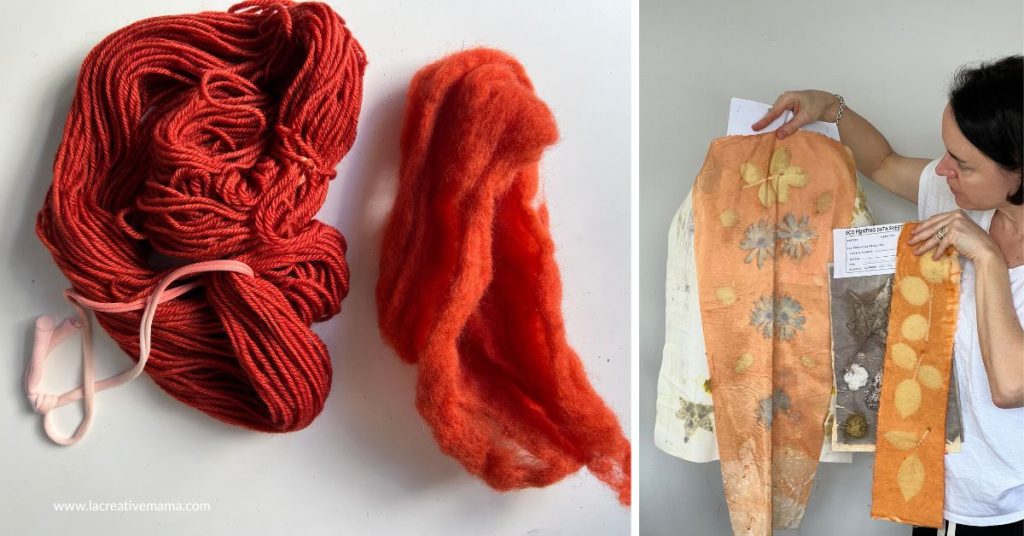
I also love using madder root in my eco printing practice to create color blankets!
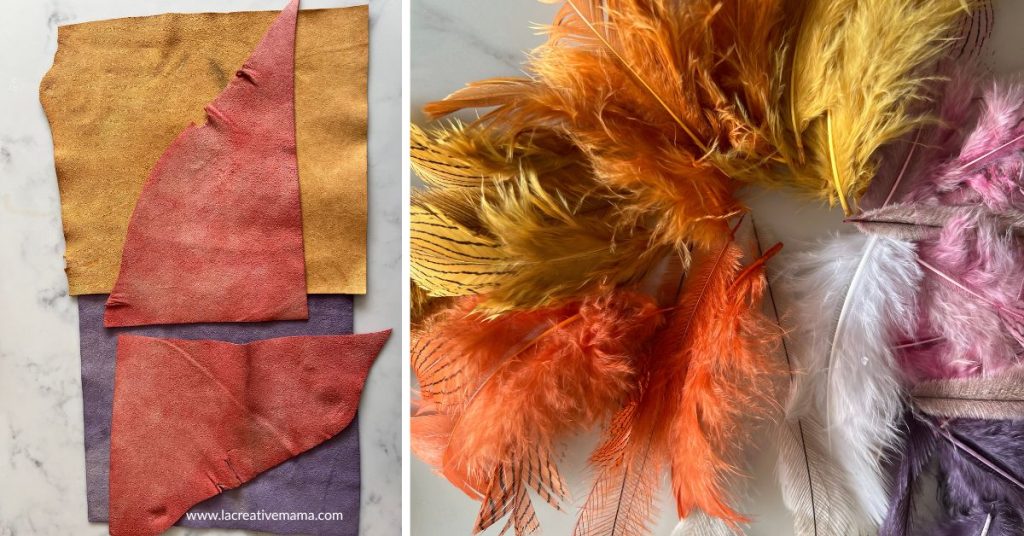
In the photo above you can see a madder root blanket on silk and wool. In the photo below you can see the results of dyeing leather and feathers with madder root. Stunning reds and coral results!
3. Eucalyptus
Eucalyptus leaves and bark are beloved in eco dyeing fabric because of their rich tannins and unpredictable beauty.
Depending on the species and the season, eucalyptus can create colors ranging from rusty orange and golden brown to olive greens and even purples.
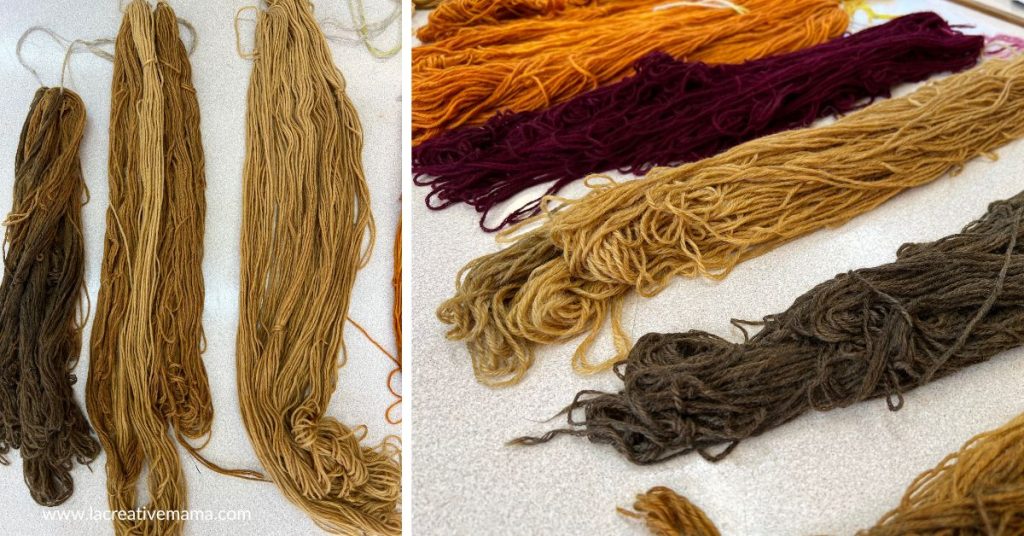
In the photo below you can see wool yarn which gave me a beautiful gold color which was modified with iron to create a nice military green.
In eco printing, eucalyptus leaves placed directly onto fabric release their dye beautifully when steamed or bundled in a big pot. The result? Unique botanical patterns that no synthetic dye can replicate.
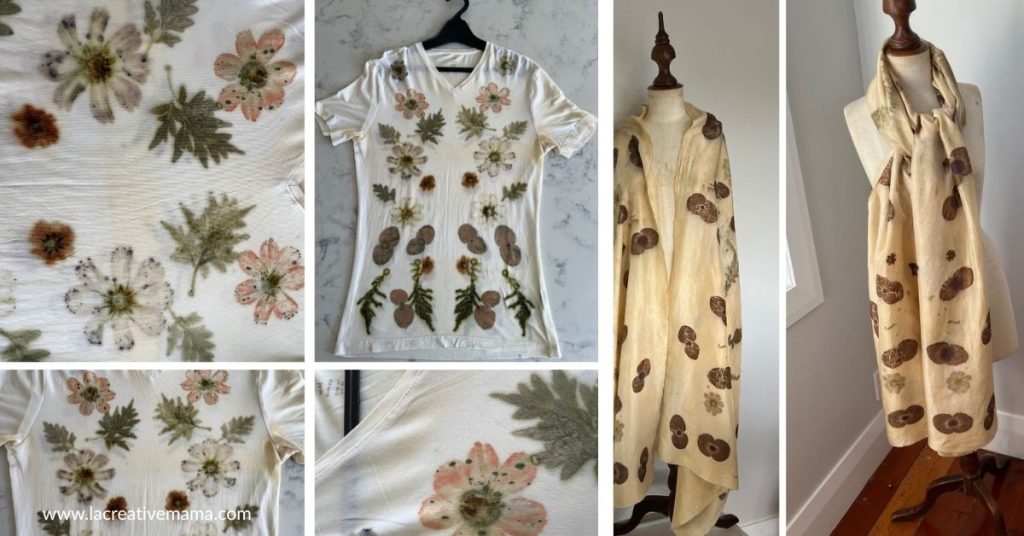
The best thing about eucalyptus is that it’s widely available in many regions and produces colorfast dyes when paired with natural mordants. Using a hot water bundle release method will give stronger prints, while experimenting with cold water soaking can lead to subtler tones.
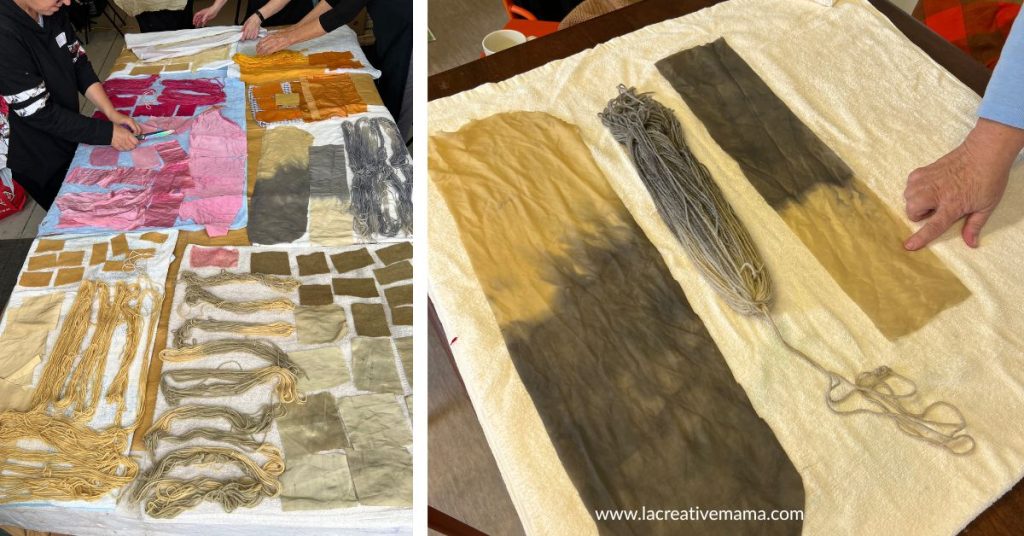
Below are some results from a live workshop in which we explored modifying eucalyptus dyed fibers.
4. Onion Skins
Onion skins are a perfect introduction for beginners because they’re a free natural dye available in your kitchen. They yield a wide range of yellow dyes and earthy oranges, depending on the fabric soak and the strength of the dye bath.
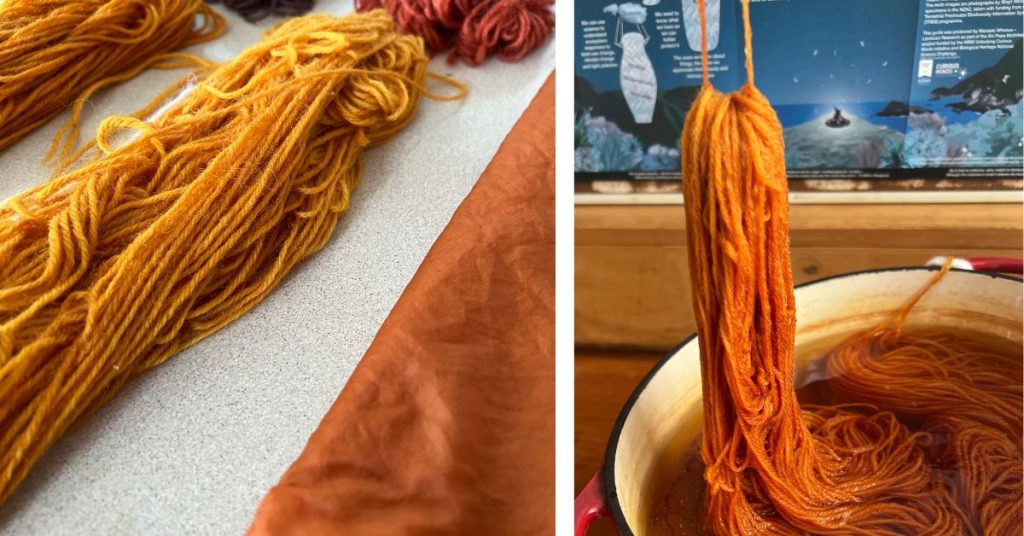
Yellow onion skins give bright yellow to golden brown, while red onion skins can create deep rusts or even greenish tones on some cellulose fibres. They are especially beautiful on natural linen plant dyed fabric.
Below you can see different fabrics, jersey cotton, woven cotton and wool fabric which were all dyed with onion skins.
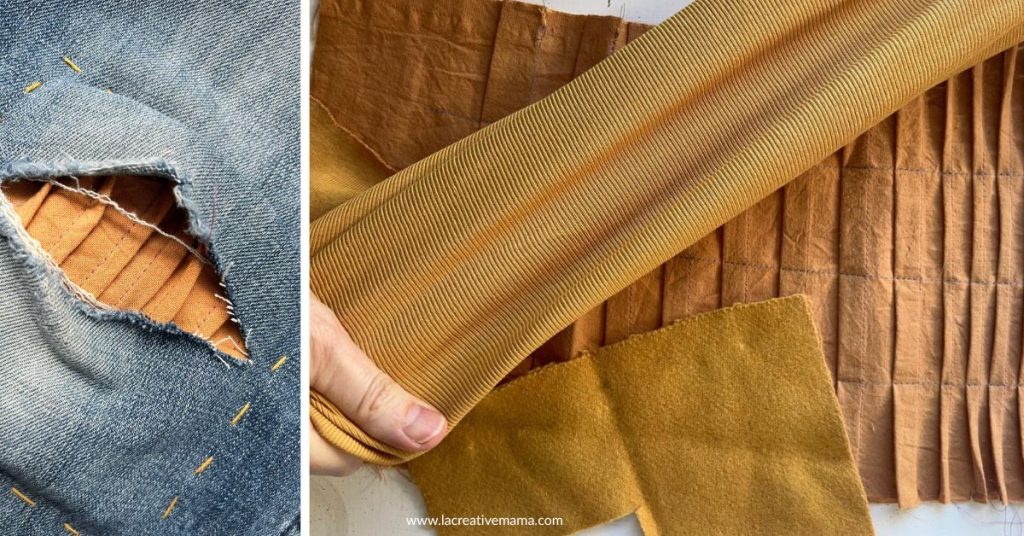
The basic rule is simple: the more onion skins you use, the deeper the color. Onion skin dyeing is also a good place to practice before moving to rarer raw materials like logwood or cochineal.
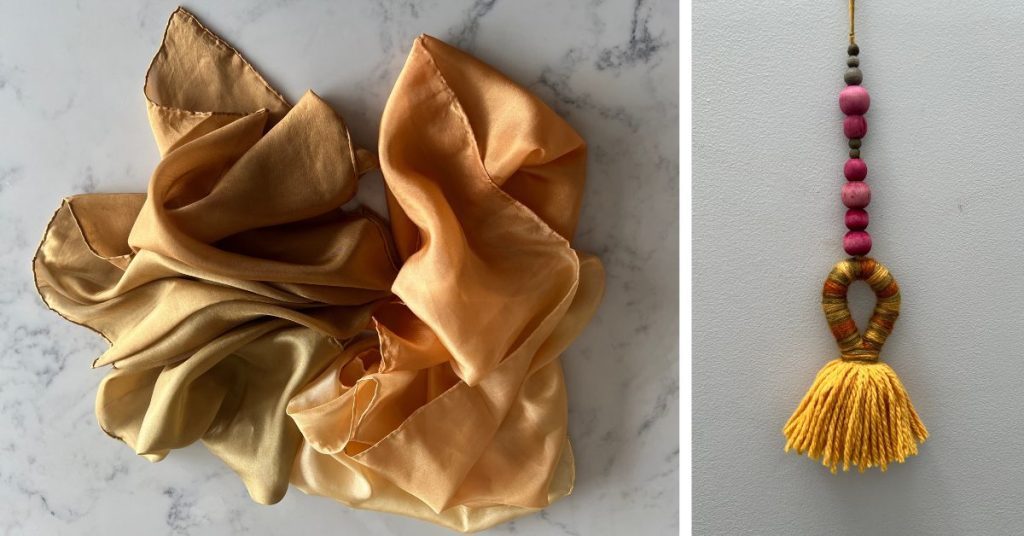
The photo below shows an onion skin ombre dyed silk scarf and a wool tassel which was made out of wool which was dyed with onion skins in a variegated effect.
5. Avocado
Who knew that those leftover avocado skins and pits from your guacamole could make a natural fabric dye DIY?
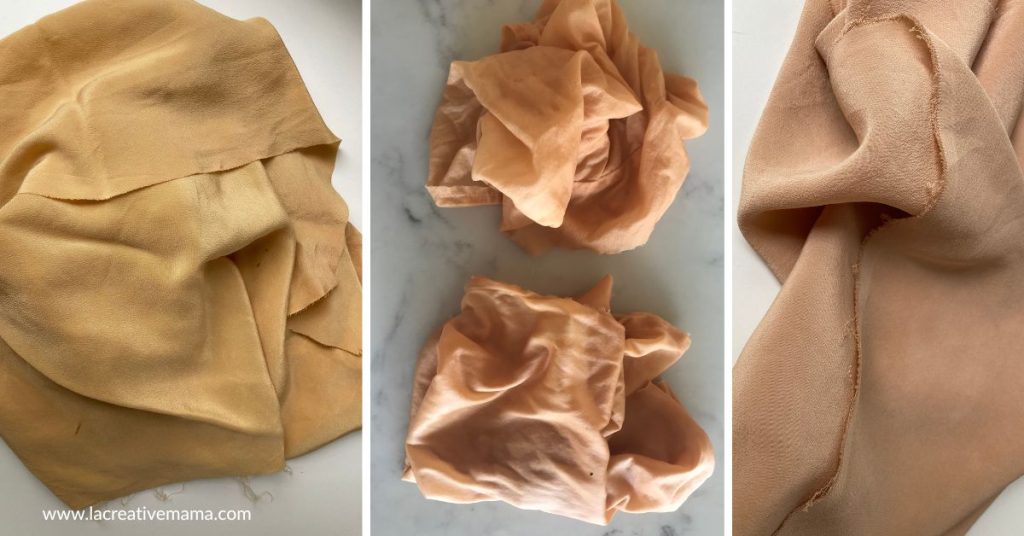
Avocado is a favorite among fiber artists because it produces dreamy peach and blush pinks, often shifting into dusty rose or coral depending on the water quality and mordant bath.
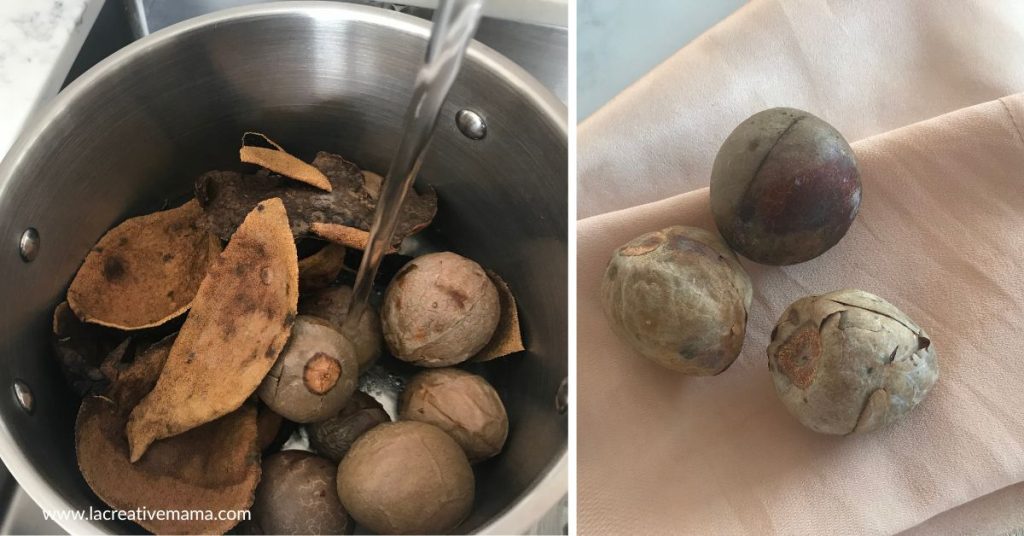
Avocado dyeing works best with protein fibres like wool or silk, though it can also color cellulose fibers like cotton. Just remember to clean the pits and skins before simmering to avoid unwanted oils in your dye pot.
Adding a touch of iron mordant will deepen the pink into greyish purples, giving you even more variety of colors from a single plant source.
6. Goldenrod
Goldenrod blooms in late summer and early fall, making it a wonderful seasonal dye plant. Its bright yellow flowers release sunny pigments that create vibrant colors on natural fibers.
I cultivate Goldenrod in my dye garden and every summer i harvest lots and lots of flowers!
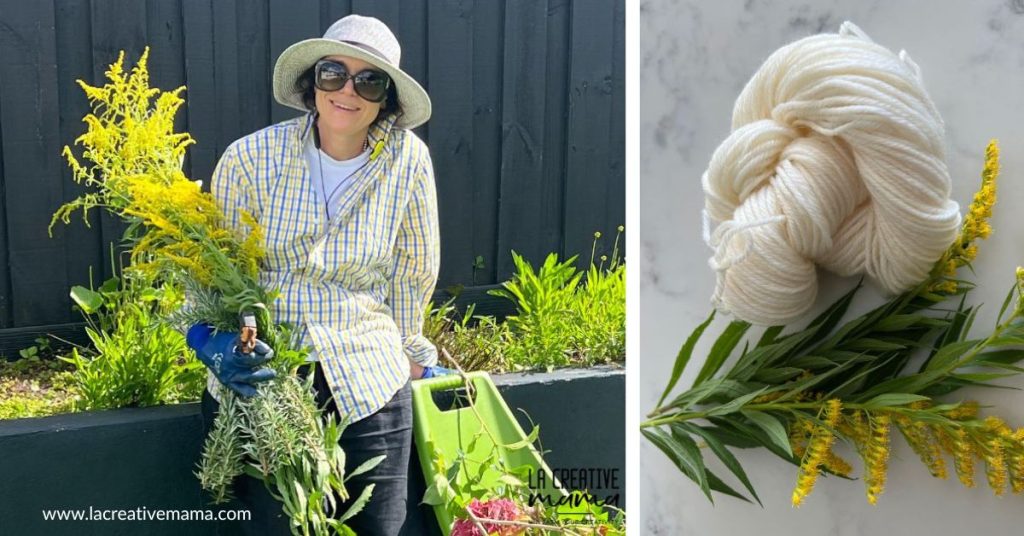
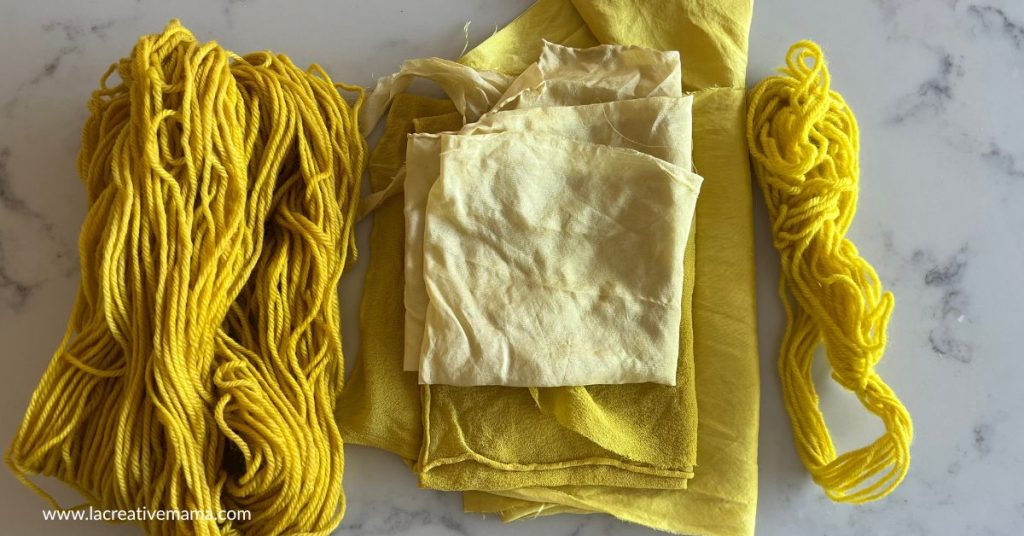
Goldenrod is one of the best natural dyes for creating a cheerful palette. Combined with alum mordant, it gives a pure golden hue; combined with iron, it shifts into olive green.
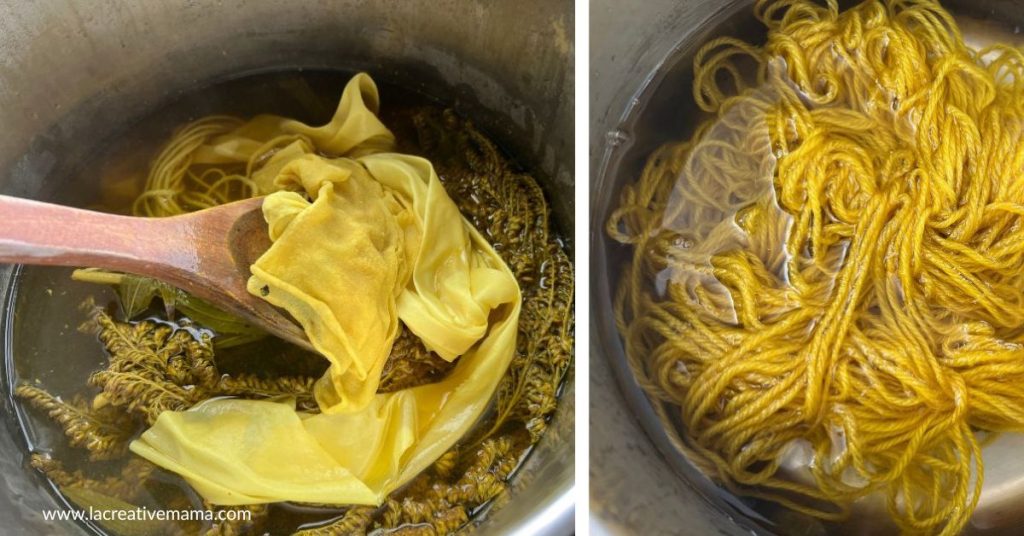
If you love making natural dyeing recipes that reflect the seasons, goldenrod is a fun way to celebrate summer’s end. Collect the flower heads when they’re in full bloom, simmer them in a big pot, and enjoy the natural color magic.
7. Logwood
Logwood is a dye wood from Central America that produces stunning purples, blues, and blacks. In fact, it was once a highly prized trade dye because of its ability to create purple dyes—a color often associated with royalty.
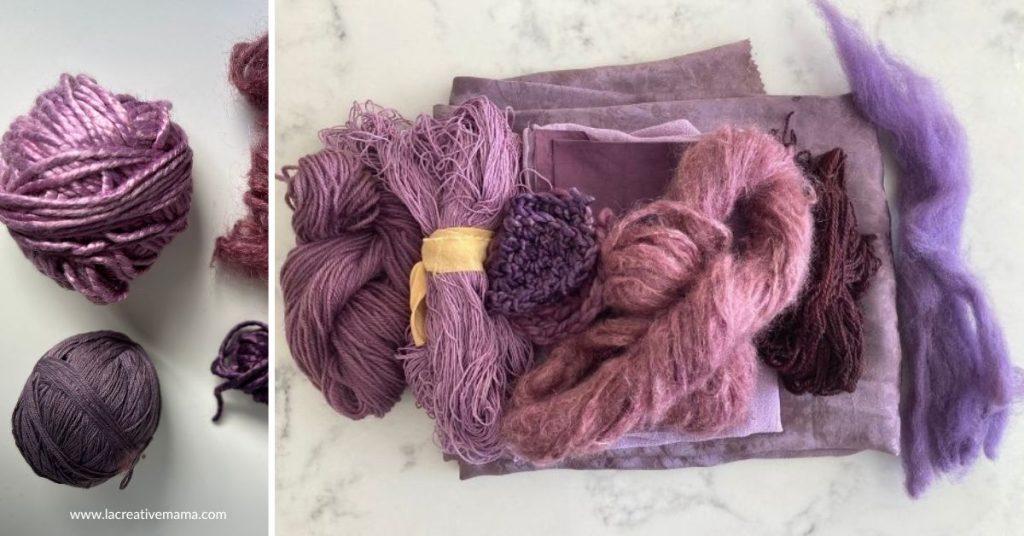
When used with natural mordants like alum, logwood produces violet and lavender tones. Add iron, and it deepens into grey or black. On protein fibres, the colors are richer, while on cellulose fibers, they’re more muted but equally beautiful.
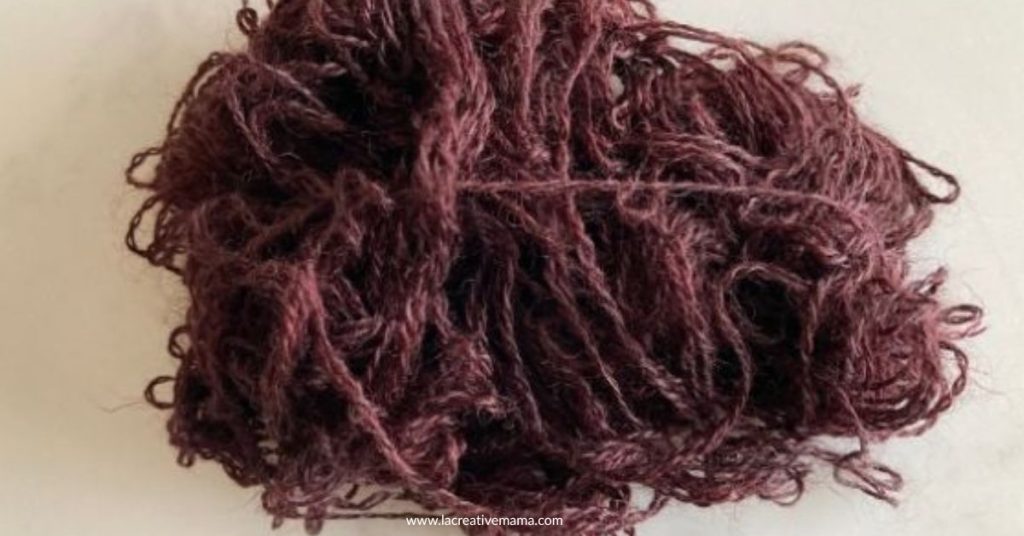
In the photos you can see different intensities of logwood dye in silk, wool, cotton fabric and cotton yarn as well.
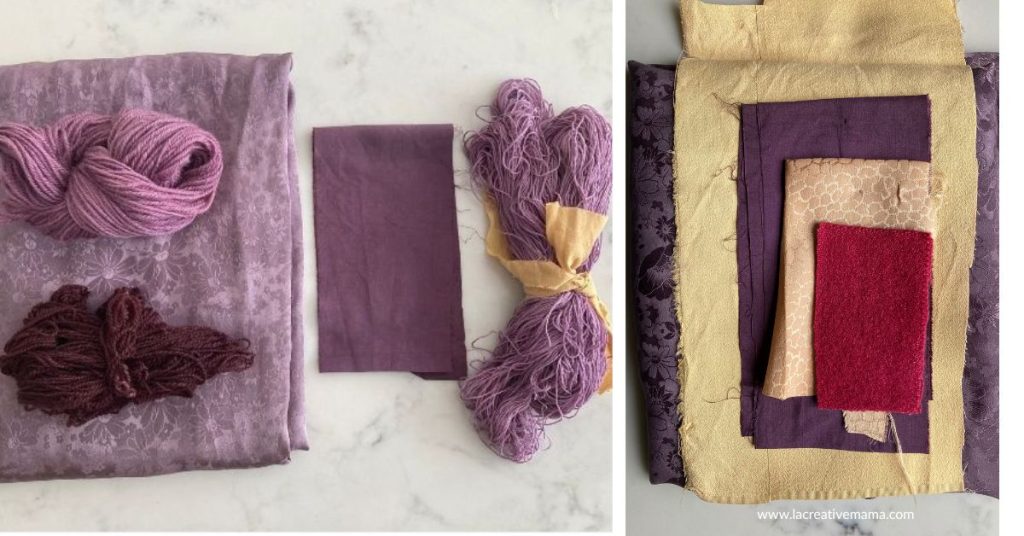
Pairing logwood with other dyes is a good result strategy: overdyed with cochineal, you can achieve deep magentas; layered with indigo, mysterious midnight blues.
8. Acorns
Acorns may seem humble, but they’re packed with natural tannins that make them excellent mordants for natural dyes as well as dyes themselves. When simmered, acorns create earthy browns and greys—perfect for grounding a palette of botanical colors.
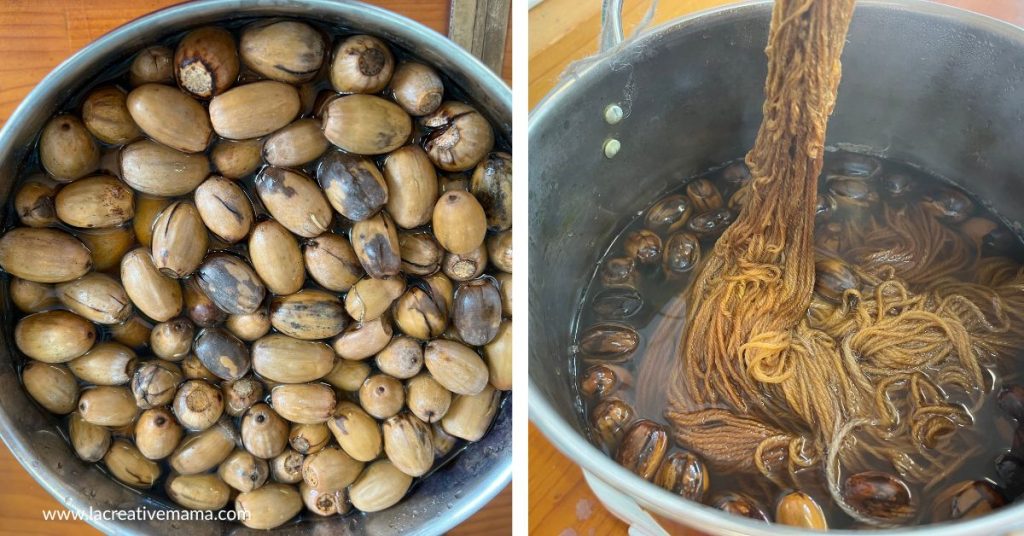
Because of their high tannin content, acorns also help improve the end result of other dyes, making colors more colorfast.
They modify really nicely into dark greys and charcoals. I have done lots of experimentation with acorns turning the original gold color into dark greys and the photos below show different effects and results in silk.
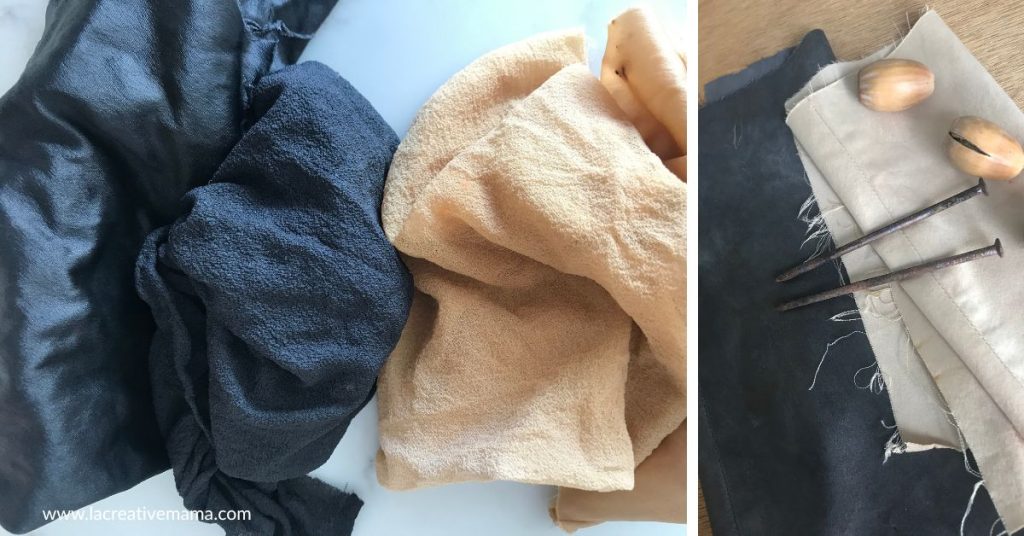
For a DIY plant dye experiment, gather acorns in autumn, crack them, and simmer in a big pot. The colors are subtle but timeless, making them a good place to start exploring natural dye techniques.
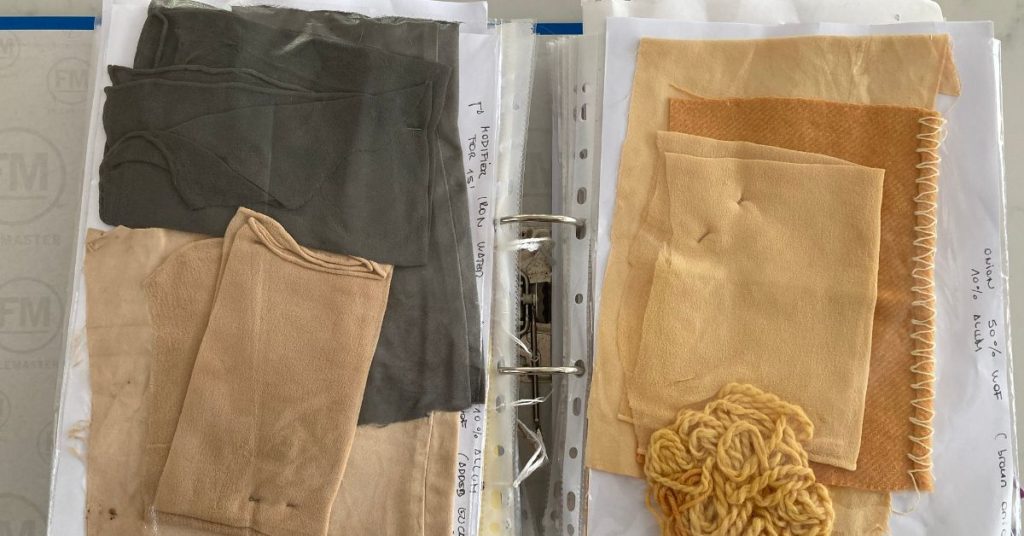
9. Dyer’s Chamomile
Dyer’s chamomile is a cheerful flower that produces warm yellows and golden tones. Unlike some yellow dyes, which can fade, dyer’s chamomile is known for its strong colorfast dyes.
Harvested in late summer, the flower heads can be dried and stored for later use, making them a versatile choice for your dye pot. They pair beautifully with iron to create mossy greens or with indigo to make fresh green colorways.
For beginners, this is a good result plant because it rarely disappoints. Its natural dye colors for fabric are always bright, sunny, and uplifting.
10. Fusticwood
Fusticwood, sometimes called old fustic, is another dye wood known for its yellow dyes. Used historically in textile dyeing, it produces shades from lemon yellow to olive green, depending on the mordant bath.
I love it and it gives me a different shade of yellow which is different from onions, dyers and goldenrods.

When combined with other dyes, fustic is versatile: with indigo, it creates green dye; with madder, it creates rich oranges. On animal fibers, its colors are bold and long-lasting, making it one of the best ways to achieve reliable natural yellow tones.
Final Thoughts
Exploring the best natural dyes is about so much more than achieving a color. It’s about connecting with natural materials, honoring centuries-old fabric dyeing techniques, and finding joy in eco-friendly textile dyeing.
Whether you’re hand dyeing old clothes from thrift stores, experimenting with natural tie dye techniques, or creating DIY printed fabric through eco printing, the journey is just as beautiful as the end result.
The best part? These dyes are accessible. Onion skins, avocados, and acorns can come from your kitchen or local park. Others, like madder root and logwood, connect you to a long tradition of global trade and craft. Together, they give us a palette of different colors, vibrant colors, and beautiful shades that rival anything produced by synthetic dyes.
So, gather your natural fibres, prepare your mordant bath, and step into this beginner’s guide to creating your own natural dyed fabrics. You’ll soon see that natural dyeing isn’t just about coloring fabric—it’s about weaving stories, memories, and nature itself into every thread.
If you are inspired to start creating your own natural colors to dye fabrics and yarn come and join me inside The Natural Dyeing Ultimate course!
Save this post to your favorite Pinterest Board!
Hi, I am Victoria!
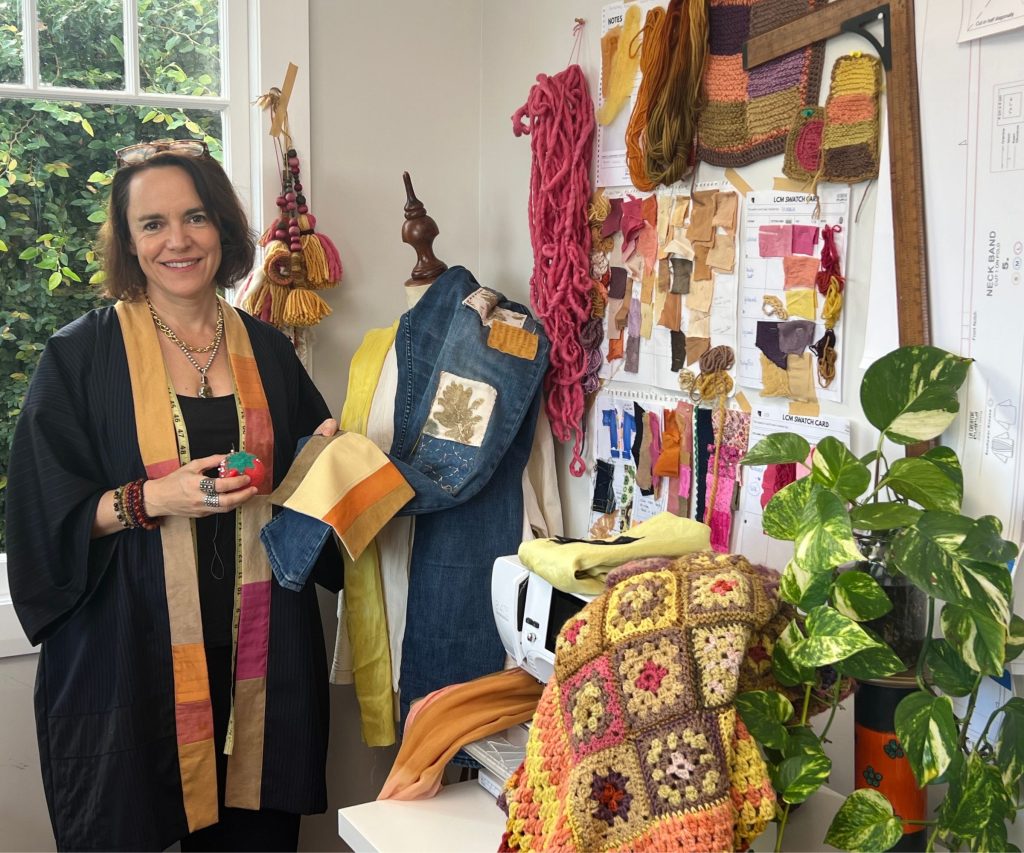
Welcome to my creative world!
I created LA CREATIVE MAMA as a crafty home for all my crafty talented friends who want to get inspired and creative with DIY sewing projects, upcycled fabric crafts, natural dyeing, eco printing and of course my favorite: DIY Sustainable FASHION!
Get in touch!
Join me and the community of Creative Mamas! Come over to Facebook / Instagram/ Pinterest and leave a comment or reply to a blog post here.
Would love to see any pics from projects you did from my blog and I can feature you here!