
Hi Creative Mamas! Lets talk DIY Fashion and all things sewing in sustainable ways…and by this I mean considering a sewing practice that minimizes waste in terms of fabric, threads, notions and time.
Minimal waste sewing is a way of cutting and constructing garments so that every piece of fabric is used — nothing goes in the bin, nothing gets wasted. It’s different from zero waste (which aims for literal zero offcuts) and different from conventional sewing (which accepts a lot of leftover scraps as normal).
Minimal waste sits beautifully in between: achievable for home sewists, kind to your fabric stash, and kind to the planet.
If you’ve ever finished a sewing project and felt a little guilty about the pile of cut-away fabric sitting on your table — this post is for you.
I’m Victoria, a sustainable fashion educator with 20+ years of experience in natural dyeing and textile arts. I want to show you what minimal waste sewing actually looks like in practice, and why the kimono shape is one of the most perfect garments for learning it.
What Are the 3 Principles of Minimal Waste Sewing?
Whether you’re working on the kimono pattern or any other garment, minimal waste sewing comes down to three core principles. These are the ideas I want you to take away from this post — even before you touch a pattern.
1. Plan your cutting layout before you cut anything. Most fabric waste happens in the first five minutes of a project — when you place your pattern pieces down without thinking about what’s left over. Minimal waste sewing starts with mapping your layout intentionally, fitting pieces together like a puzzle to leave as little empty fabric as possible.
2. Design for scraps from the beginning. Scraps aren’t an afterthought in minimal waste sewing — they’re part of the design. That’s why the kimono pattern includes pocket options, neckbands, and sleeve gussets that can be cut entirely from what’s left over. You’re not “using up scraps” — you’re designing with them.
3. Choose shapes that work with your fabric, not against it. Rectangular and geometric shapes (like the kimono) use fabric far more efficiently than curved, fitted shapes. This is why traditional Japanese garment construction produced almost zero waste — the geometry of the garment matched the geometry of the cloth. When you choose the right shape for your fabric, waste almost eliminates itself.
These three principles are what we teach throughout the full Minimal Waste Sewing Course — applied to a real pattern, in real fabric, step by step.
What Is Zero Waste Fashion and Why Does It Matter?
Before we dive into the the amazing Kimono inspired top pattern, which part of our collection of sustainable patterns at La Creative Mama, I want to take a moment to talk about the concept of zero waste.
Zero waste is gaining momentum within DIY fashion makers and sewists, transforming the way we think about fabric and sustainability.
Imagine creating beautiful garments without leaving behind piles of fabric scraps—this is where zero waste fashion design comes in.
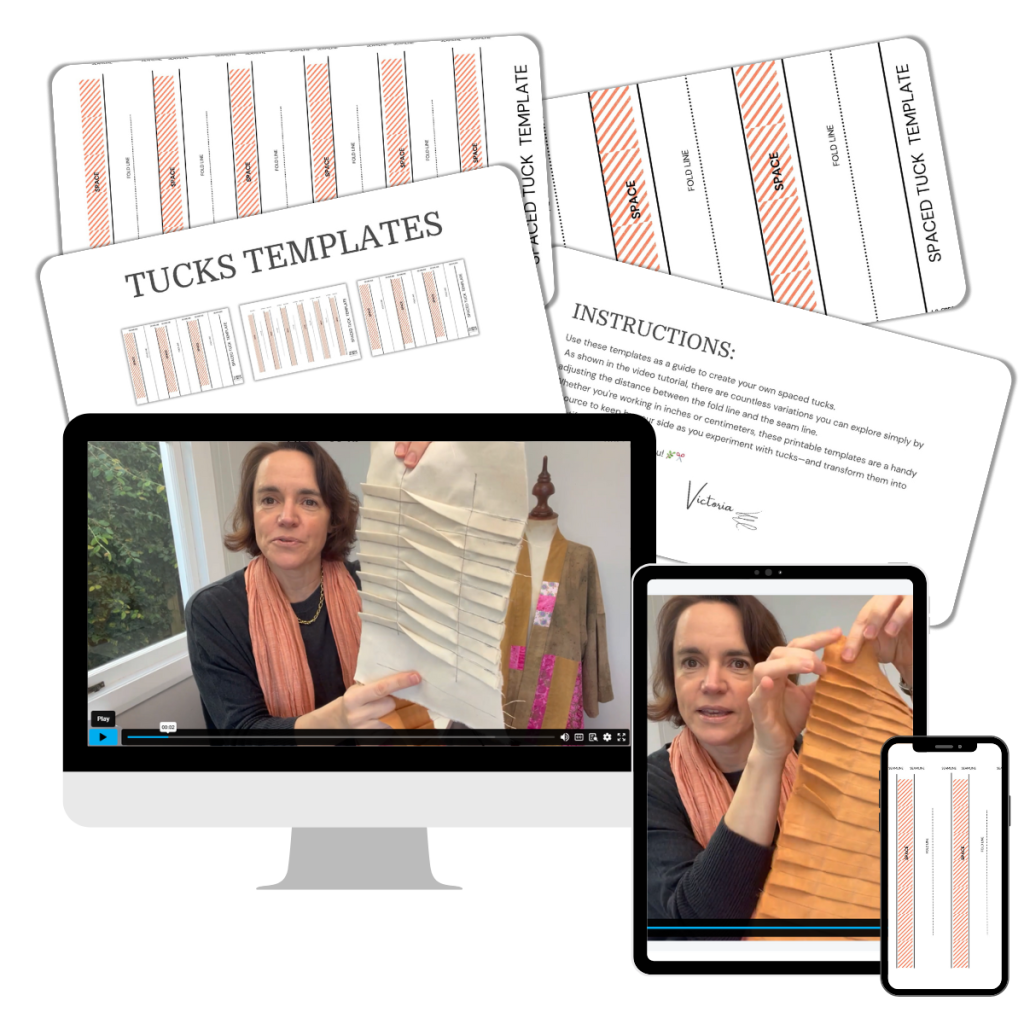
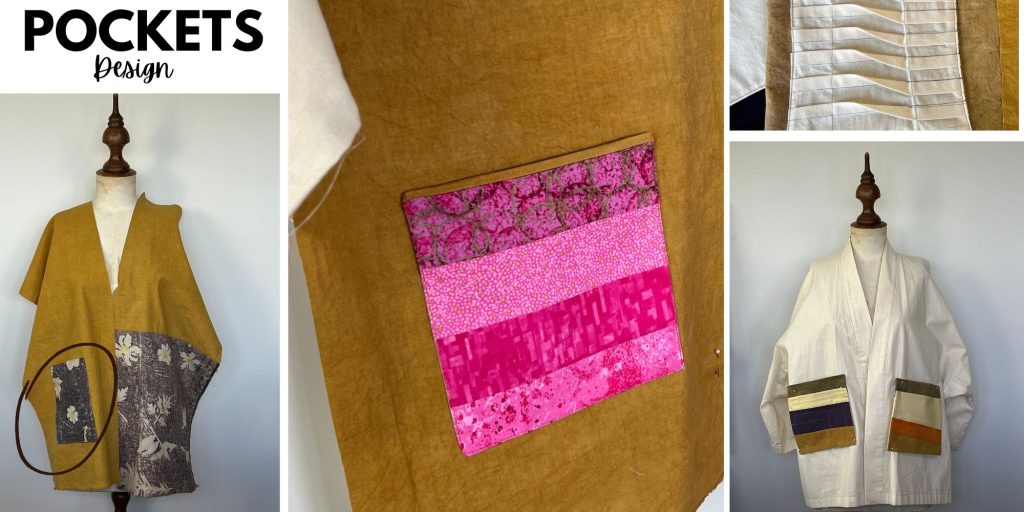
Our students have been creating wonderful clothes using zero waste strategies such as creating patch pockets from fabric scraps, using fabric manipulation techniques to make use of left over pieces of fabrics.
If you want to learn how to create cross over tucks using fabric scraps sign up for the FREE VIDEO TURIAL HERE! Patterns and templates included!
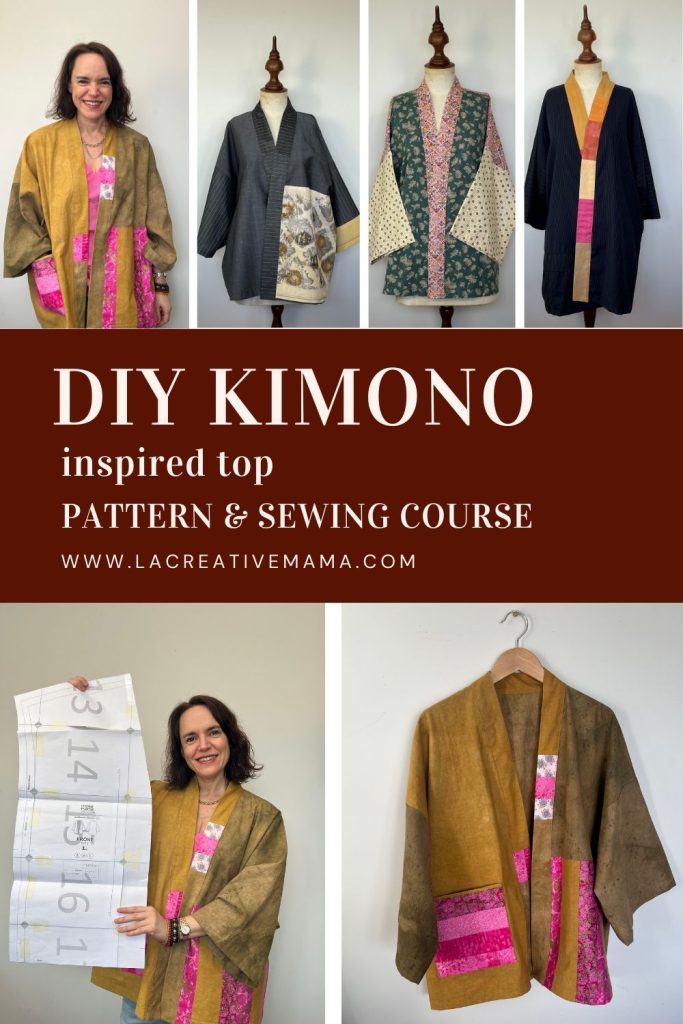
If you’re passionate about reducing waste while sewing stylish, versatile garments, you’re going to love our super popular Kimono inspired Minimal Fabric Waste Sewing course.
A note on this course: I created the Kimono Minimal Waste Sewing Course in collaboration with Liz Farr, a professional pattern maker and sustainability specialist — a graduate of the London College of Fashion with years of experience in sustainable garment construction.
Together we’ve designed something that actually works for real bodies and real fabric stashes, not just pattern-making theory.
This course explores the concept of inclusive sewing and we created an amazing pattern which comes in sizes:
- Small
- Medium
- Large
- XL
- 2XL
- 3XL
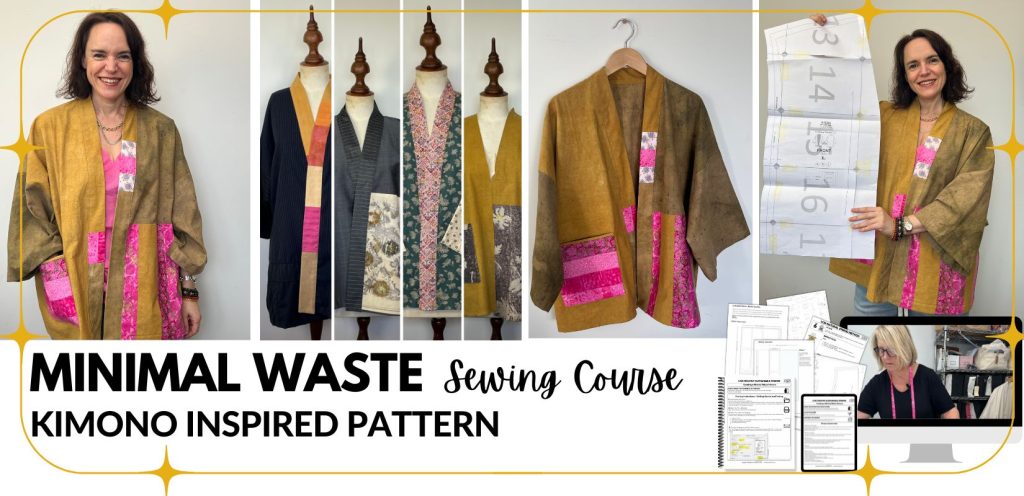
This course is designed for those looking to explore the art of zero waste patterns, helping you make the most out of every piece of fabric.
From mastering pattern pieces to optimizing minimal waste patterns, you’ll leave with not just a stunning kimono inspired top, but the skills to adopt a minimal waste design approach in all your sewing projects.
In this course you will discover how exciting it is to work from a minimal waste pattern. This is different from a zero waste pattern and different from a conventional pattern/ regular pattern.
You will learn how important it is to consider your pattern layout at the time of cutting your garment pieces and to maximize the use of all your raw material.
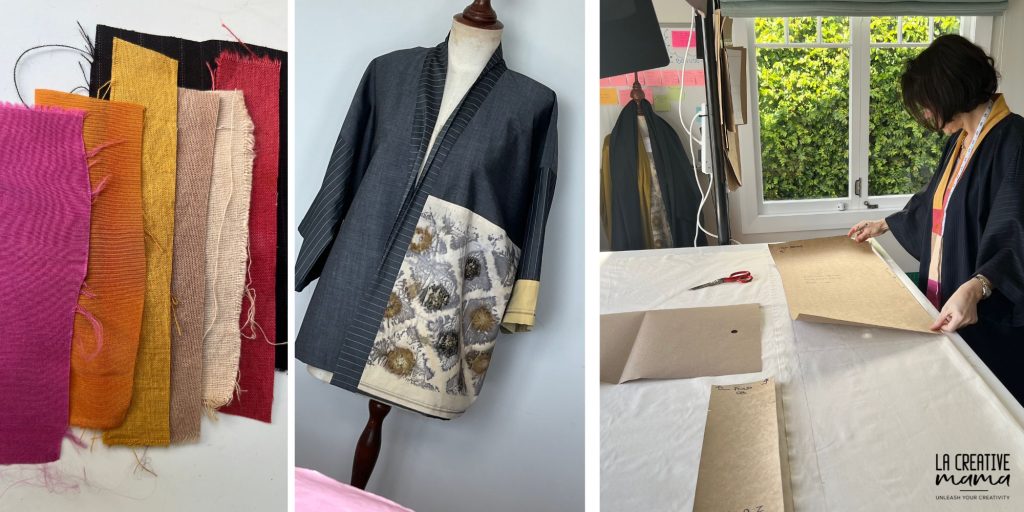
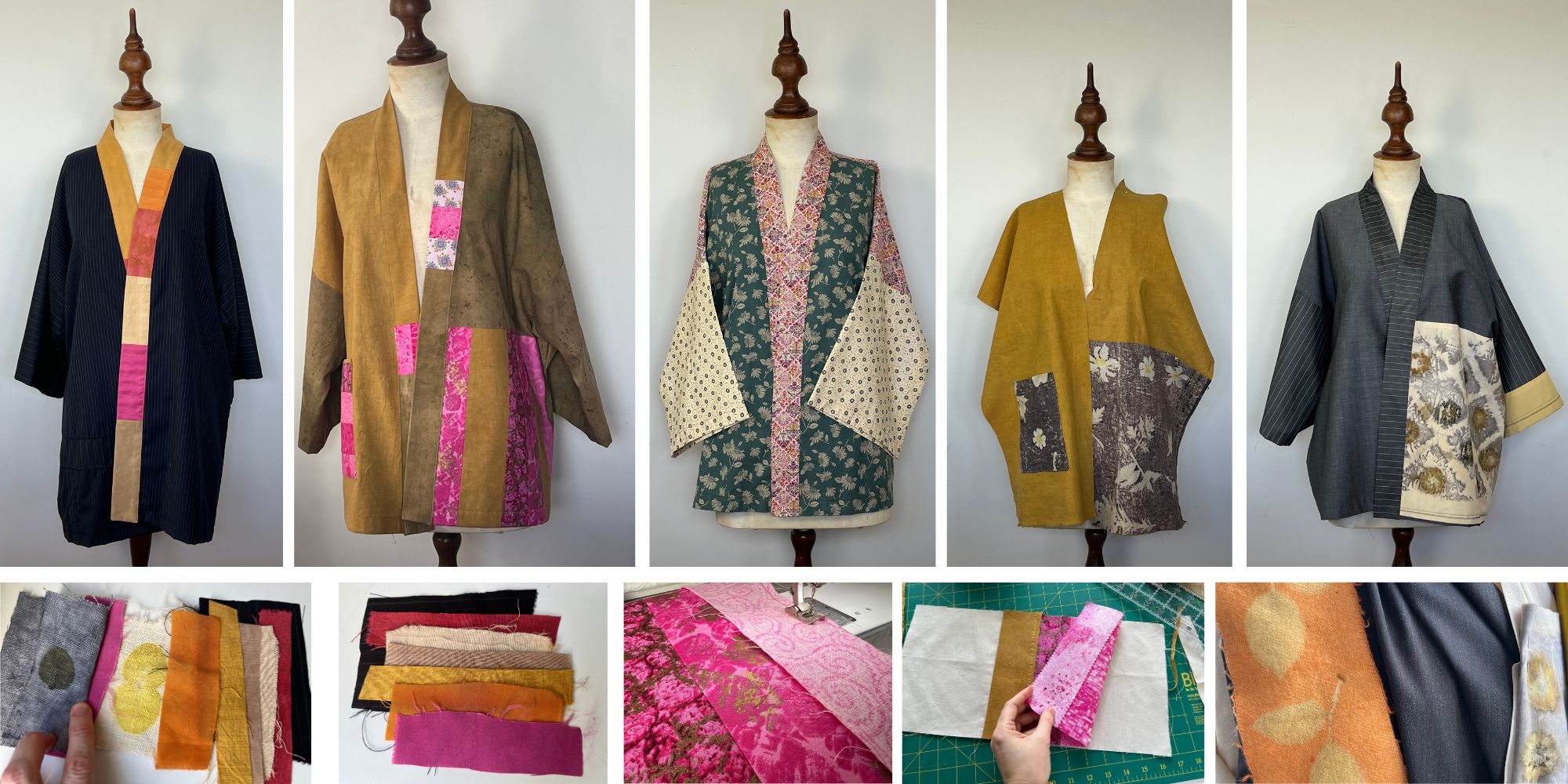
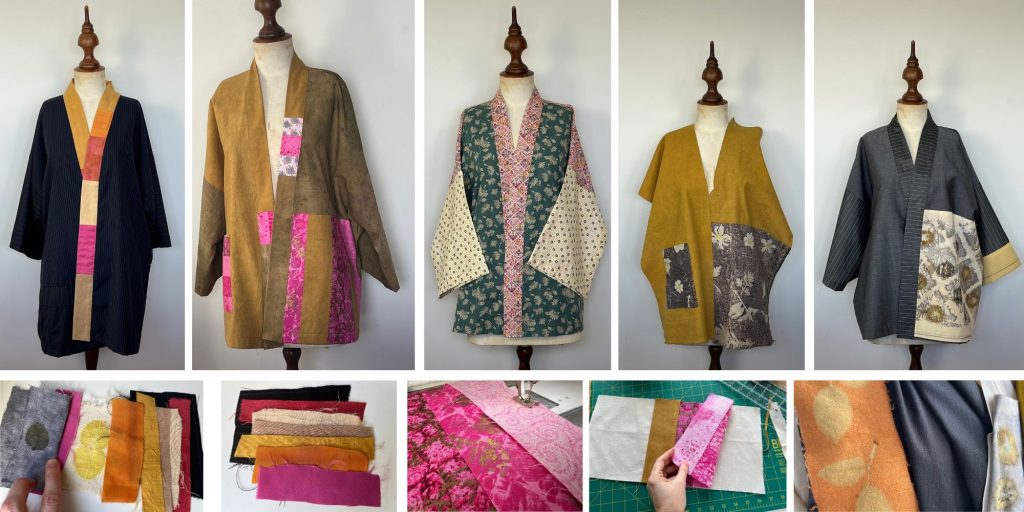
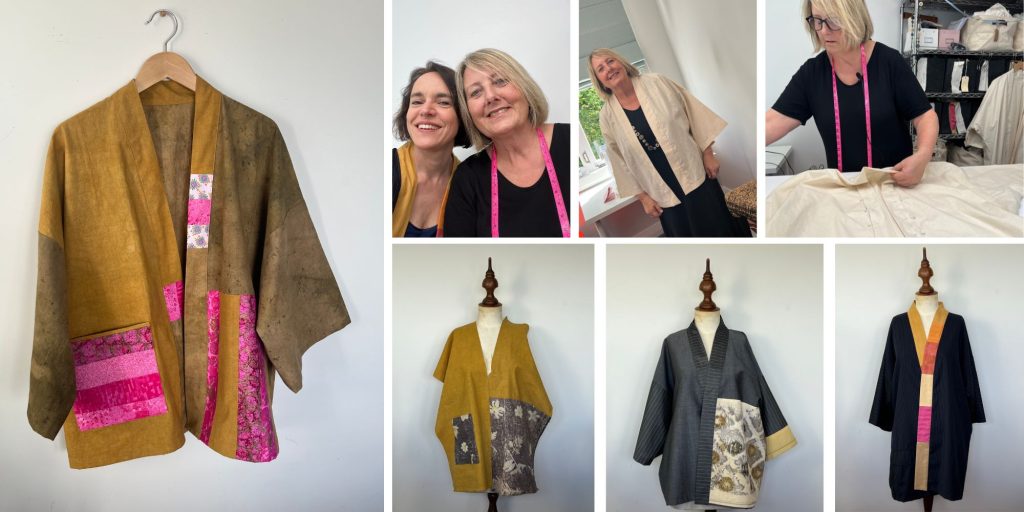
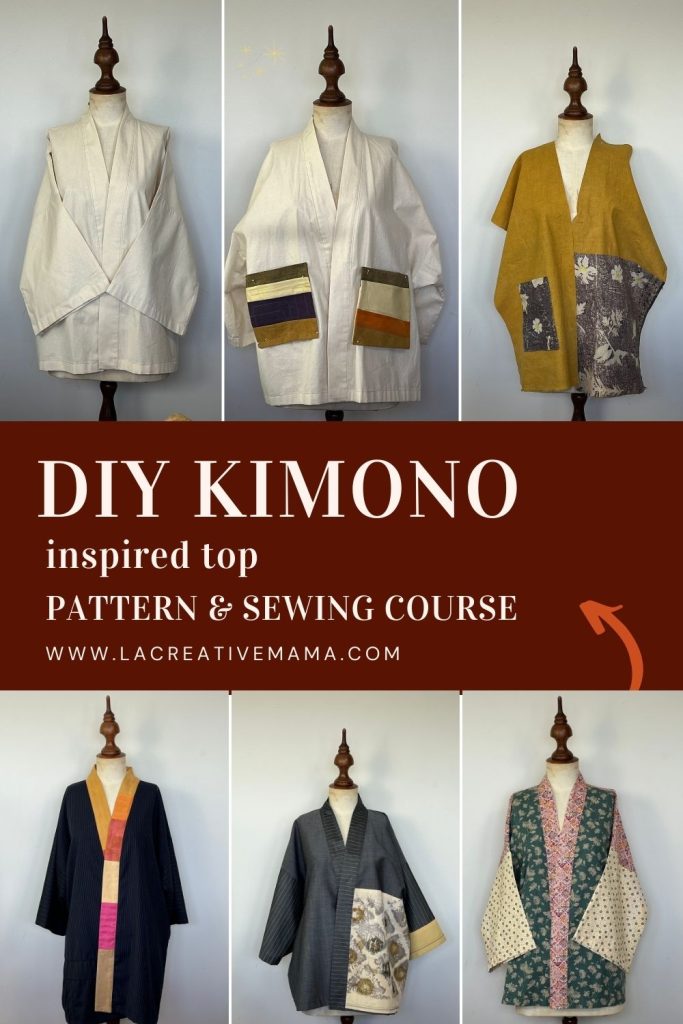
Check out the amazing fit of this kimono inspired pattern in different fabrics.
One of the most exciting areas to explore in Minimal Waste Pattern is the fact that you can create many different variations of just one pattern.
You can easily achieve this by combining different fabrics, manipulating the patterns (making it longer, shorter), adding eco printed panels or even creating pact pockets or a neckband from fabric scraps.
Check out the beautiful versions of some of our creative mamas who have gone through the minimal waste course and made their own version of the kimono inspired top.
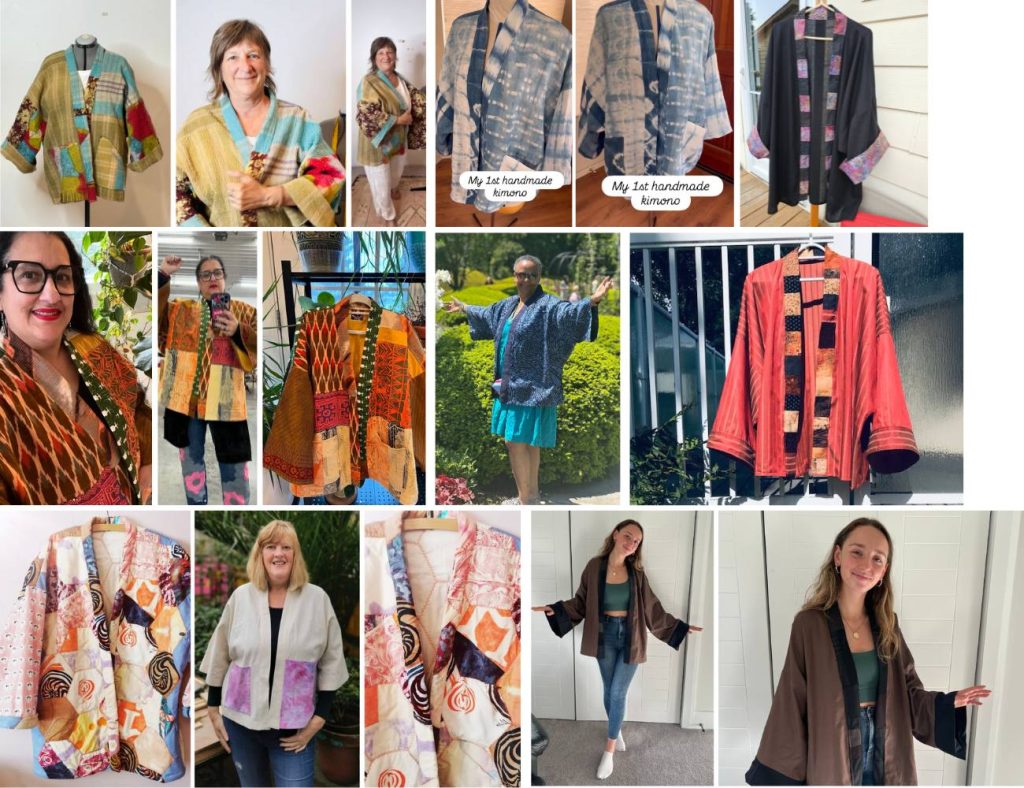
As you can see in the photo above you can create and design your own version of this pattern block!
What Is Zero Waste Design in Sewing?
So, what exactly is zero waste design? Simply put, it’s the practice of using every bit of fabric in the garment-making process, reducing waste to the absolute minimum.
By carefully planning the cutting layout, zero waste sewing minimizes fabric loss and reduces the impact on the environment.
In an industry where overproduction and waste have long been the norm, adopting low waste patterns is a huge step toward a more sustainable future.
In this course, you’ll learn how to use precious fabric wisely, without leaving behind any fabric scraps. This not only helps the environment but also saves you money by maximizing your available fabric.
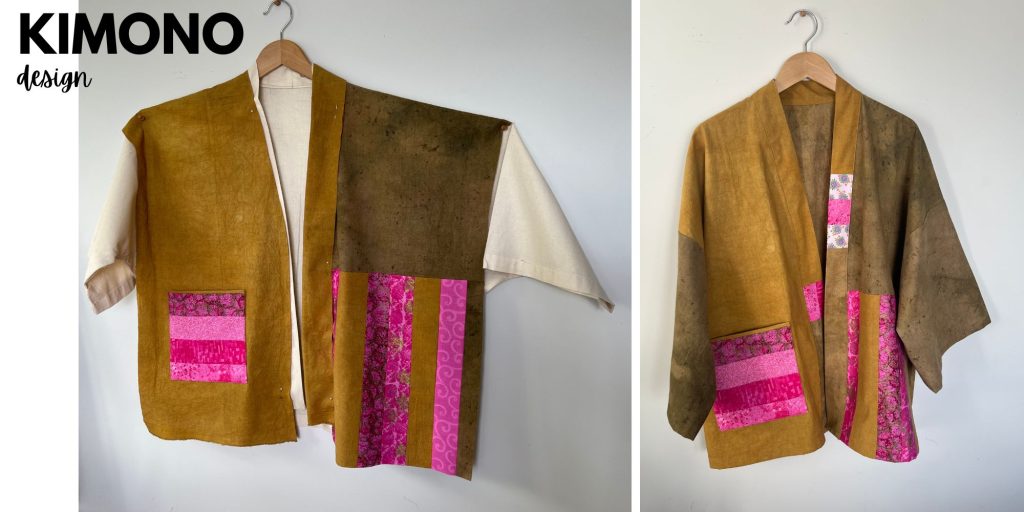
It is important to note that most patterns that fall into this category are based on a rectangle or a square shape.
Why Kimono inspired Minimal Waste Patterns are Perfect for Zero Waste Sewing
The traditional kimono is a prime example of minimal fabric waste design. Its shape, made up of rectangular pattern pieces, allows for an efficient use of fabric, with very little left over.
This makes it an ideal garment to explore the principles of minimal waste sewing patterns.
Moreover, the kimono’s simple and versatile design can be easily adapted for different size ranges. You can use natural fabrics, and the kimono’s construction allows it to fit various body measurements without the need for complex adjustments.
It’s the perfect canvas for those who want to embrace both creativity and sustainability in their sewing practice.
We have adapted the traditional kimono pattern which traditionally is based on a rectangle of fabric and we have created a pattern that not only minimizes fabric waste but also fits beautifully on any body shape.
This was important to us because we wanted all the mamas in this community to feel gorgeous while wearing this kimono top, we didn’t want to sacrifice fit and comfort at the expense of zero waste.
So, we came up with lots of creative ideas to minimize fabric waste by adding pocket options to our kimonos as well as fabric manipulations to it as well.
I love to make quilted pockets, you can even create a quilt as you go log cabin quilt patch pocket! So much fun!!! Check out this quilt as you go with wonky sashing idea!
What Will I Learn in the kimono inspired Minimal Waste Sewing Course?
In this course, we will dive deep into the art of minimal waste sewing. You’ll learn how to map out a cutting layout that ensures no fabric goes to waste.
Every inch of your available fabric will be used, whether for the body of the kimono or smaller details like sleeve gussets, hem, bands, panels.
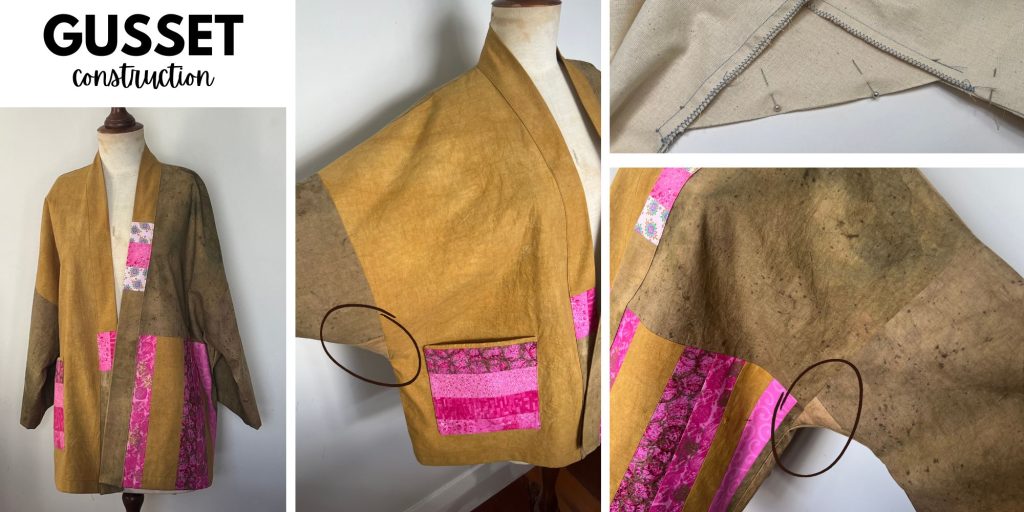
You’ll also master the construction of a minimal waste kimono while working with eco printed or naturally dyed fabric panels that bring your design to life.
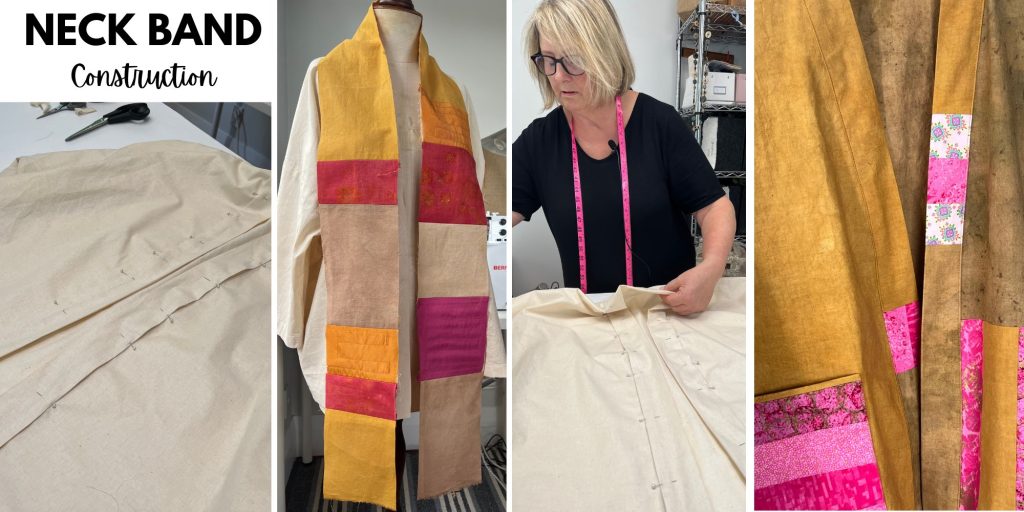
To make sure your garments are as polished as they are eco-friendly, we’ll teach techniques like finishing remaining raw edges with a great kimono neck band for professional, clean results.
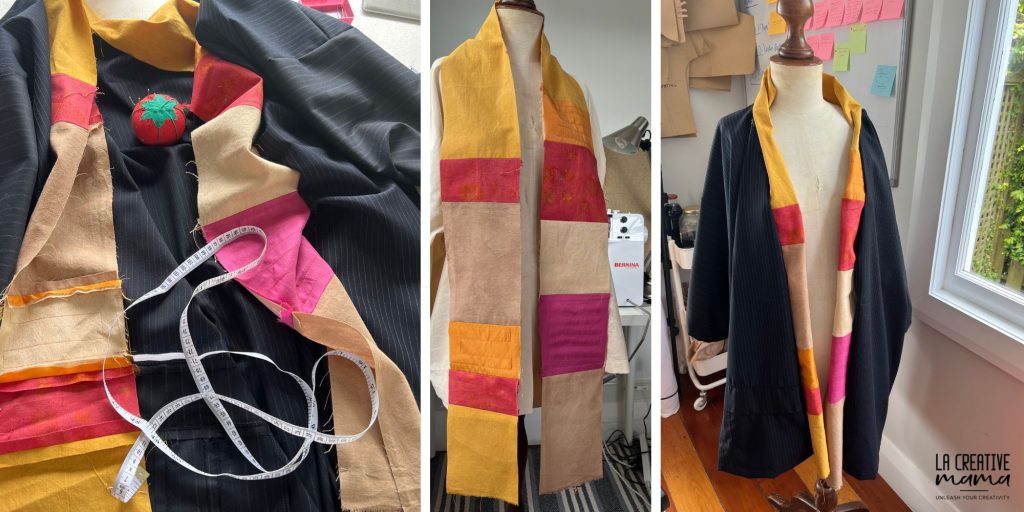
We are not using French seams, however you can consider doing French seams on the shoulder seams.
How Do Minimal Waste Patterns Compare to Conventional Sewing Patterns?
Conventional sewing patterns often leave you with a lot of fabric scraps, which can feel wasteful, especially when you’re using high-quality, precious fabric.
In contrast, zero waste patterns are carefully designed to use as much of the fabric as possible.
The shift from conventional patterns to zero waste fashion design is part of a larger movement within the fashion and sewing communities to rethink the way we use materials.
While this may seem like a new concept to some, it’s quickly gaining popularity among forward-thinking pattern designers and sustainable fashion advocates.
Is Minimal Waste Sewing Right for Me?
There’s no better time than now to dive into zero waste sewing. With sustainability taking center stage in the fashion world, this is the year of zero waste sewing, and our course is designed to help you stay ahead of the curve.
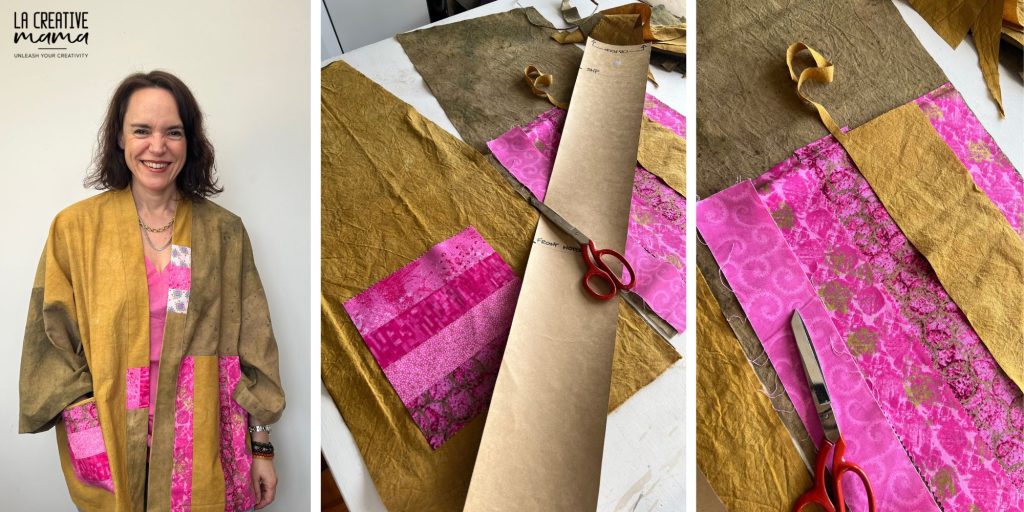
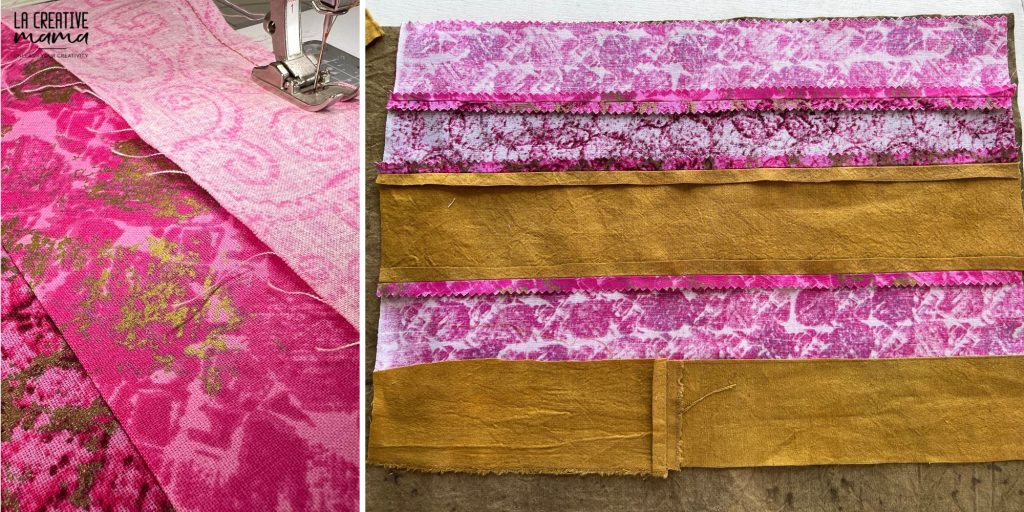
The photo below illustrates how I am creating panels of fabric using strips of fabrics left over from previous sewing projects.
Ready to Sew Your Own Minimal Waste Kimono Top?
The Kimono Minimal Fabric Waste Sewing Course is designed for sewists of every level — whether you’re just starting out or you’ve been sewing for years and want to bring more intention to your practice.
Here’s what’s inside:
- 14+ step-by-step video tutorials covering the full construction process
- Our unique Kimono pattern in sizes S–3XL — inclusive sizing with a beautiful relaxed fit
- Minimal waste cutting layout guidance — so you know exactly how to place your pieces before you cut
- Bonus techniques: sleeve gussets, neckbands, patch pockets, and fabric manipulation — all from your leftover scraps
- Printable PDF pattern tiles you can print at home and tape together
- Expert guidance from Victoria (20+ years in sustainable textiles) and Liz Farr (London College of Fashion)
“I loved how the course taught me to think differently about my fabric — I used to have piles of offcuts, now everything goes into the garment.” — Sasha
🌿 Join the course for just $37. (Instant digital access. Yours to keep forever.)
Not quite ready to buy? Start with our free tutorial on crossover tucks using fabric scraps — patterns and templates included. → Sign up for the free video here
If you are interested in DIY Fashion and creating a capsule wardrobe, you will love these free tutorials on how to eco print on a cotton t-shirt as well as how to make your own denim bag using old jeans.
FAQ- Frequently asked questions
Minimal waste sewing is a garment construction approach that aims to use as much of your fabric as possible — reducing offcuts and scraps to a minimum. It sits between conventional sewing (which accepts significant fabric waste) and true zero waste design (which eliminates all offcuts). Minimal waste sewing focuses on intentional cutting layouts, geometric pattern shapes, and designing scrap usage into the garment from the start.
Zero waste sewing means the pattern is designed so that literally every piece of fabric becomes part of the finished garment — no offcuts at all. Minimal waste sewing aims to reduce waste as much as possible, but allows for small offcuts, making it more achievable for home sewists working with standard fabrics. Both approaches are far more sustainable than conventional pattern cutting.
The kimono is based on rectangles and straight lines, which means pattern pieces can be placed very efficiently on the fabric with very little left over. Traditional Japanese kimono construction was designed around the width of the loom — nearly every piece of cloth was used. This geometric logic makes it ideal for learning minimal waste principles as a beginner.
Yes — the course is designed for sewists of all levels. The pattern comes in sizes S–3XL with full step-by-step video tutorials, so even if you’re relatively new to sewing you’ll be guided through every stage. The construction techniques are straightforward, and the relaxed fit means less precision is needed compared to fitted garments.
Any fabric can work, but woven natural fabrics like cotton, linen, silk, or naturally dyed fabrics are particularly beautiful. Because you’re maximising every piece, this is a wonderful way to use hand-dyed or eco-printed fabrics where every inch is precious. Fabrics without a directional print or pile are easiest to work with when planning your cutting layout.
A conventional sewing pattern is designed primarily for fit and style — waste is a side effect. A minimal waste pattern is designed with the cutting layout in mind from the beginning, using shapes that nest efficiently on the fabric. It often incorporates elements like gussets, bands, and pockets that make use of the offcuts that would otherwise be discarded.
Absolutely — that’s one of the most exciting parts of this course. The kimono design includes options for neckbands, patch pockets, and sleeve gussets that can all be cut from leftover fabric from other projects. Some students have made beautiful tops using a patchwork of naturally dyed fabric strips and eco-printed panels alongside their main fabric.
Zero waste Upcycling
Do you want to RE SIZE and REPAIR those old jeans that are sitting in your wardrobe and don’t fit you any more? …we have a super easy to follow course just for you!
Check out The Ultimate Jeans Alterations Course and discover how to upcycle, re size and embellish your old jeans so that they look brand new and fit you perfectly in less that 1 hour.
Save this post in your favorite Pinterest Board!
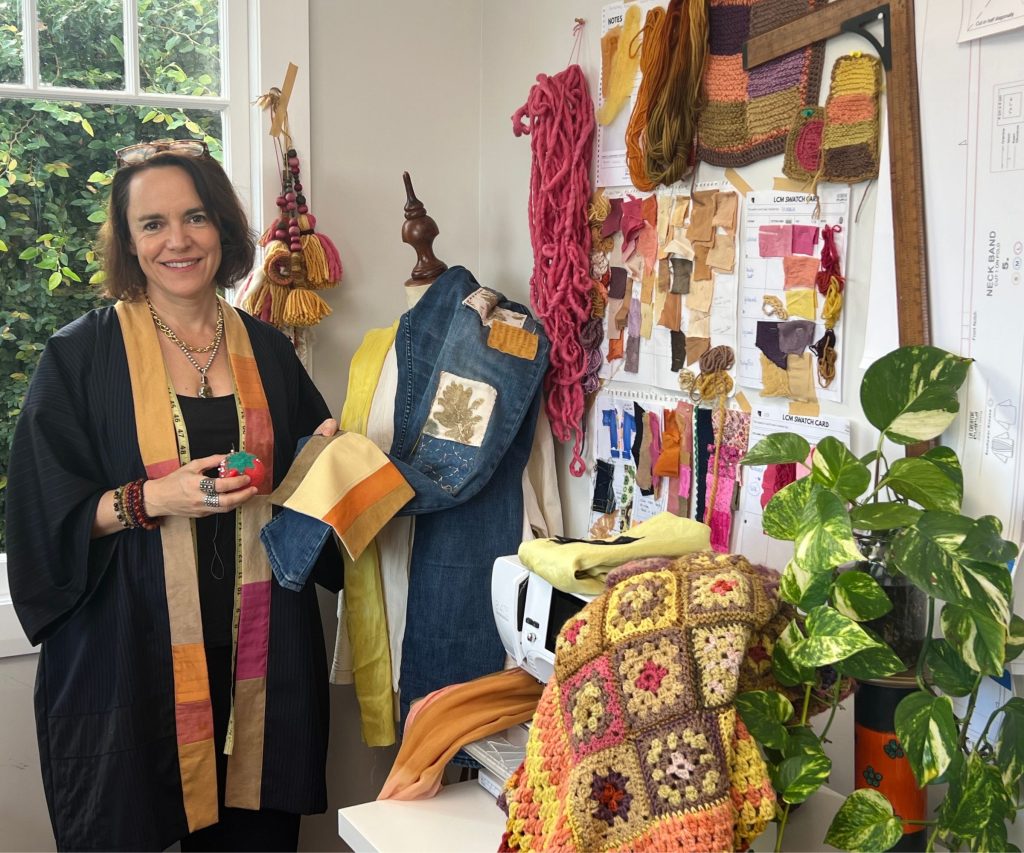
Hi, I am Victoria!
Welcome to my creative world!
I created LA CREATIVE MAMA as a crafty home for all my crafty talented friends who want to get inspired and creative with DIY sewing projects, upcycled fabric crafts, natural dyeing, eco printing and of course my favorite: DIY Sustainable FASHION!
Get in touch!
Join me and the community of Creative Mamas! Come over to Facebook / Instagram/ Pinterest and leave a comment or reply to a blog post here.
Would love to see any pics from projects you did from my blog and I can feature you here!
I’m a senior and large. Does this course allow me to get a good fit? Normal fit all type stuff is too small for me. I need to add width for both the bust to get a good fit.
Hi Sandra, thanks for your question! Yes the top comes in all sizes to accommodate to all body shapes (from small to 3XL) and the fit is a loose fit, we also have included bonus tutorials to make the top shorter or longer to make it super inclusive and easy to wear 🙂 hope this helps!
I am an experienced sewer, can I buy just the pattern?