
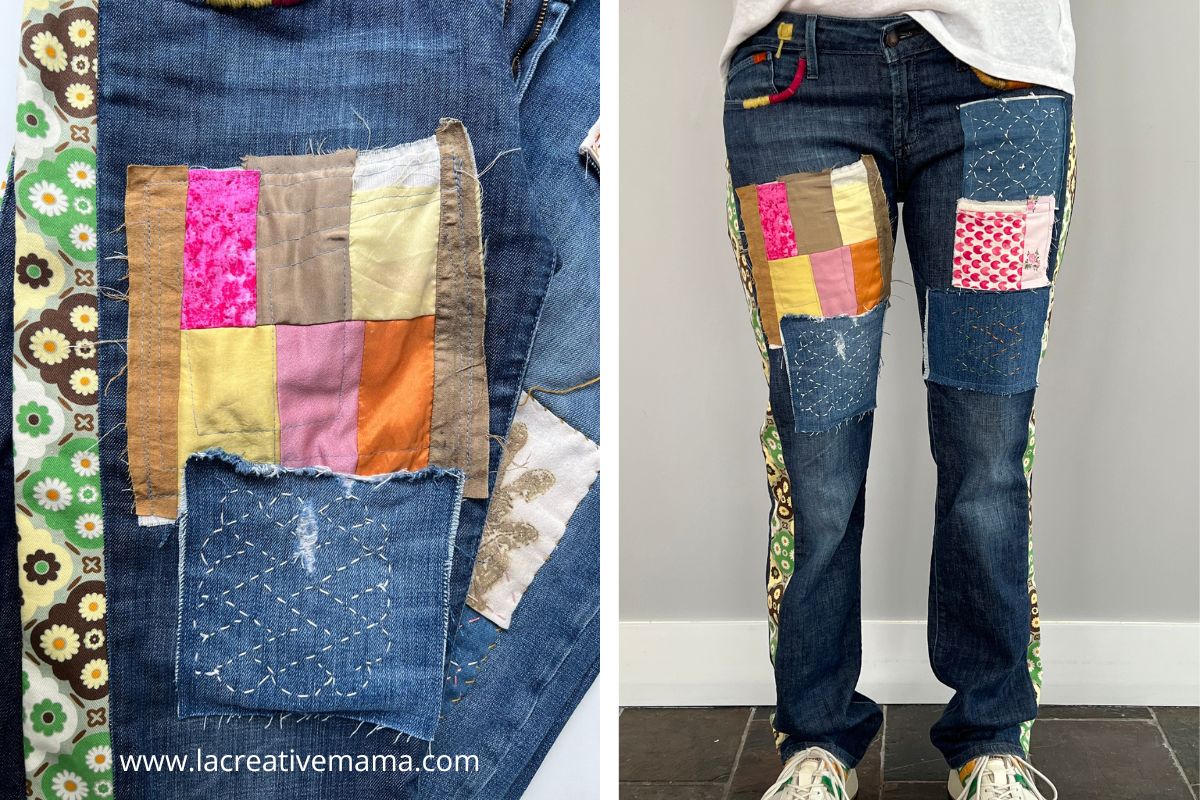
Visible mending is repairing clothes so the repair shows — with contrasting thread, decorative stitches or bold patches — instead of hiding it. It’s beginner-friendly, needs only a needle, thread and fabric scraps, and below I share 5 visible mending techniques you can try this week.
Hi Creative Mamas! Last month I pulled my favorite pair of jeans out of the wash and found the knee had finally worn through. Ten years ago I would have quietly retired them. Instead, I stitched a patch of eco printed fabric right over the hole, in a color you can see from across the room.
That’s visible mending. And right now, it’s having a real moment.
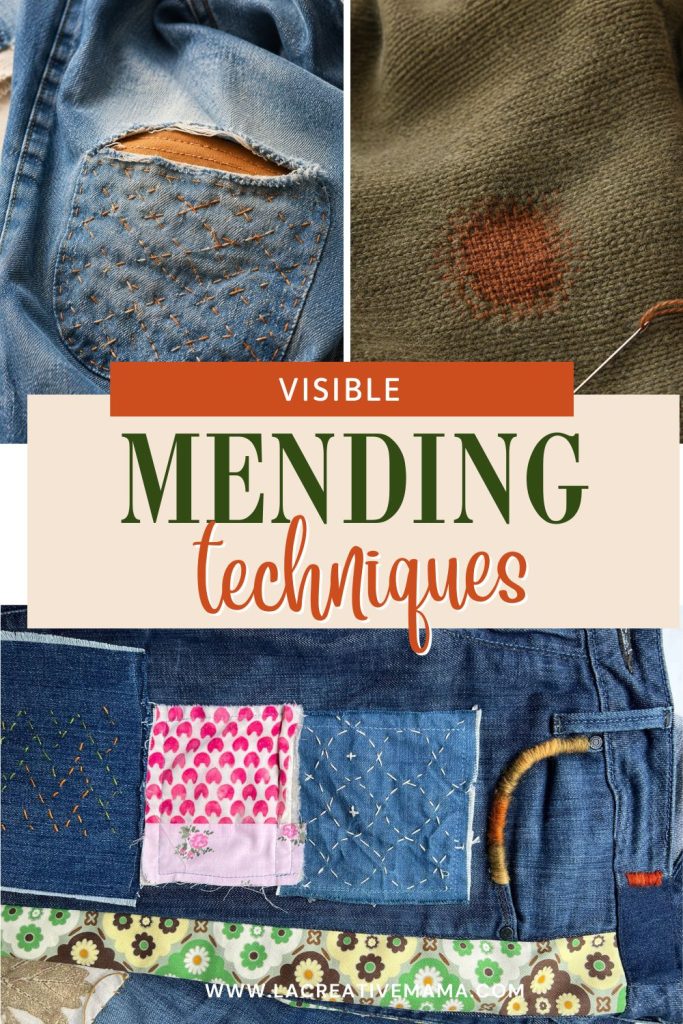
What is visible mending?
Visible mending is repairing clothes in a way that’s meant to be seen, contrasting thread, decorative stitches, patches that celebrate the repair instead of hiding it. Think of it as the opposite of invisible repair: the mend becomes part of the garment’s story.
The idea originates from the Japanese tradition of sashiko stitching and the philosophy of wabi-sabi, finding beauty in imperfection. A mended knee isn’t a flaw. It’s proof the garment was loved enough to keep, and I love this idea so much!
Why is everyone talking about visible mending right now?
Mending has quietly moved from “thrifty habit” to fashion statement. Etsy’s Spring/Summer 2026 Seller Trend Report named visible mending part of its “Soft Stitch Era”, pieces with sun-worn fabrics, visible mending, and little details that feel intentional, and mended garments are showing up in design awards and on runways.
Younger shoppers are pushing back on fast-fashion sameness, they want clothes with character and a story.
For those of us who’ve been mending all along, this is lovely news: your repaired jeans are officially on-trend.
But the deeper reason matters more. Research from the climate charity WRAP found that extending a garment’s life by just nine months of active use reduces its carbon, water and waste footprint by around 20–30%.
Every mend is a small act of resistance against throwaway fashion, and again, I love this idea!
5 visible mending techniques for beginners
Here’s an overview of the five techniques I reach for most. Each one is beginner-friendly, if you can thread a needle, you can start this weekend.
1. Sashiko-inspired stitching
Rows of simple running stitches in contrasting thread, worked over a worn area or a patch. The repetition is the beauty (and honestly, it’s wonderfully meditative).
Traditional sashiko uses white cotton thread on indigo fabric, but your color combinations are endless.
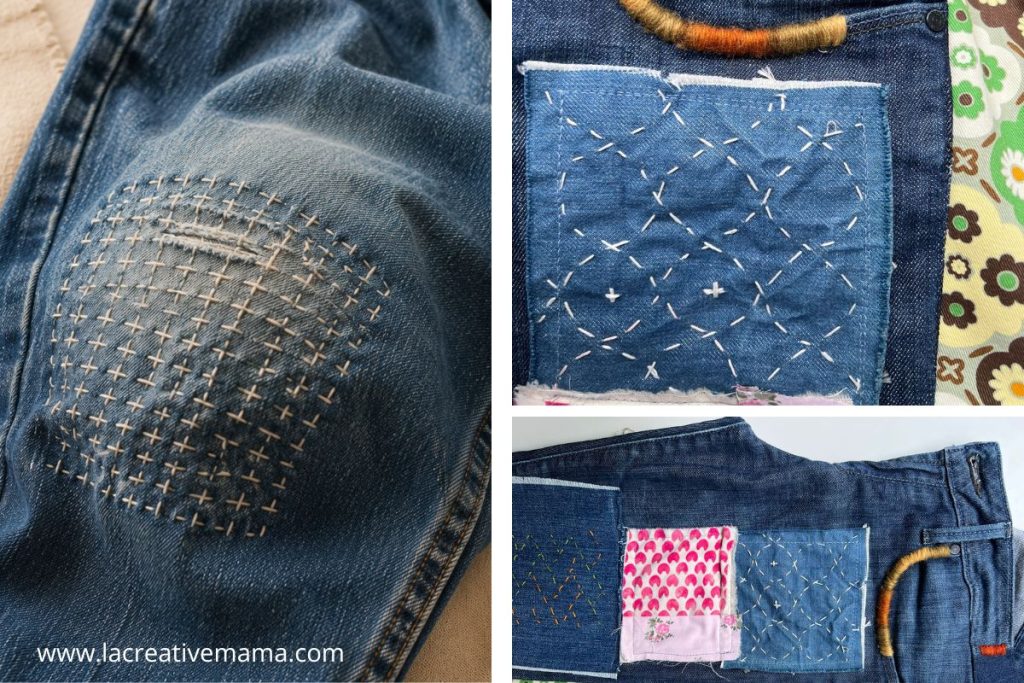
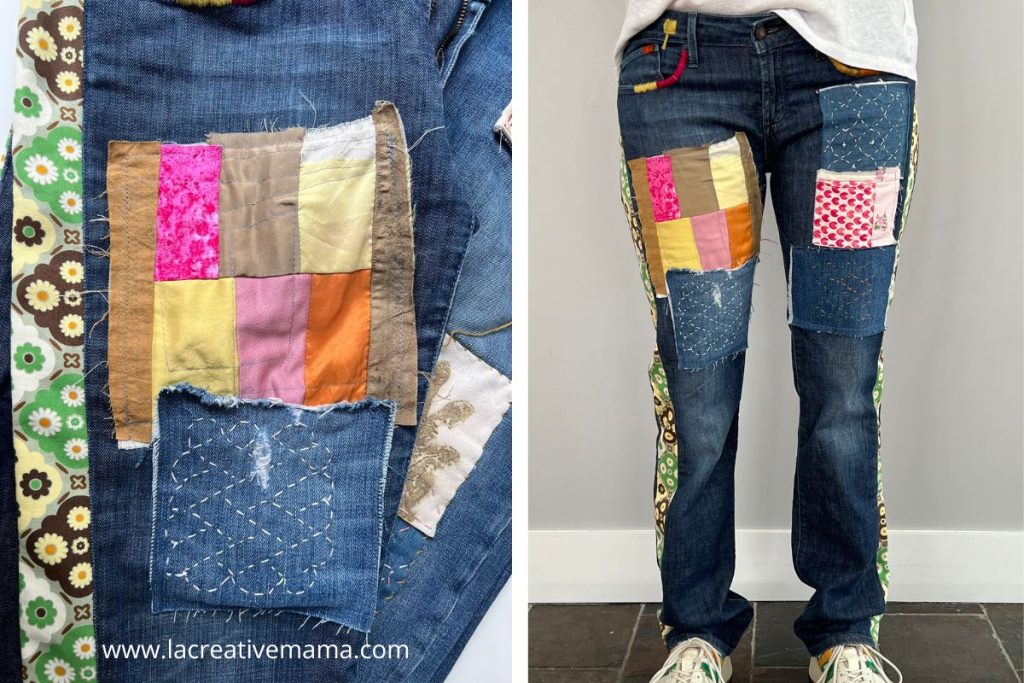
The photos above show my jeans mended using sashiko inspired techniques to mend directly on the jeans or to create patches to use in my mending practice.
2. Patching, on top or underneath
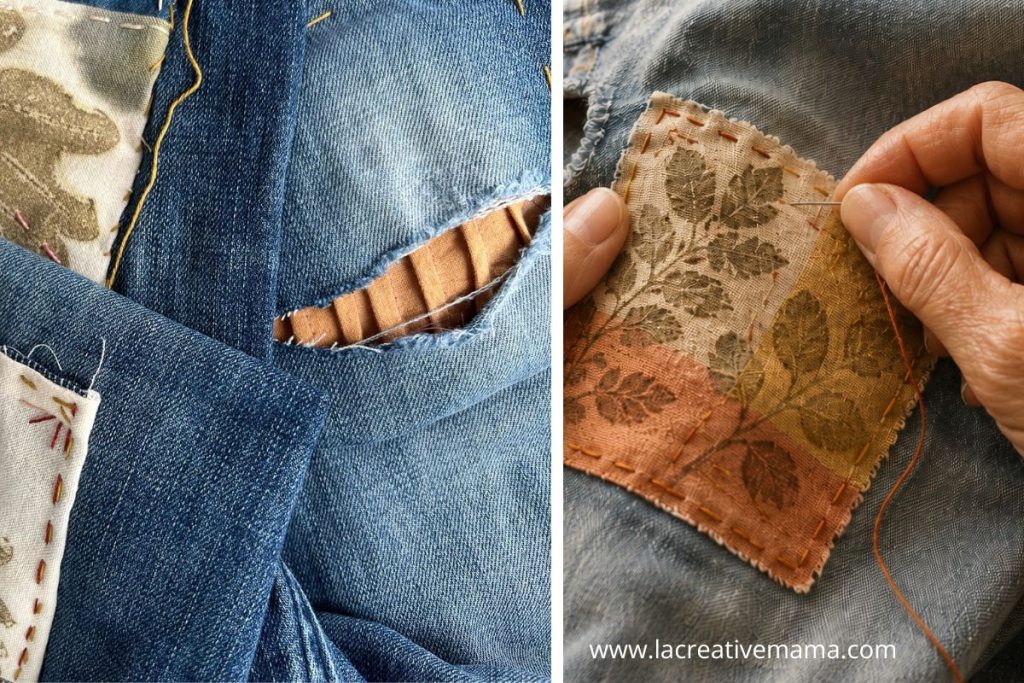
A patch sewn over the hole makes a bold statement; a patch placed underneath with visible stitching across the opening looks beautifully deconstructed.
This is my favorite technique for denim, I walk you through it step by step in my guide to visible mending on jeans.
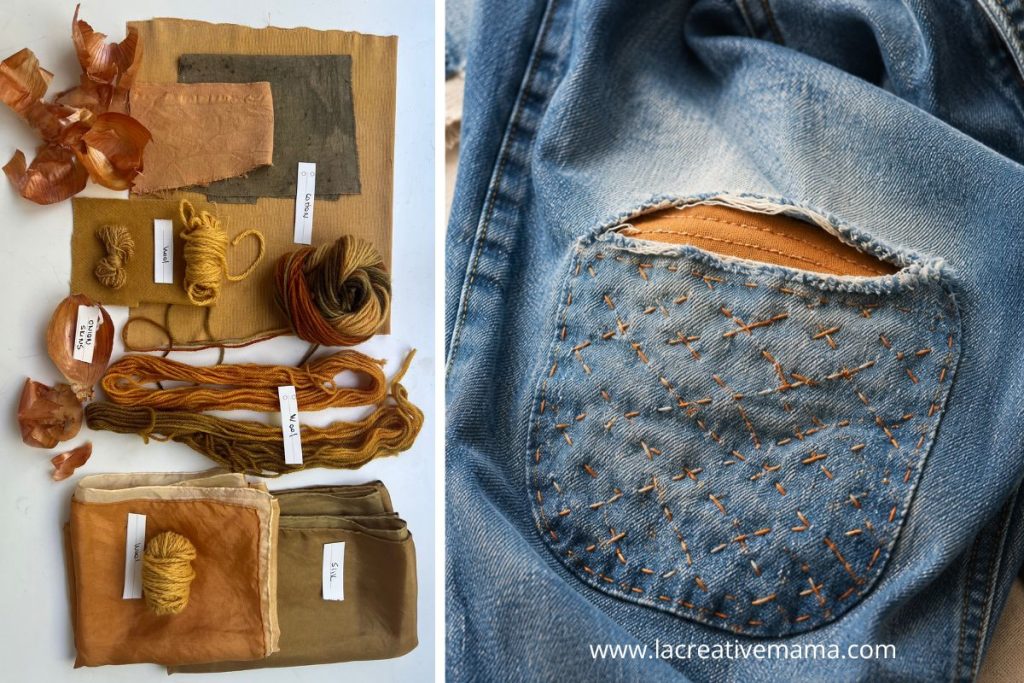
The photo above shows beautifully dyed fabrics using onion skins. I used the cotton to mend the jeans knee area by creating an internal patch.
3. Darning
Weaving thread back and forth across a hole to create new fabric, perfect for knits, socks and sweater elbows.
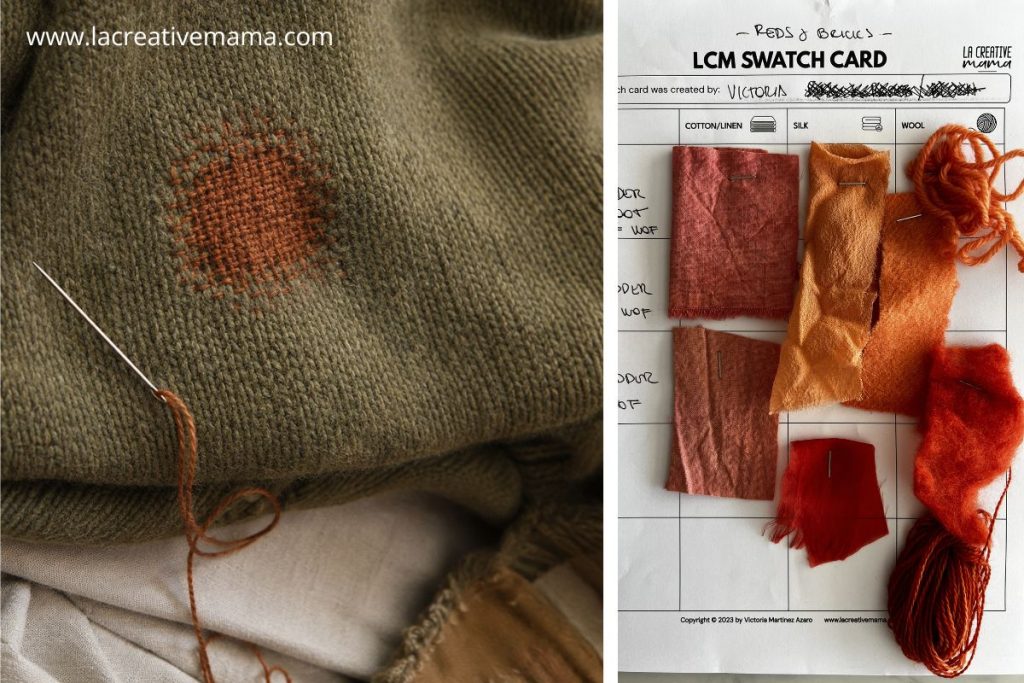
Done in a contrasting color, a darned patch looks like a little woven jewel. I love using my naturally dyed yarn for these projects.
In the photo below I am using yarn which was dyed using Logwood dye.
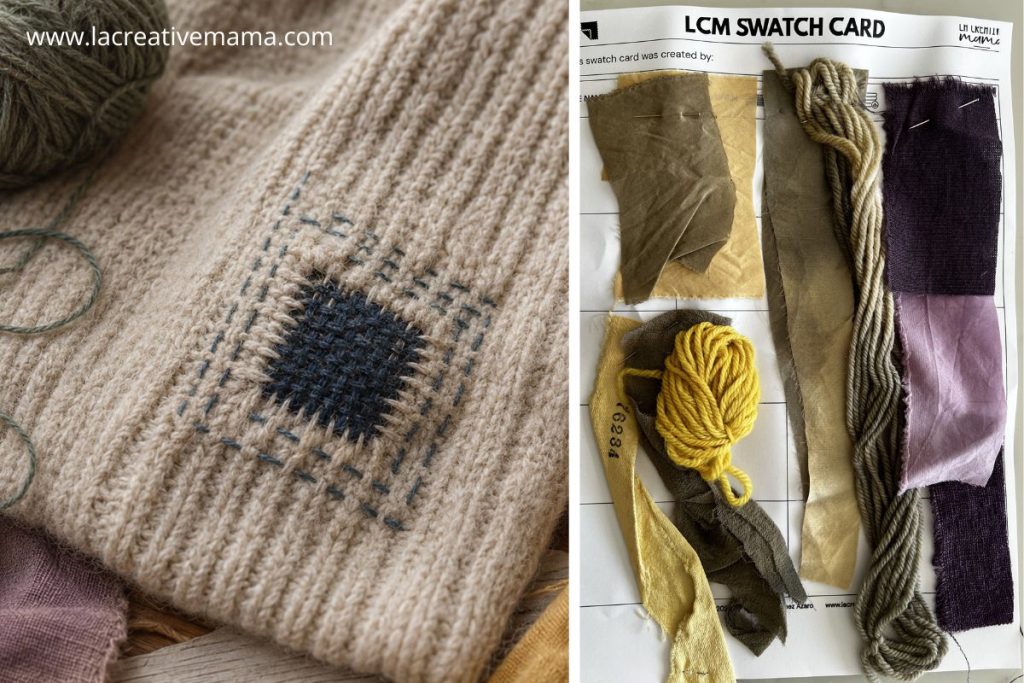
In the photo below I used madder root dyed yarn to create the darned detail.
4. Embroidery over stains and small holes
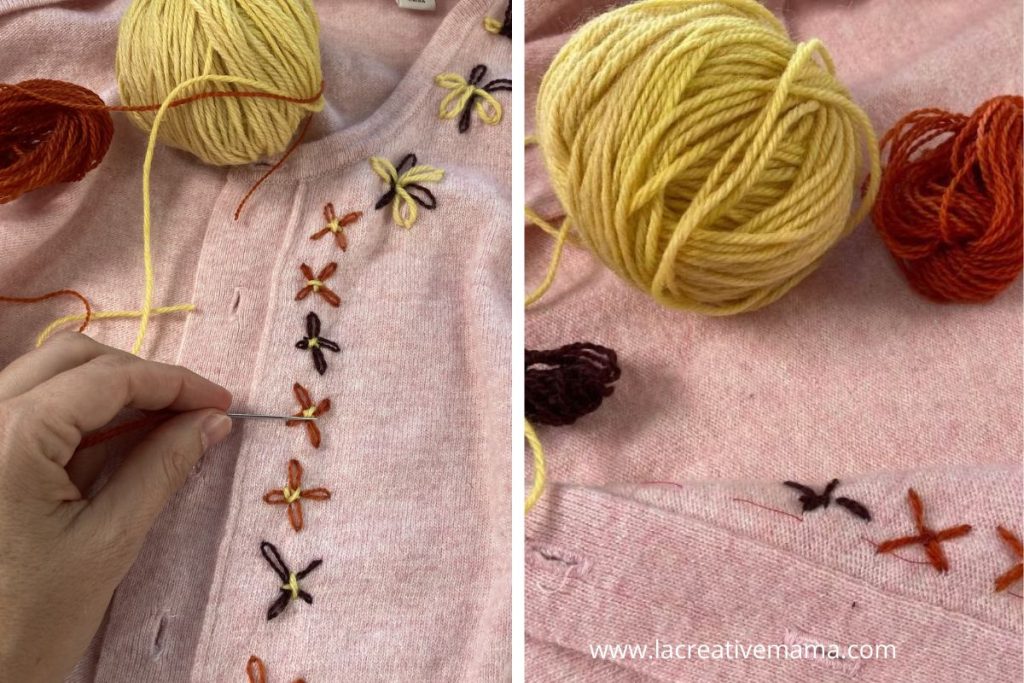
A stubborn stain becomes a flower. A moth hole becomes the center of a leaf. Embroidery is the most playful mending technique, there’s no wrong answer, and small motifs are very forgiving for beginners.
The photo below shows an old cardigan of mine which I embroidered using a chain stitch to create flowers all around the jersey.
5. Appliqué with upcycled fabric
Cut shapes from fabric you already have, old shirts, offcuts, thrifted finds, and stitch them over the worn area. This is where mending meets upcycling old clothes, and where your scrap basket becomes a treasure chest.
If you are inspired to create your own naturally dyed fabrics and yarns check the natural dyeing section here.
What do you need to start visible mending?
Truly not much: a needle, thread that contrasts with your garment, scissors, and something to mend. That’s it. No machine required.
A few things that make it easier: an embroidery hoop to keep the fabric taut, thicker cotton thread (like sashiko or perle cotton) for stitches that show up beautifully, and fabric scraps for patches.
The part I love most: mend with your own naturally dyed fabric
Here’s where I’ll let you in on my favorite twist. The most beautiful patches I’ve ever sewn weren’t store-bought, they were scraps of fabric I’d dyed and eco printed myself.
A goldenrod-yellow patch on faded black jeans. An eco printed leaf motif on a plain sweater elbow. When you dye your own mending fabric, every repair becomes completely, unmistakably yours, and your worn-out clothes become a canvas for slow, handmade color.
This is the heart of a truly sustainable, creative wardrobe: dye it, print it, sew it, mend it, wear it for years.
If you’d like to bring sewing into that picture, my minimal waste sewing approach is designed so that nothing, not even the scraps, goes to waste. (Those scraps? Future patches.)
And if your jeans need more than a patch, you can even re-size your jeans to fit the body you have now.
A note for teachers: visible mending is a wonderful classroom project, inexpensive, hands-on, and a gentle door into textile skills and sustainability conversations. Just a needle, thread and a donated pair of jeans per student.
Ready to make your wardrobe truly yours?
Start small this weekend: one garment, one hole, one contrasting thread. That first mend will change how you see every “ruined” piece in your closet.
And when you’re ready to go beyond mending, to actually make the pieces of your handmade wardrobe, my Minimal Waste Sewing Course walks you through sewing a beautiful kimono-inspired top with zero fabric waste, step by step, in sizes S–3XL.
No more guesswork, just a wardrobe that’s genuinely yours.

Visible mending FAQs
Visible mending is repairing clothes in a deliberately noticeable way, using contrasting thread, decorative stitches or patches so the repair becomes a design feature rather than something to hide.
No, if you can thread a needle and sew a running stitch, you can start visible mending. Patching and simple sashiko-style stitching are the easiest first techniques.
Just a needle, contrasting thread and scissors. An embroidery hoop, thicker cotton thread (sashiko or perle cotton) and fabric scraps for patches are helpful but optional.
Sashiko is a traditional Japanese technique of decorative running stitches, historically used to reinforce and repair fabric. Modern menders use sashiko-inspired stitching to strengthen worn areas beautifully.
Yes, denim is the perfect fabric for visible mending because it’s sturdy and holds stitches well. Patches and sashiko-style stitching work especially well on worn knees and thighs.
Visible mending sits at the meeting point of sustainability and self-expression. Trend reports (including Etsy’s 2026 report) show shoppers moving away from fast fashion toward pieces with character, story and intentional imperfection.
Yes. Research by the climate charity WRAP found that extending a garment’s life by just nine months of active use reduces its carbon, water and waste footprint by around 20–30%.
Absolutely, naturally dyed and eco printed fabric scraps make one-of-a-kind patches. It’s a beautiful way to combine natural dyeing with a sustainable wardrobe practice.
Hi, I am Victoria!
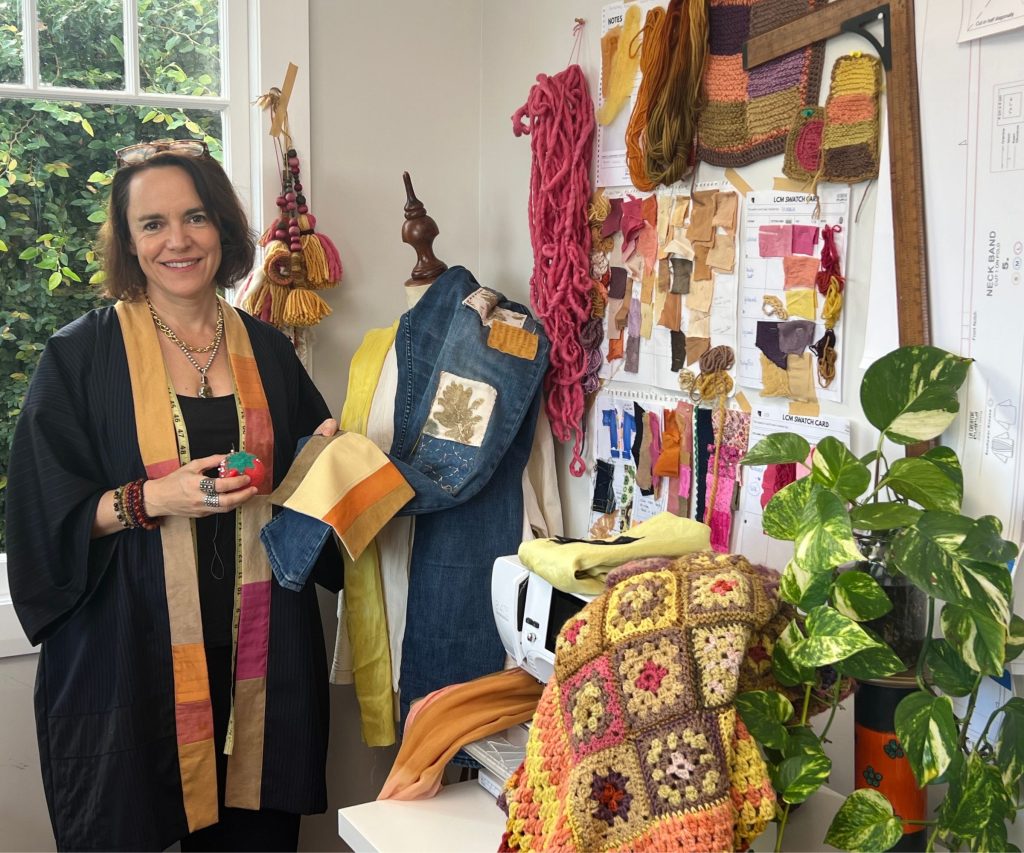
Welcome to my creative world!
I created LA CREATIVE MAMA as a crafty home for all my crafty talented friends who want to get inspired and creative with DIY sewing projects, upcycled fabric crafts, natural dyeing, eco printing and of course my favorite: DIY Sustainable FASHION!
Get in touch!
Join me and the community of Creative Mamas! Come over to Facebook / Instagram/ Pinterest and leave a comment or reply to a blog post here.
Would love to see any pics from projects you did from my blog and I can feature you here!