
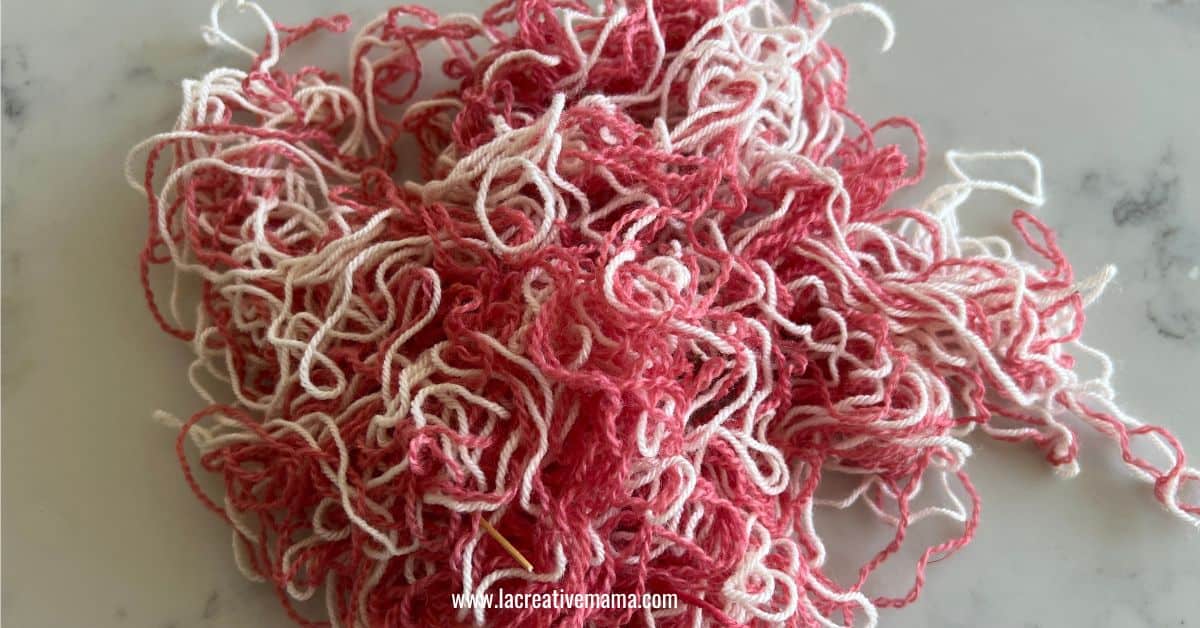
Hi Creative Mamas! Today I want to share with you a list of 10 mistakes to avoid in natural dyeing so that you can get best results the first time!
These are very common mistakes that every natural dyer can make from time to time, so they are well worth noting to avoid them all together 🙂 I have personally made all of these mistakes!

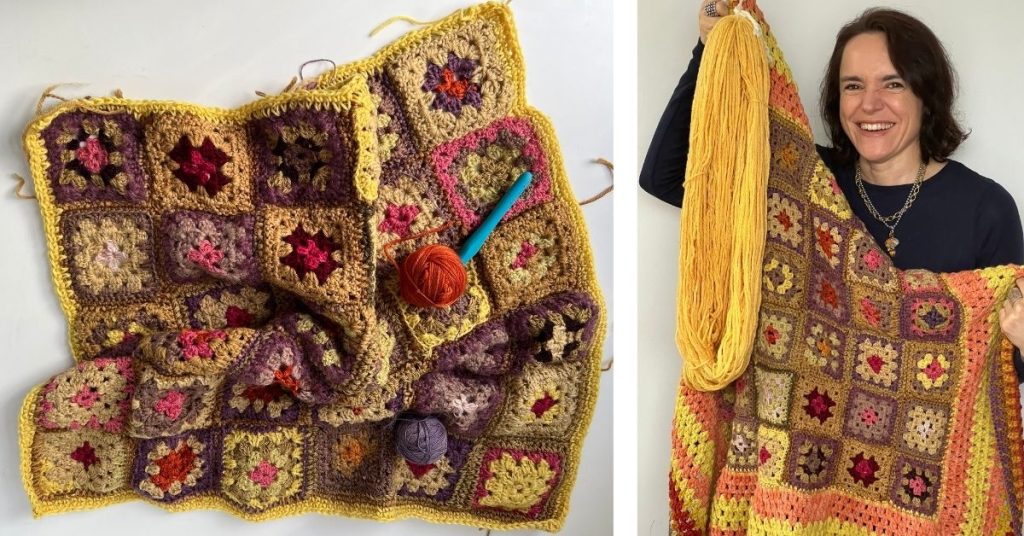
This post is applicable to all natural fabric dyeing techniques and eco dyeing in general. Avoiding these mistakes means that you will be able to create these kind of bright and long lasting color on fabrics and yarns as shown in the photos below.
These are different types of fabrics and yarns which have been dyed using a variety of natural dyes. I like using my fabrics to create one of a kind clothes as well as visible mending and upcycling my existing wardrobe.

The photo below illustrates the kind of color you can get from dyes such as onion skins, avocado dyes, madder root and cochineal.

10 mistakes to avoid in natural dyeing
#1 Not using natural fibers
Before starting the natural dyeing process, it’s super important to use 100% natural fibers (natural fabrics and natural yarns) when you are using natural dyes.
Synthetic fibers such as polyester and nylon are not going to receive the natural color so you must avoid them.
The best way to make sure that you are dealing with 100% natural materials is to perform a quick burn test.
Best natural fibers:
The photo below illustrates silks, wools and cottons which have all been naturally dyed.

The photo bellow illustrates what happens when you immerse 2 different yarns (which look exactly the same to the naked eye) into a cochineal dye bath, but one is acrylic wool and the other one is 100% merino wool.

#2 Weighing the fiber when its wet
You must always know the weight of fiber before starting the natural dyeing process.
It’s important to remember to do this while the yarn or fabric is still dry. Otherwise the wet fiber will be heavier and the whole mordanting and dye percentages will be wrong!
#3 Not mordanting the fiber
You must always mordant your fibers. Please remember that you need different types of mordanting processes depending on whether you are working with cellulose fibers such as cotton and linen or protein fibers such as silk and wool.
For more detailed information about mordanting your fibers read here.
However not all dyes are made equal and some natural dyes (substantive dye) do not require a mordant in order to receive the dye.
But most natural dyes do require the use of mordants so it’s important not to skip this step!
#4 Using the wrong mordant
Another very common mistake is to use the wrong mordant.
So, if you are working with cotton you must use Alum Acetate and if you are working with wool you must use Alum Sulphate.
The photo below illustrates what happened when I mordanted cotton using the wrong mordant.
I dyed it in a cochineal dye bath and instead of getting the bright deep pink I was expecting I got a soft washy pink.
The small pink yarn is cotton as well and was dyed in the same dye bath as the light pink yarn but was mordanted correctly!
It represents the true color of cotton dyed with cochineal using the same formula.

This is because the dye was not able to penetrate the fiber properly 🙂 So remember not to do what I did!
#5 Felting your wool yarn
When dyeing wool yarn or roving you must be super careful not to expose it to high temperatures.
The idea is not to shock the fiber and that means avoiding sudden changes in temperature (hot water, cold water) as well as avoiding friction.
So the best way to avoid this is to start the dyeing process using lukewarm water and to never allow the dye bath to reach boiling point.
Also it’s a good idea not to handle the fiber too much while inside the dye bath.
The photos below illustrate the kind of color and texture that you can obtain from naturally dyeing your wool yarns. The texture should remain soft and supple so that you can knit, weave and crochet with it.
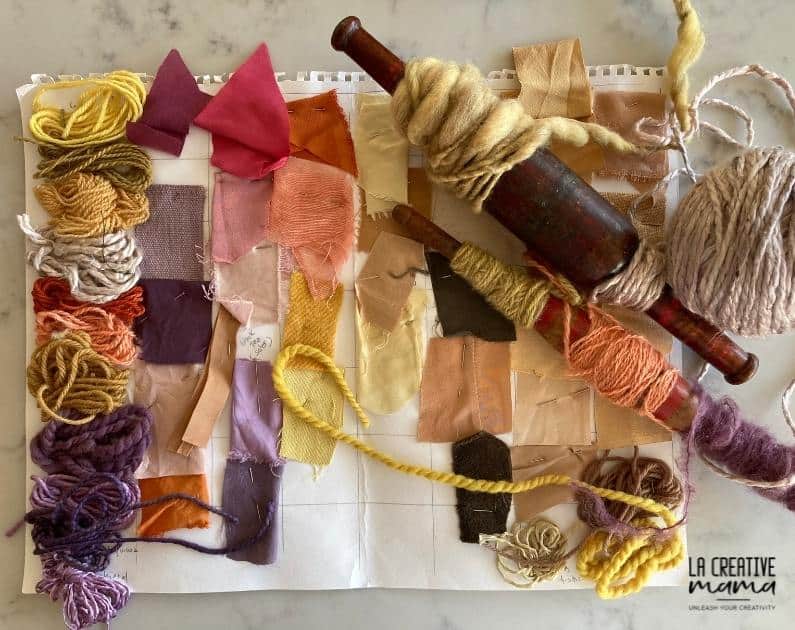
This photo below shows the kind of color I got from dyeing cotton yarn, silk yarn amd wool yarn using dyer’s chamomiles, cochineal, logwood, madder root and eucalyptus.

#6 Streaks in fabric
Another very common mistake is to not stir your fabrics enough while they are inside the dye solution.
The fabric needs to have enough space inside the dye bath to move freely and to allow you to stir constantly. This is because we want the fabric to dye evenly and without any marks or streaks.
The photo below illustrates my point! The orange piece of fabric was too big and didn’t have enough room inside the pot, hence the darker red streaks!

#7 Spots in fabric
When using natural dye extract its very important to dilute it correctly to avoid spots in your fabrics.
The photo above illustrates this point very well. This silk was dyed in logwood and we had some undissolved lumps of dye extract inside the bath. By the time we realized it was too late, the spots were there forever 🙂
#8 Not enough time inside dye bath
Another common mistake is not allowing your fabric or yarn to stay inside the dye solution for long enough time.
My rule of thumb is to always allow for 1 hour of dyeing time but this will depend on the color intensity that you are after as well as the type of natural dye you are using!

#9 Throwing excess dye
Throwing left over dye solution is a big NO NO in my book. If you still have a decent amount of color inside the dye pot after you have finished with your fibers there are a couple of things you can do:
- Pour the left over dye solution inside a glass jar. You can keep this dye to use for solar dyeing as well as for eco printing.
- You can re use the dye as a second, third or fourth exhaust. This means you can re use it with new mordanted fabric or yarn as long as you still have color in the dye pot.
Some natural dyes are more generous than others. Cochineal and logwood tend to give me many exhausts every time I use them.
The photo below shows you the different tones of pink you can achieve y using different exhausts.

Each time you dye a new fabric or yarn, it will go from bright dark color to less intense color and you will be able to get different shades of one dye.
#10 Using the wrong natural dye
Choosing your natural dye carefully is so important. I have written extensively about natural dyes and the best way to identify the best dyes for natural dyeing.
I have a list of my favorite 40 best natural dyes!
Download your natural dyes list!
Avoiding these mistakes do guarantee a nice result from your natural dyes! Once you have a variety of samples and colors you can start creating your own DIY Fashion!

If you are using a fugitive dye such as carrots or red cabbage it’s just not going to work.
You can make amazing bright yellows using yellow dyes such as dyer’s chamomiles , onion skins and fusticwood.
You can also make beautiful red colors using madder root. Check out the natural color palette that is available to you by choosing the right natural dyes.
Why does my natural dye fade or wash out?
This is the question I get in my inbox more than any other. You spend a whole afternoon dyeing, the color looks beautiful, and then it fades in the sun or rinses away in the very first wash. It is so disheartening, and I promise it is almost always fixable once you know what went wrong.
Fading and washing out nearly always come down to one of these reasons, and most of them are the same mistakes we just went through:
- The fiber was not 100% natural. If your fabric has polyester or nylon blended in, the natural color has nothing to hold onto, so it washes straight out. When in doubt, do the burn test (mistake #1).
- The fiber was not mordanted, or the wrong mordant was used. The mordant is what bonds the color to the fiber. Cellulose fibers like cotton and linen need a different mordant to protein fibers like wool and silk, so the wrong one leaves the color sitting on the surface where it can rinse away (mistakes #3 and #4).
- The dye was a fugitive dye. Some plants give gorgeous color that simply will not last, no matter how carefully you mordant. Berries, beetroot, red cabbage, and turmeric are the usual culprits. For color that stays, reach for reliable dyes like madder root, cochineal, onion skins, and dyer’s chamomile (mistake #10).
- The aftercare was too harsh. Even a well dyed piece will fade faster if you wash it in hot water with a strong detergent, or leave it drying in direct sun for hours. Wash your naturally dyed textiles gently in cool water with a pH neutral soap, and dry them out of direct sunlight.
Get the fiber, the mordant, and the dye right, and your colors will stay bright and last for years. The exact mordant ratios and the full step by step process live inside my mordanting guide and my natural dyeing courses, but simply understanding these four things is what makes the difference between color that lasts and color that disappears.
Natural dyeing troubleshooting FAQ
Why did my natural dye fade after one wash?
Almost always because the fiber was not mordanted, was mordanted with the wrong mordant for that fiber type, or was not 100% natural. The mordant is what fixes the color to the fiber, so without the right one the dye simply rinses away.
Why didn’t my mordant work?
The most common reason is using a mordant meant for a different fiber. Cellulose fibers such as cotton and linen and protein fibers such as wool and silk need different mordanting processes, so a mordant that works beautifully on wool can leave cotton pale and washy. Weighing your fiber while it was still wet can also throw the whole process off.
Does natural dye wash out?
Properly mordanted natural dye on a natural fiber does not wash out. It will soften gently over years of use, which is part of its charm, but it should not disappear in the wash. If it washed out quickly, that points to a skipped or incorrect mordant, a synthetic fiber, or a fugitive dye.
Which natural dyes fade the fastest?
Fugitive dyes will fade. These include berries, beetroot, red cabbage, and turmeric. They are tempting because the fresh color is so vivid, but it will not hold. For lasting color, choose madder root, cochineal, onion skins, indigo, and dyer’s chamomile.
How do I make my natural dye more permanent?
Three things make the biggest difference: start with a 100% natural fiber, mordant it correctly for its fiber type, and choose a stable dye rather than a fugitive one. Then care for it gently with cool water, a mild soap, and drying out of direct sun. Get those right and your color will last for years.
Can I save fabric that has already faded?
Often, yes. If the fiber is natural, you can re mordant it and dye it again, either with the same dye for a deeper shade or with a fresh color over the top. A faded piece is rarely ruined, it is usually just waiting for another dip.
Save this post to your favorite Pinterest Board
I don’t consider red cabbage or carrots a dye; they stain the fabric.
Thanks so much for all your wonderful advice. My journey is just beginning so I’m grateful for your continued expertise and experience.
You are so welcome Theresa!