
The question I get asked most about avocado dye is this one: “Why did mine turn brown instead of pink?”
Here’s the short answer: avocado pit dye turns brown when the flesh isn’t fully cleaned off, when the dye bath gets too hot, or when your water pH is working against you. Every one of those is fixable — and none of them mean you did it wrong.
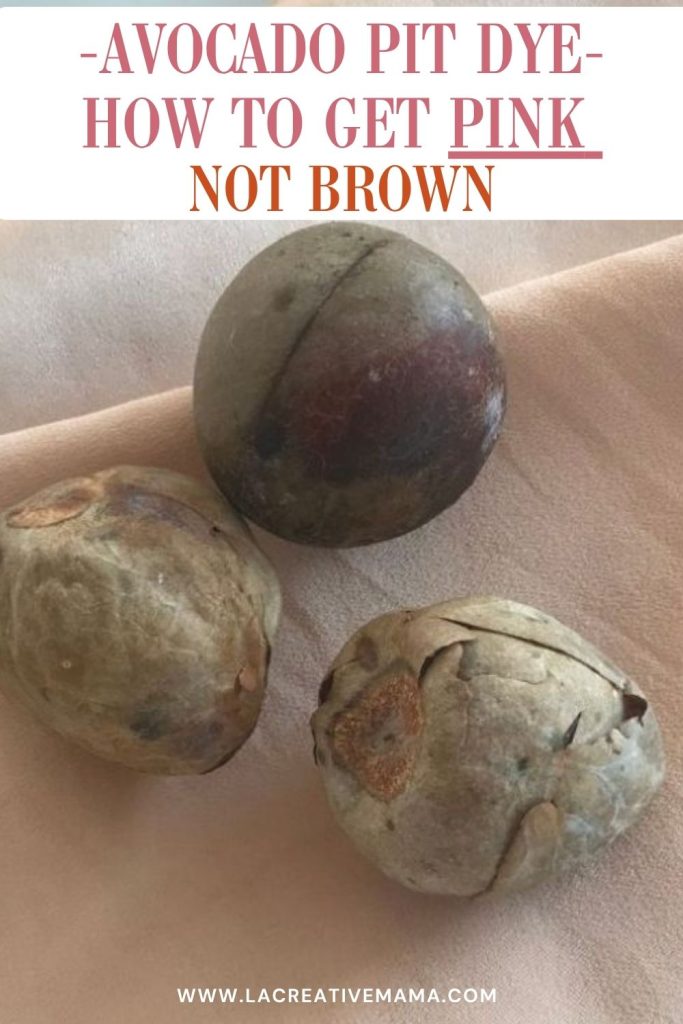
I’ve been dyeing with avocado pits and skins for over twenty years, and in summer my kitchen counter is never without a little plate of them collecting for the next dye pot.
These are the 12 tips that turned my avocado results from “sometimes pink, mostly beige” into colors I can rely on.

Before I get to the best tips, you may want to download the FREE Natural Dyes Guide which has a list of 44 best natural dyes you need to be using in order to get lasting and bright natural color!
Download your FREE Natural Dyes Guide
Following the step by step tutorial on how to dye fabric and yarn using avocado dye here are a few more tips to get you fantastic results.
Here are my best tips to dye fabric and yarn using avocado dye. These are tips that I have picked up from dyeing many times with avocado dye and that I hope will be useful to you too.
12 tips for avocado dyeing
These tips are in no particular order.
1-Use a natural fiber
Make sure that you are aware of the type of fabric or yarn that you want to dye with avocado dye. When using natural dyes you must always use natural fibers such as cotton or linen (cellulose fibers) and silk or wool (protein fibers).
To classify the fibers you can perform a little fabric burn test which will tell you straight away if the fiber is natural or synthetic.
2-Follow the correct natural dyeing process
Natural dyeing can be very random or quite precise. It all depends on the recipe or instructions that you are following.
Unfortunately there are many dyers who don’t follow the correct process and they end up producing faint colors that just don’t work.
This is very frustrating because dyeing with natural dyes can take a long time and you want to make sure that your time pays off and that you produce bright and long lasting colors.
If you follow the correct process you will be able to achieve beautiful results from your natural dyeing, but you must not skip any of the steps. Check out The Ultimate guide to Natural dyeing for a step by step tutorial of all the processes involved in natural dyeing.
The illustration below shows the entire process required to obtain great results from natural dyes.
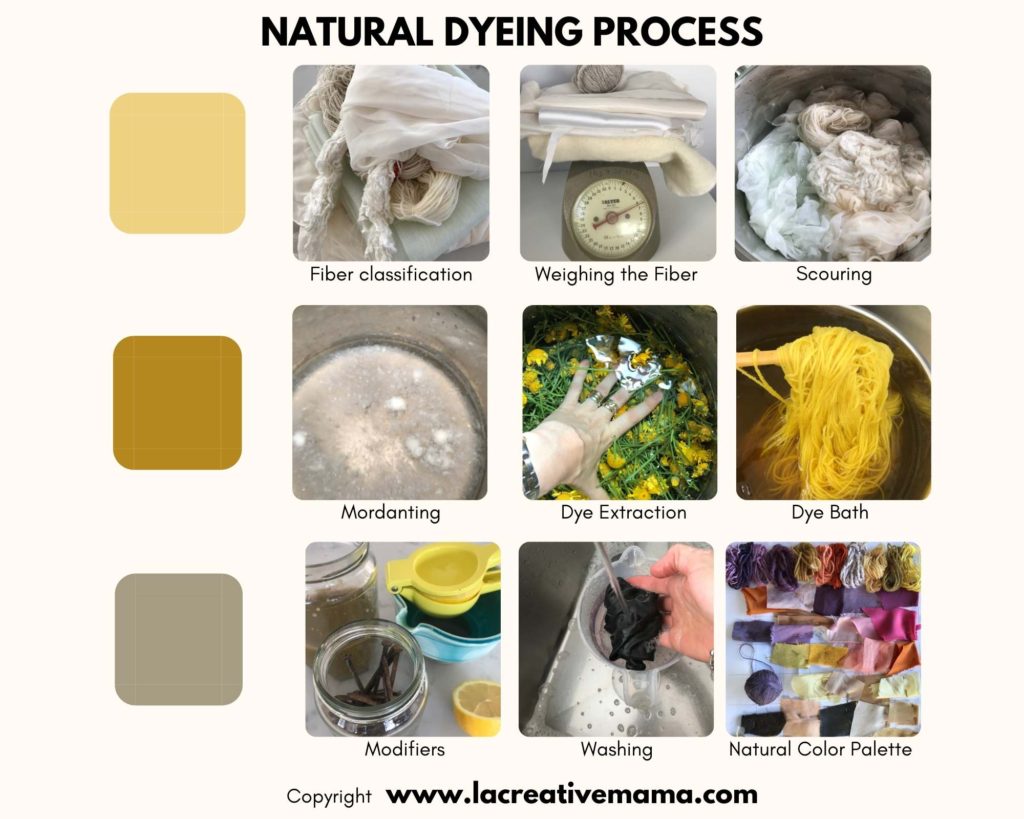
Natural dyeing steps:
- Fiber classification
- Scouring
- Mordanting
- Dye extraction
- Dye bath
- Washing
Mordants used with avocado dyes
You can use different types of mordants but my preferred mordant is Alum. It’s environmentally safe (however you must wear a mask when handling it just to be super safe) and it yields beautiful results consistently even with different water PH conditions.
Other mordants include:
- Copper
- Tin
- Iron
- Chrome
Note: I don’t use any of these in my practice except for iron from time to time. I prefer modifying the color by using natural iron water.
If mordanting still feels confusing, my complete mordant guide for natural dyeing walks you through it in plain English.
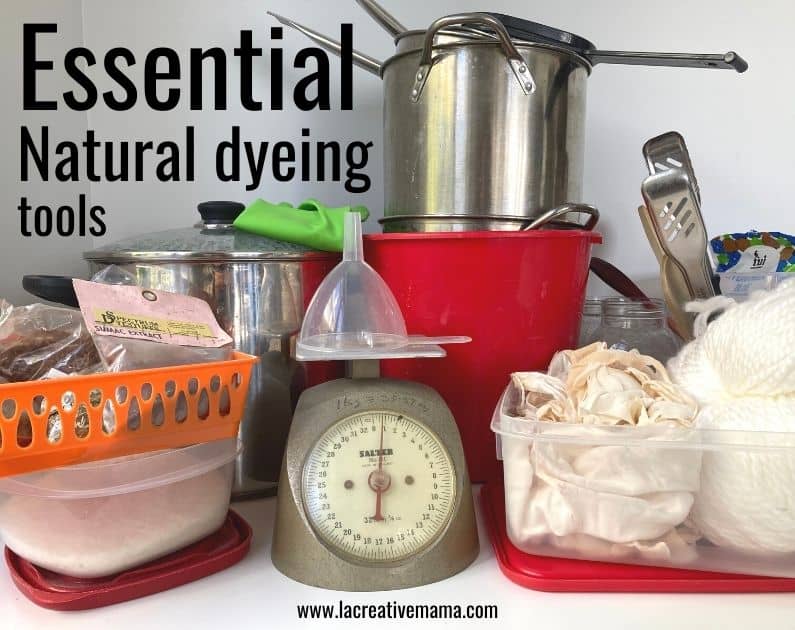
3- Use a stainless steel pot
Using a stainless steel dye pot will not affect the color results from your avocados. It’s a great pot to use for the dye bath with both avocado skins and avocado pits/stones.
4-Why do avocado pits give pink?
Avocado pits can deliver many tones of pink. This will depend on the water PH, the type of avocado, the soil where the avocado tree is growing and also the temperature of the water during the dye extraction.
Keep water just under simmering temperature.

5-What color do avocado skins give?
Avocado skins make beautiful blush tones and when you combine avocado skins with avocado pits/stones you get a deeper more pink tone of blush.
I like mixing them together in my dye bath.
Make sure that the water doesn’t boil during the dye extraction process by keeping under simmering temperature.
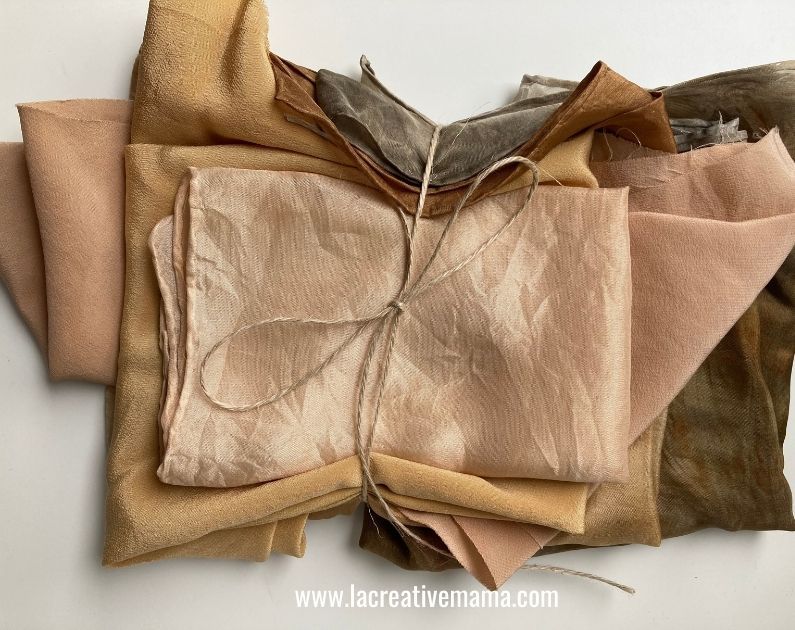
The photo below shows the variety and depth that you can get from the humble avocado dye.
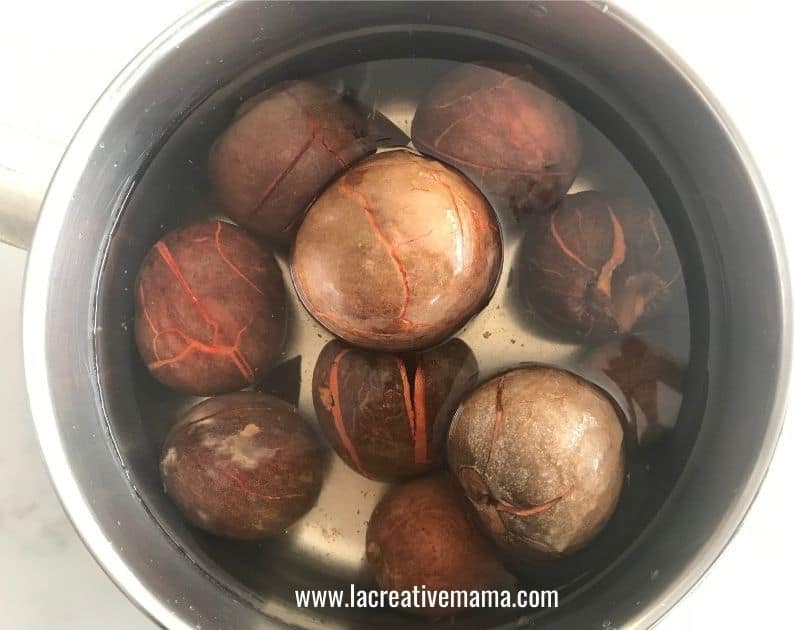
6-Steep overnight
Leave avocado skins and pits steeping overnight. This will allow the dye to start releasing slowly before you even go through the dye extraction process.
When you are ready to start the color extraction simply pour the avocados with the colored water onto a big stainless steel pot, add enough water to cover the avocados and start extracting the color.
7-Leave yarn to cool in dye bath
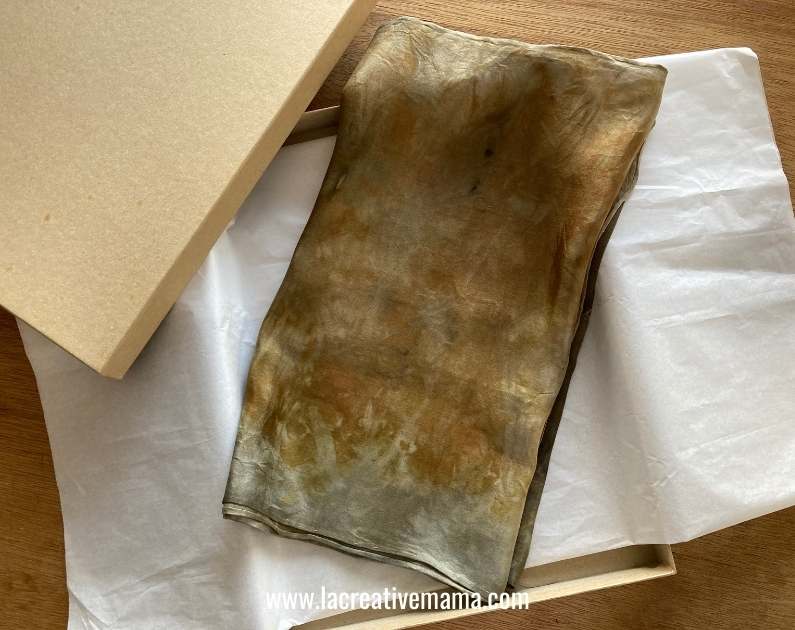
After you complete the dye process you can leave your yarn to cool overnight inside the dye pot. This only applies to yarn. If you are dyeing a length of fabric and you want to avoid streaky results you must remove immediately after the dyeing process is complete.
Don’t let your fabric sit in the avocado dye unless you are using avocado dye bath in Bundle dyeing. This is a great way to use avocado dye and you can expect really surprising results!
8- Does water pH change avocado dye color?
Try using water from different locations. You most probably will see big differences and this is due to the water PH. You can test the PH level in your water using these testing kit.
I recommend dyeing with rain water as much as possible but I am aware that it’s not very practical.
The colors will vary a lot depending on the quality of water you dye with.
9- How do I store avocado pits and skins for dyeing?
I like using fresh avocados when possible but in summer we end up with so many avocados that I always store them for future use. You can store avocados in 3 ways:
- Freeze them fresh
- Dry them and then freeze them
- Dry them and store in a paper bag
I do all three things depending on how many I have in bags and in the freezer.
10- Clean avocado skins and pits
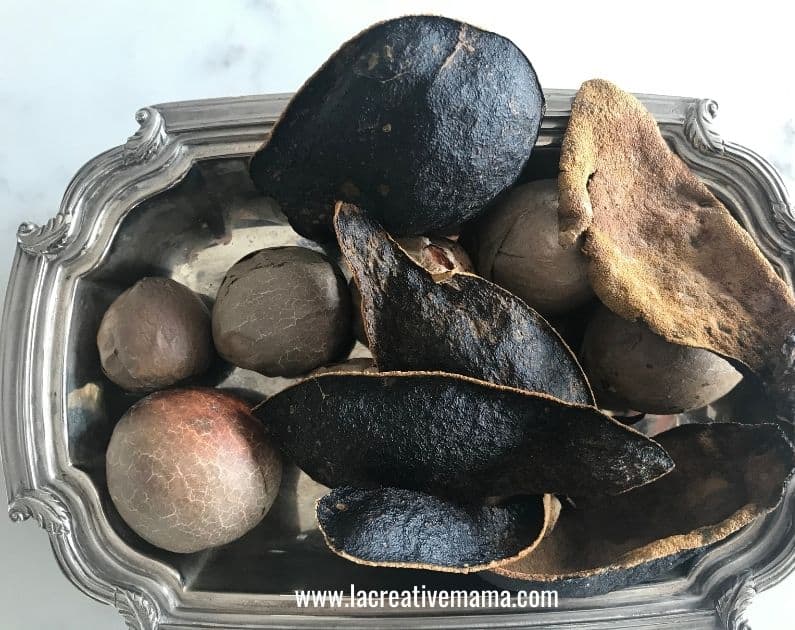
Make sure to scrape all the avocado flesh from the skins and the pits. I use a metallic sponge which is super helpful in removing all residue. Once the skins and the pits are totally clean I will either dry them or freeze them.
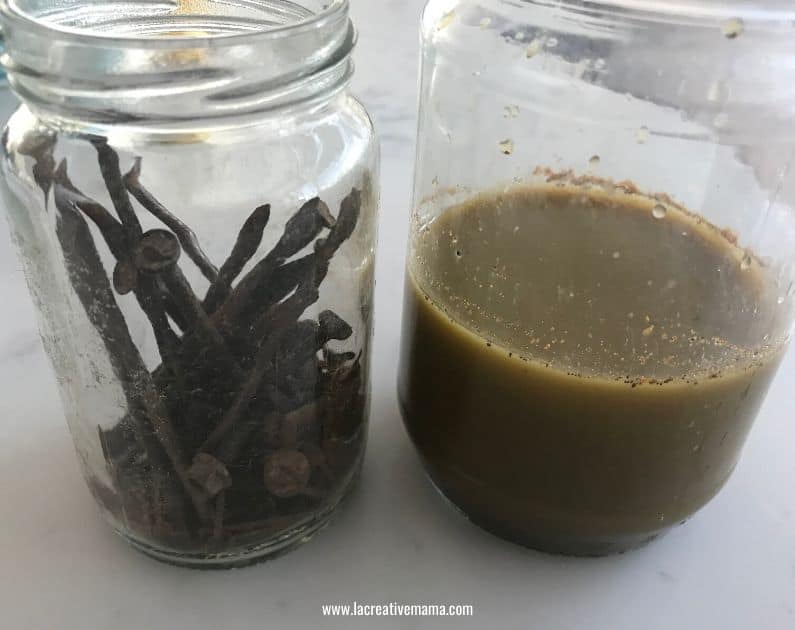
11- Modify avocado dye with iron water
Once you have gone through the dyeing process and you have dyed your fabric or yarn you can choose to further modify the color. This is a great way to expand the color palette provided by the avocado dye.
I like to make my own iron water and to use it as a color modifier. When combining iron water with the dyed avocado fiber you can get a darker color, some people call it a saddened color. I really like how this looks and it make me happy not sad 🙂
Check out how to make your own iron water and the color possibilities available to you.
12- Use avocado to eco print
If you have an avocado tree near you make sure that you get hold of the amazing avocado leaves. I actually use the avocado leaves as a dye in its own and it provides me with a deep yellow color.
However, the avocado leaves provide us with a beautiful print which is worth exploring through fabric printing and eco printing.

The photo below shows an envelope pillow made out of naturally dyed silk. The square in the middle of the log cabin block is an avocado printed leaf.

I hope you have enjoyed this article. Reach out with any questions that you may have.
Avocado Dye FAQs
Avocado dye usually turns brown for one of three reasons: leftover flesh on the pits or skins, a dye bath that got too hot, or water pH that’s too acidic. Clean your pits until they’re completely free of green flesh, keep the water below a simmer, and test your water pH — slightly alkaline water gives clearer pinks.
Pits generally give the truer rose-pink tones, while skins lean blush and peach. Combining pits and skins in one dye bath gives a deeper, warmer pink than either alone. Results vary with the avocado variety, season, and your water — my natural dye color chart shows the range you can expect.
Avocado pits and skins are naturally high in tannins, so you’ll get a light pink on unmordanted natural fibers. However, if you are dyeing fabrics and yarns for making garments or any other lasting item, you need to mordant it. Mordanting first makes a real difference — alum is the beginner-friendly choice.
Natural fibers only: cotton, linen, silk, or wool. Protein fibers (silk and wool) take avocado dye more readily than cellulose fibers (cotton and linen). Synthetic fabrics won’t hold plant dye — do a quick burn test if you’re unsure what your fabric is.
Fewer than you’d think. A handful of clean pits can dye a garment or a short length of fabric, though skins are less concentrated — you’ll need more of them for depth. Steeping overnight before extraction gets more color from every pit.
Yes — freezing is the most reliable way to store them, and frozen pits dye just as well as fresh. You can also dry them fully and keep them in a paper bag. Avoid airtight glass jars for drying — trapped moisture causes mold. Avocado is one of the best food scrap dyes to keep a stash of.
Avocado is one of the better-lasting food-scrap dyes because of its natural tannins, especially on mordanted fabric. Like all natural color it will slowly soften with sun and washing — wash cool and gentle, and dry out of direct sunlight.
Yes. Avocado leaves give a deep yellow dye on their own, and they also print beautifully — they’re worth exploring in eco printing if you have access to a tree.
Ready to start? Follow my full step-by-step tutorial on how to dye fabric and yarn with avocado.
Avocado dye is one of the most forgiving places to start with natural color — but if you’re tired of guessing and want colors that come out right every time, my Natural Dyeing CREATIVE Bundle gives you my complete manual, masterclass video, solar dyeing guide, and workbook — everything I wish I’d had when I started, for just $37.
👍👍
Cheers!
I chop the pits while they are fresh and let them dry. You’ll get more color from them that way.
Thank you- lovely article thanks for sharing.
I just want to know the final step. You have put the fabric in the dye bath- you have a beautiful result, it’s dried completely.
Now I need to wash it properly. This is what I need the advice on….
Is there any place for using bicarb at this point? Or just a gentle neutral soap wash??
Hi Lianne,
Just a gentle soap wash would be enough. the main issue in this last step is to make sure your water is running clear (again, you already rinsed it thoroughly before) and to wash the fiber so that it has a nice handle and smell 🙂 Hope this helps 🙂