
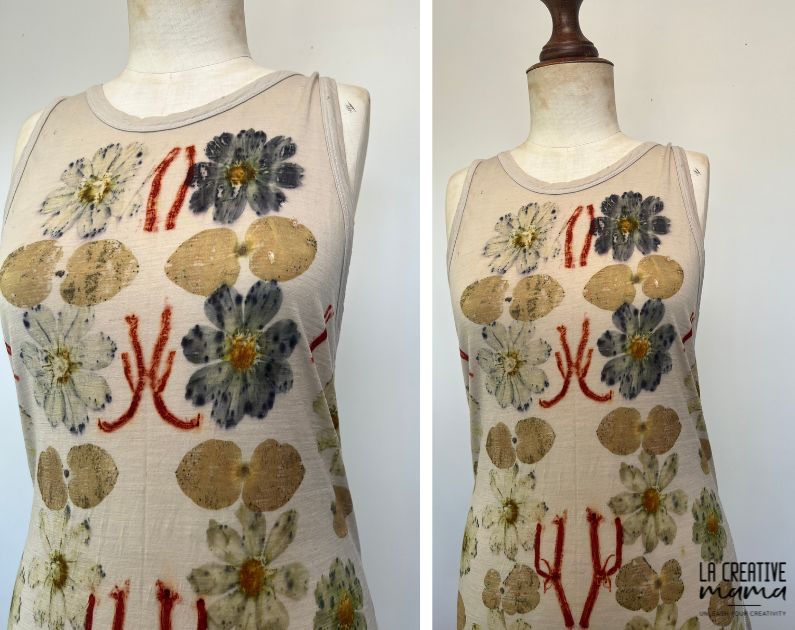
Eco printing with eucalyptus is the most reliable way to get crisp, clear leaf prints on fabric. Eucalyptus leaves are naturally rich in tannins and dye compounds, which means they print boldly where so many other leaves come out faint and patchy.
If you’ve ever unrolled a bundle and felt that sinking disappointment of ghostly, barely-there prints, eucalyptus is the leaf I want you to try next.
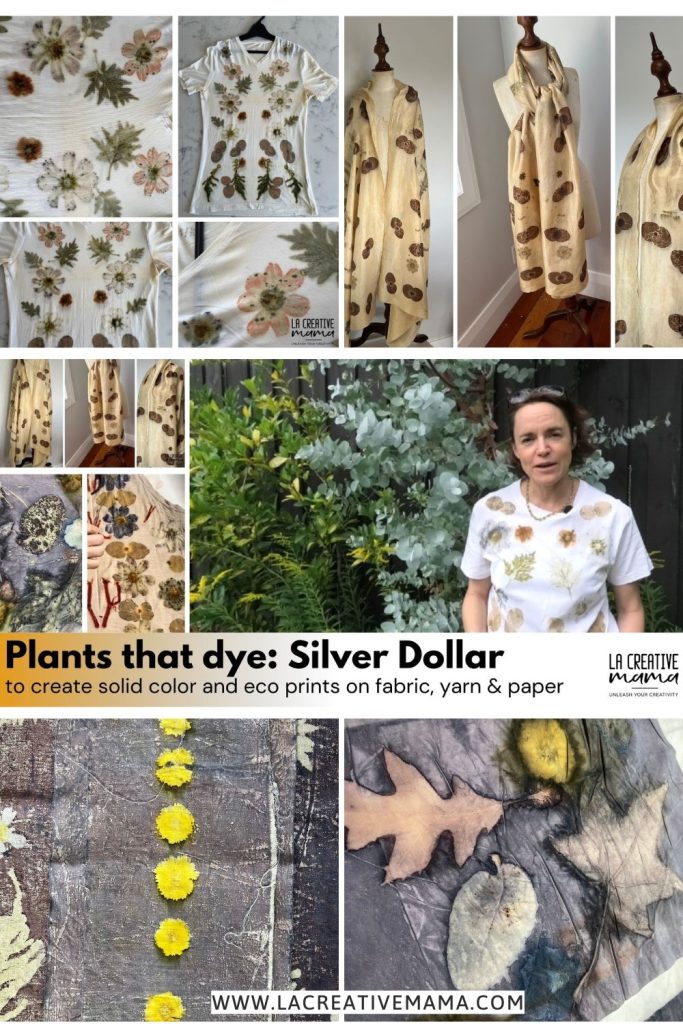
Here in New Zealand I’m surrounded by eucalyptus, and it was one of the very first plants I ever printed with, more than twenty years ago now. It’s still the leaf I hand to every beginner. Here’s why it works so well, which species to look for, and how to get your first beautiful print.
Why does eucalyptus print so well?
Eucalyptus leaves carry their own built-in dye. The tannins and pigments inside the leaf release with heat and moisture, so when you press a leaf against damp fabric and steam it, the leaf essentially dyes its own silhouette onto the cloth.
That’s what makes eucalyptus so forgiving. Many leaves need exactly the right season, the right mordant, and a bit of luck. Eucalyptus just wants to print.
Which eucalyptus species work best for eco printing?
Not all eucalyptus prints the same way, and this is where most beginners get stuck. The species I reach for again and again:
- Silver dollar eucalyptus (Eucalyptus cinerea): the round, silvery leaves you see in florist bouquets. Beautiful shapes, strong prints, and easy to find even if you don’t live near a tree. I wrote a whole love letter to this plant in my silver dollar eucalyptus for natural dyeing and eco printing post.
- Eucalyptus nicholii (willow peppermint): narrow leaves, delicate feathery prints.
- Whatever grows near you: eucalyptus varies wonderfully by species, season, and even individual tree. Testing your local leaves is half the joy.
Florist tip: a bunch of eucalyptus from the supermarket or flower shop works beautifully. You don’t need a tree.
What colors will eucalyptus give you?
This is the magic moment for most new printers: eucalyptus doesn’t print green.
On wool and silk, eucalyptus prints in warm oranges, rusts, and deep terracottas. On cotton and other plant fibers the prints are softer, in tans and warm browns, unless the fabric is properly prepared. Add a touch of iron to your process and those warm tones shift toward deep olive, gray, and near-black outlines.
The color depends on the species, the season, your water, and your fabric. That variability is not a flaw. It’s the signature of a truly handmade cloth.
What solid colors can you dye with eucalyptus?
Here’s a secret that surprises almost everyone: eucalyptus isn’t just for printing. Simmer the leaves into a dye bath and you can dye whole pieces of fabric and yarn in rich, solid color, and each variety gives you something different:
- Silver dollar eucalyptus (E. cinerea): deep, glowing oranges and rusts on wool and silk. This is the color that made me fall in love with this plant.
- Eucalyptus nicholii: bright oranges leaning toward warm reds, some of the strongest color in the whole family.
- Red ironbark (E. sideroxylon): among dyers, the one whispered about for its deeper reds and burgundy tones.
- Blue gum (E. globulus): softer caramels, tans, and khaki, lovely for a quieter palette.
- The bark: don’t throw it away. Eucalyptus bark simmers into deep, warm browns.
As with printing, wool and silk drink up the most color, while cotton gives you gentler, softer versions of the same tones. And the loveliest part: you can dye a solid base color with one variety, then eco print on top of it with another.
One plant family, an entire wardrobe palette.
Just for a little inspiration I want to share this image below with you! It’s the photo of a woven piece that I created over a weekend using lots of little samples of my naturally dyed yarns, and there is a lot of eucalyptus cinerea color in this scarf!
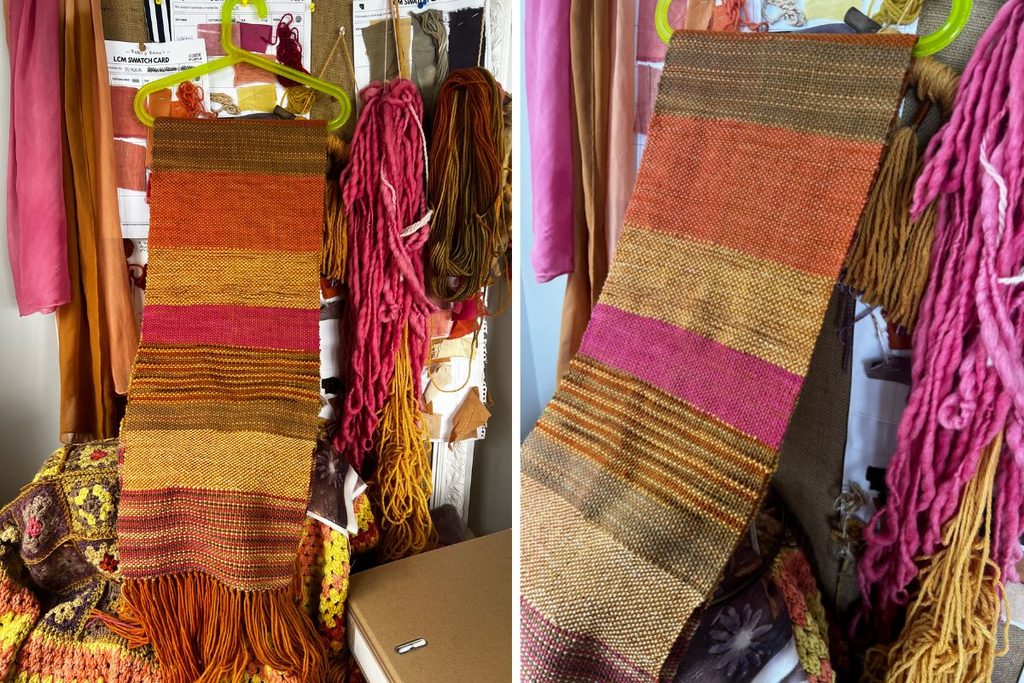
Even though my weaving is all uneven and there are lots of “weaving mistakes” I just love this samples of natural color and I have been wearing it!
So, what dyes did I use?
- The warp is eucalyptus cinerea at different ratios and there is a lot of it on the weft too (silk yarn and wool yarn)!
- The weft is mainly a variety of everything: cochineal, eucalyptus cinerea, madder root, variegated wool dyed with onion and modified with iron, variegated wool dyed with cochineal and logwood, goldenrod and onion skins at different ratios.
If you want to see exactly what silver dollar gives in the dye pot, my silver dollar eucalyptus post shows the dyed results.
If you want to know which natural dyes will provide you with great lasting color, you can download your FREE Natural dyes Guide by completing the form below!
How do you eco print with eucalyptus? (Your first print)
Here's the simple version of the process, the same bones every eco printer builds on:
- Prepare your fabric. Protein fibers like wool and silk give the strongest eucalyptus prints. Fabric preparation matters more than any other step; my guide to the best mordants for eco printing fabric explains what each one does.
- Soak your leaves. A short soak in warm water softens the leaves and helps them make full contact with the cloth.
- Arrange your design. Lay the leaves face-down on damp fabric. Every leaf placement is a design decision, which is what makes this so addictive.
- Roll tightly around a dowel or branch. Tight contact is the difference between a crisp print and a blurry one.
- Bind and steam. Wrap the bundle firmly with string and steam it. Heat and time release the dye.
- The unbundling. Let it cool, then unroll slowly. This is the moment we all do this for.
If you're brand new to eco printing, start with my eco printing on fabric beginners guide, which walks through the whole process step by step, then come back here for the eucalyptus specifics.
And when you're ready to move from "sometimes it works" to reliable, repeatable prints you'd proudly gift or sell, that's exactly what I teach inside my Eco Printing Ultimate Course: exact fabric preparation, steaming times, troubleshooting, and my complete method refined over 20+ years.
When should you harvest eucalyptus for printing?
You can print with eucalyptus year-round, which is another reason it's the perfect beginner leaf. Mature leaves tend to hold more tannin than very young growth, and leaves gathered in warmer months often print more strongly. Dried and even fallen leaves still print; some printers swear the prints get better with a little age.
Keep a simple journal of what you picked, when, and what it gave you. Within a season you'll know your local trees like old friends.
A note for teachers
Eucalyptus eco printing is a wonderful classroom project: it's low-cost, works with florist-bought leaves, and every student unrolls a different result. If you teach fiber arts or science, the tannin chemistry hiding inside this project is a lesson in itself. My natural dyeing lessons for schools were built for exactly this.
Eucalyptus was my gateway into eco printing, and I have a feeling it will be yours too.
If you want the complete method, the Eco Printing Ultimate Course gives you everything: fabric prep, my exact process, troubleshooting, and the confidence to get prints you love every single time.
Eco printing with eucalyptus: your questions answered
Eco printing with eucalyptus is a natural printing technique where eucalyptus leaves are pressed against fabric and steamed, transferring the leaf's own tannins and pigments as a permanent print. It's one of the most reliable forms of botanical printing.
Eucalyptus leaves are naturally high in tannins and dye compounds, so they print clearly without the faint results many other leaves give. They also work fresh, dried, or from florist bunches, all year round.
On wool and silk, eucalyptus typically prints warm oranges, rusts, and terracottas. On cotton the prints are softer tans and browns unless the fabric is prepared first. Adding iron shifts the colors toward olive, gray, and near-black.
Yes. Simmering eucalyptus leaves creates a dye bath that colors fabric and yarn in solid tones, from rust and orange (silver dollar, E. nicholii) to caramel and tan (blue gum). The bark gives deep warm browns.
Yes. Florist and supermarket eucalyptus, usually silver dollar eucalyptus, prints beautifully. You don't need access to a tree to start eco printing.
Eucalyptus is tannin-rich, so it prints on protein fibers like wool and silk even with minimal preparation. For cotton and plant fibers, and for prints that last wash after wash, fabric preparation makes a big difference.
Yes. Dried eucalyptus leaves print well after a soak in warm water to rehydrate them. Many printers find aged leaves print just as strongly as fresh ones.
On properly prepared fabric, eucalyptus prints are permanent and washfast. Preparation and technique are what separate prints that last for years from prints that fade.