
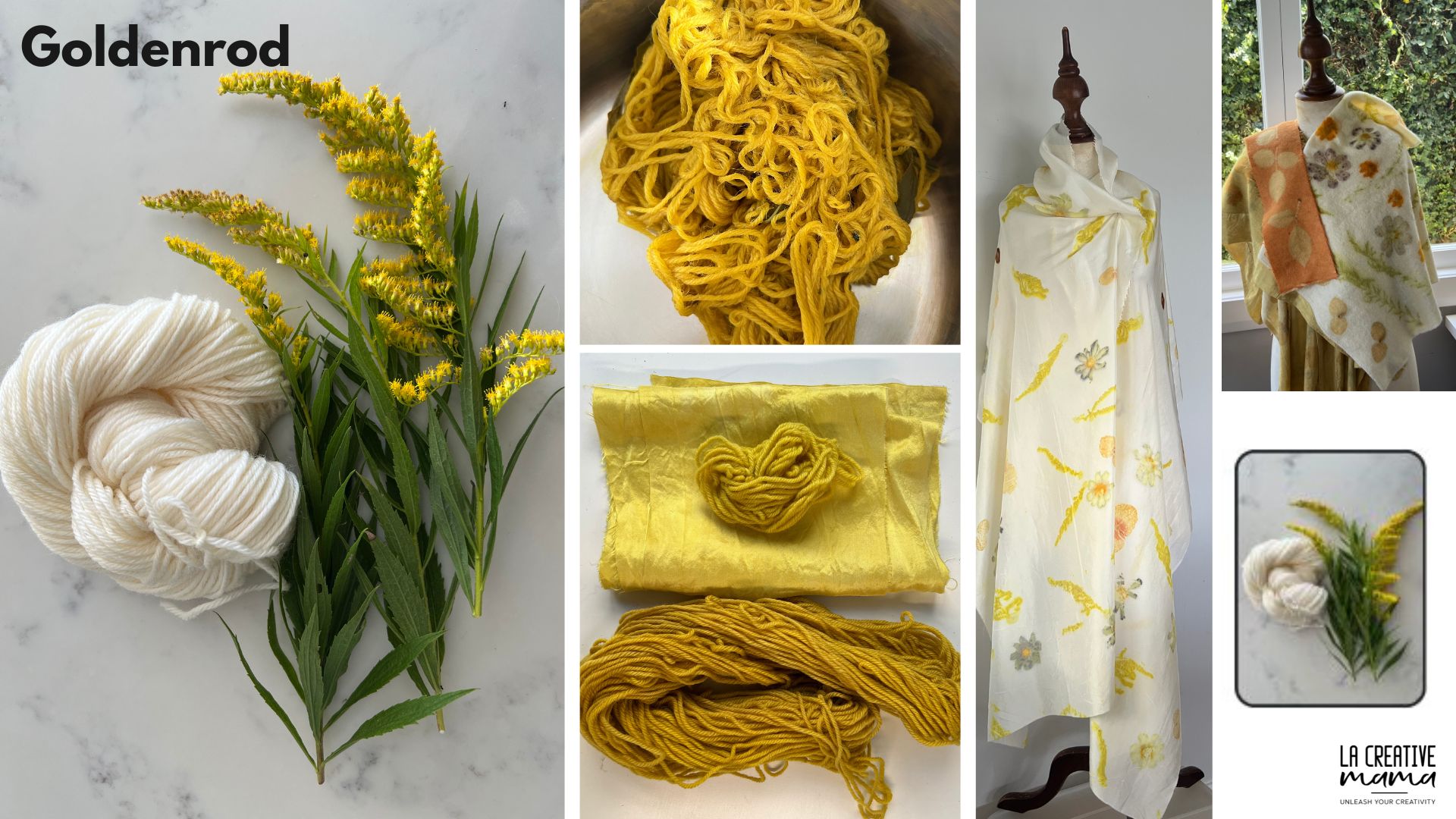
Goldenrod (Solidago) is one of the most reliable natural dye plants for producing bright, long-lasting yellow color on fabric, yarn, and paper.
Easy to grow and forage, it works beautifully for both solid natural dyeing and eco printing, and gives consistent, vibrant results even for beginners.
Today, I want to talk a little more about goldenrod as a natural dye plant. I’ve already shared a full natural dyeing tutorial using goldenrod, but since starting my YouTube series on plants that dye, I felt called to go a little deeper into this beautiful and incredibly reliable dye.
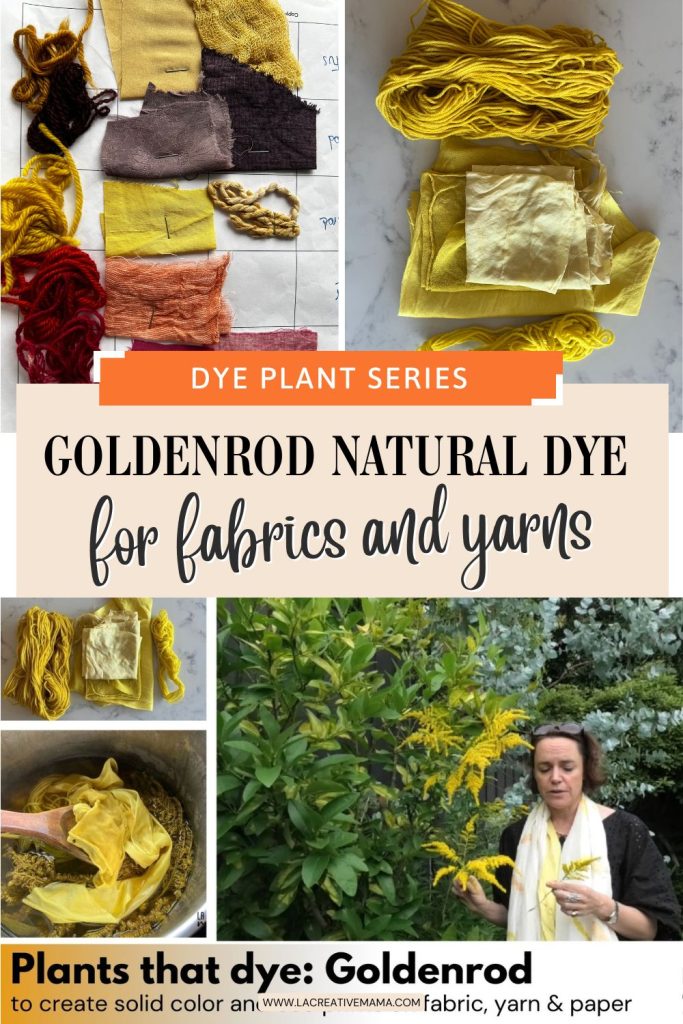
Because truly… there’s something magical about discovering that a simple flower growing in your garden can give you the most vibrant, long-lasting yellow color.
And if you’ve ever felt overwhelmed wondering which plants actually work for natural dyeing and eco printing — you’re going to love this one.
Today, I want to introduce you (or reintroduce you) to one of my absolute favorites: Goldenrod
A plant that is not only beautiful… but wonderfully dependable when it comes to creating bright yellow natural dyes and clear, consistent eco prints.
Check out the Youtube Video:
What Is Goldenrod and Where Can You Find It?
Goldenrod (Solidago) is a flowering plant known for its tall stems and clusters of tiny yellow flowers.
In some parts of the world, it grows abundantly — even considered a wild plant or weed.
Here in Auckland, New Zealand, it doesn’t grow wild in the same way… so I actually planted it in my own natural dye garden.
And every summer (around February), I get these stunning blooms ready to harvest.
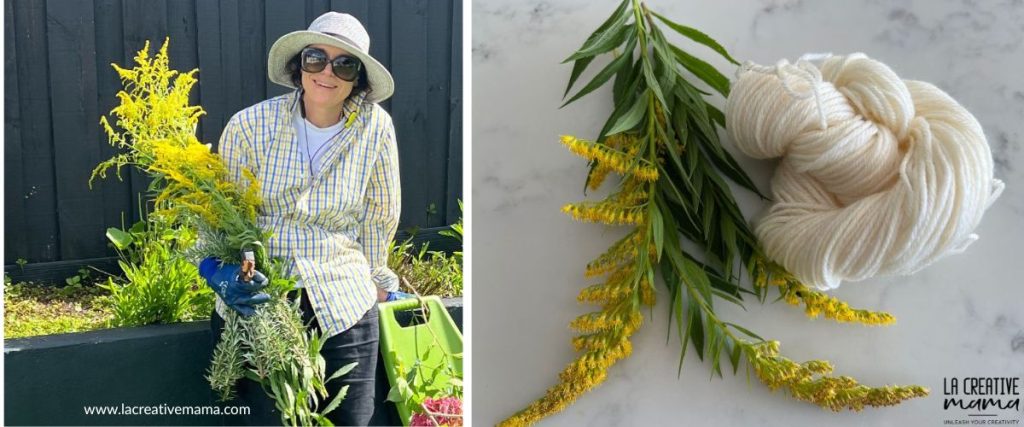
If you don’t have it nearby, you can:
- Grow it from seed
- Buy a small plant (punnets work beautifully)
- Or forage it locally if it grows in your area
Why Goldenrod Is One of the Best Plants for Natural Dyeing
If you’ve ever struggled with:
- Colors that fade after a few washes
- Weak or pale dye results
- Unpredictable eco prints
Goldenrod is one of those plants that feels like a breath of fresh air.
Because…
It’s reliable
It produces strong, vibrant yellow tones
It works for both solid dyeing AND eco printing
And that’s something I personally look for when I grow plants — I want them to do both.
Because when you’re putting time, love, and energy into growing your dye plants… you want to get the most out of them.
What Color Does Goldenrod Produce?
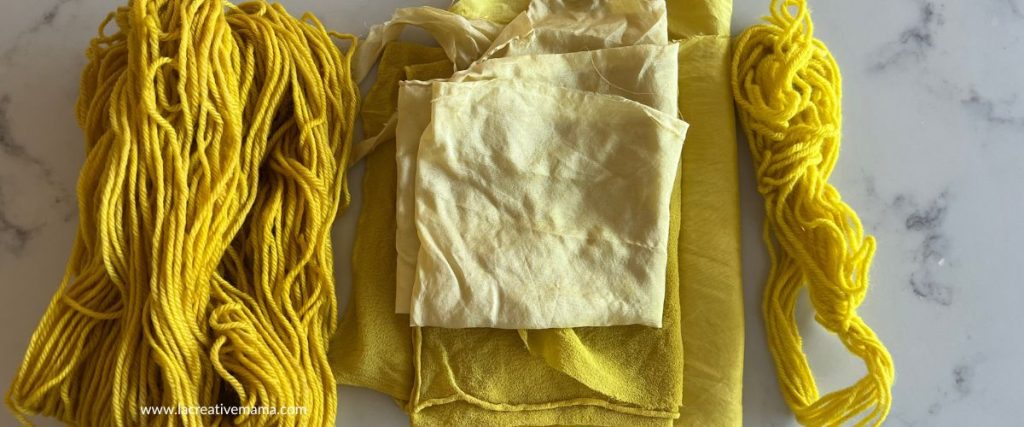
Goldenrod is known for producing a range of yellow shades, from soft buttery tones to bright sunshine yellows.
But here’s something important (and beautiful) to understand:
👉 The final color depends on:
- The type of fabric (cotton, silk, wool)
- The intensity of the dye bath
- Any modifiers you use
For example:
- Wool & silk (protein fibers) → richer, deeper yellows
- Cotton (cellulose fibers) → softer yellow tones
- Iron modifier (post-dye) → shifts yellow into green tones
So with just one plant… you can create a whole natural color palette.
Using Goldenrod for Eco Printing
This is where goldenrod becomes extra special.
Not all natural dyes work well for eco printing.
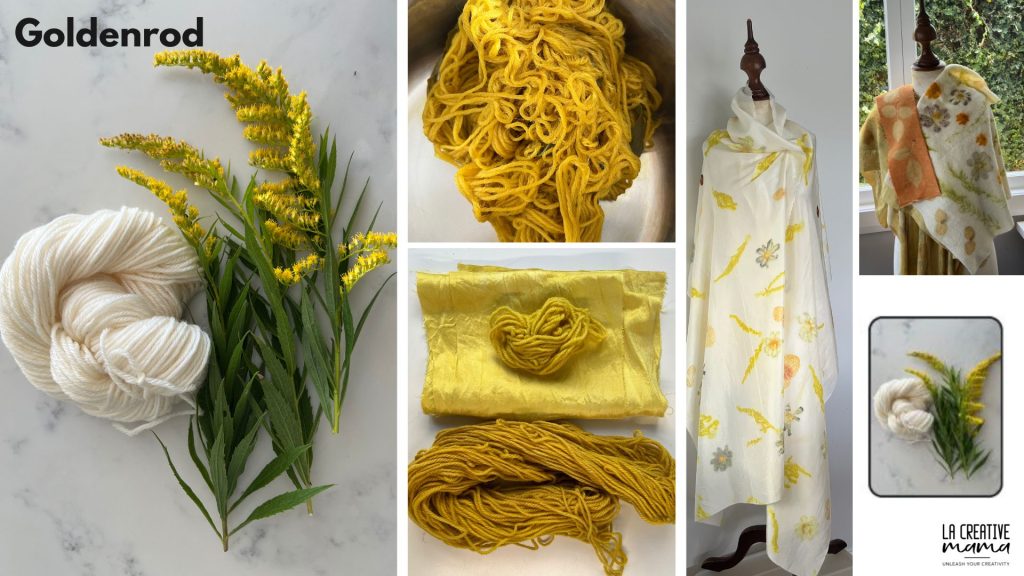
But goldenrod? It gives you:
- Clear botanical prints
- Beautiful yellow imprints
- Consistency between dye bath and print color
That means your:
- Solid dyed fabric
- Eco printed fabric
…can match beautifully — something that’s not always easy to achieve.
And if you’re creating garments or textile pieces, this is incredibly powerful.
Can You Use Goldenrod Leaves?
Yes — but with a little nuance.
- The flowers hold most of the pigment
- The leaves alone give a much softer, less intense color
However…
👉 When you use leaves + flowers together, they:
- Enhance the dye bath
- Add depth to your color
So I always recommend using the whole plant when possible.
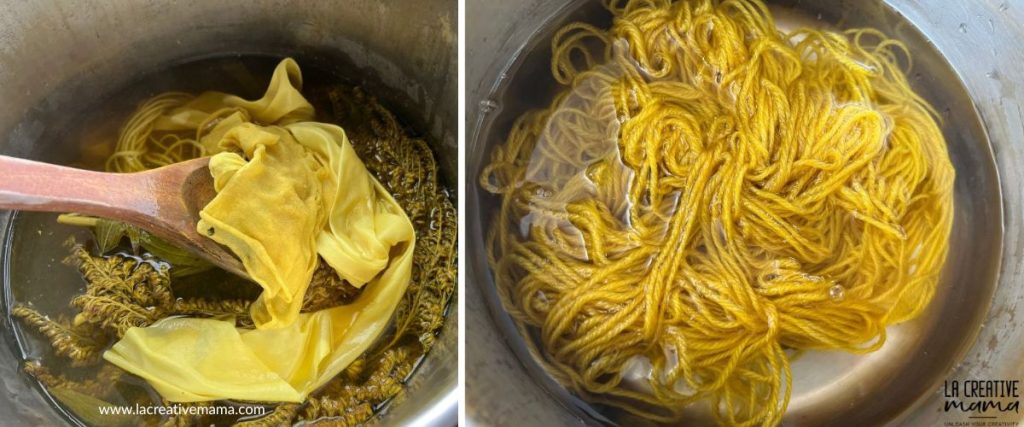
Why Your Colors May Vary
One of the most beautiful aspects of natural dyeing is that it reflects nature itself.
That means:
- More rain one year → slightly different tones
- Different soil → subtle variations
- Seasonal changes → unique results
You might notice:
- One batch is more yellow
- Another leans slightly green
And that’s completely normal 💛
This is why working with trusted natural dye plants like goldenrod is so important.
Even with variation… you can rely on it to give you strong, beautiful results every time.
Goldenrod on Fabric, Yarn & Paper
Goldenrod works beautifully across different materials:
Fabric (Cotton, Linen, Silk)
- Soft to bright yellows
- Great base for garments
- Perfect for eco printing
Yarn (Especially Wool)
- Rich, saturated color
- Ideal for knitting and weaving projects
Paper
- Stunning botanical prints
- Perfect for handmade cards and art
It’s one of those rare plants that truly does it all.
Want to Learn More About Natural Dyeing?
If goldenrod has sparked your curiosity about natural dyeing, there’s so much more to explore.
A great place to start is the ultimate guide to natural dyeing, which walks you through the full process from start to finish, including how to mordant your fabric so your colors stay bright and colorfast wash after wash.
If you’d love to take goldenrod further and press those beautiful leaves directly onto fabric, my beginner’s guide to eco printing will show you how.
And if you’re building your natural dye garden or stash, you might also enjoy my guides to the ten best natural dyes for fabric and yarn and the best plants for eco printing — goldenrod features in both!
Want More Plants Like This?
If you loved learning about goldenrod, I’ve created something special for you:
👉 A free printable guide with the 40 best natural dyes
Inside, you’ll discover:
- Plants that create strong, lasting color
- Options for both dyeing and eco printing
- Examples from my own work and my students
It’s the perfect starting point if you want reliable results without the overwhelm
Ready to Go Deeper?
If you’re ready to move beyond experimenting and start creating consistent, beautiful results, I’d love to guide you further.
Inside my courses, I teach you:
- Step-by-step natural dyeing methods
- How to get bright, lasting color (that doesn’t wash away)
- My full eco printing process for clear, defined prints
Explore:
Goldenrod produces a range of bright yellow shades, from soft buttery tones to vivid sunshine yellows. On protein fibers like wool and silk, the color is richer and more saturated. On cellulose fibers like cotton and linen, you’ll get softer, paler yellows. Using an iron modifier after dyeing can shift the yellow into green tones.
Yes. For colorfast results that won’t wash out, a mordant is essential. Alum (aluminum potassium sulphate for wool and silk) is the safest and most reliable choice. Without a mordant, most goldenrod dye will fade after a few washes. I always mordant first before putting any fiber into the dye bath.
Yes, but the flowers hold most of the pigment. Leaves alone give a softer, less intense color. When you use the whole plant — flowers and leaves together — you enhance the dye bath and add more depth and warmth to the final color. I always recommend using the full plant when you can.
Goldenrod is one of the best plants for eco printing. It produces clear botanical prints with beautiful yellow imprints, and the print color closely matches what you’d get in a dye bath — which makes it ideal for mixed-technique textile projects. Both the flowers and leaves can be used in eco printing bundles.
Wool and silk (protein fibers) give the richest, most saturated yellows with goldenrod. Cotton and linen (cellulose fibers) can also be dyed, but the color will be softer and may require more plant material for a deeper tone. For beginners, starting with wool or silk gives the most satisfying results.
Yes and no. Dried goldenrod does not work as beautifully as the fresh flowers for dyeing. Many natural dyers harvest goldenrod at peak bloom and dry it for use throughout the year but in my experience the dye and the prints are not as strong.
Harvest goldenrod just before it reaches full bloom — when the tiny flowers are starting to open but haven’t yet fully developed. This is when the pigment concentration is highest. In Auckland, I harvest in late summer (around February). In the northern hemisphere, this is typically late August to September.
Yes! By using iron as a modifier after dyeing with goldenrod, you can shift the bright yellow into green tones. This is one of the reasons goldenrod is such a versatile plant, with one dye bath and different modifiers, you can create a whole palette of colors from yellow through to olive and sage greens.